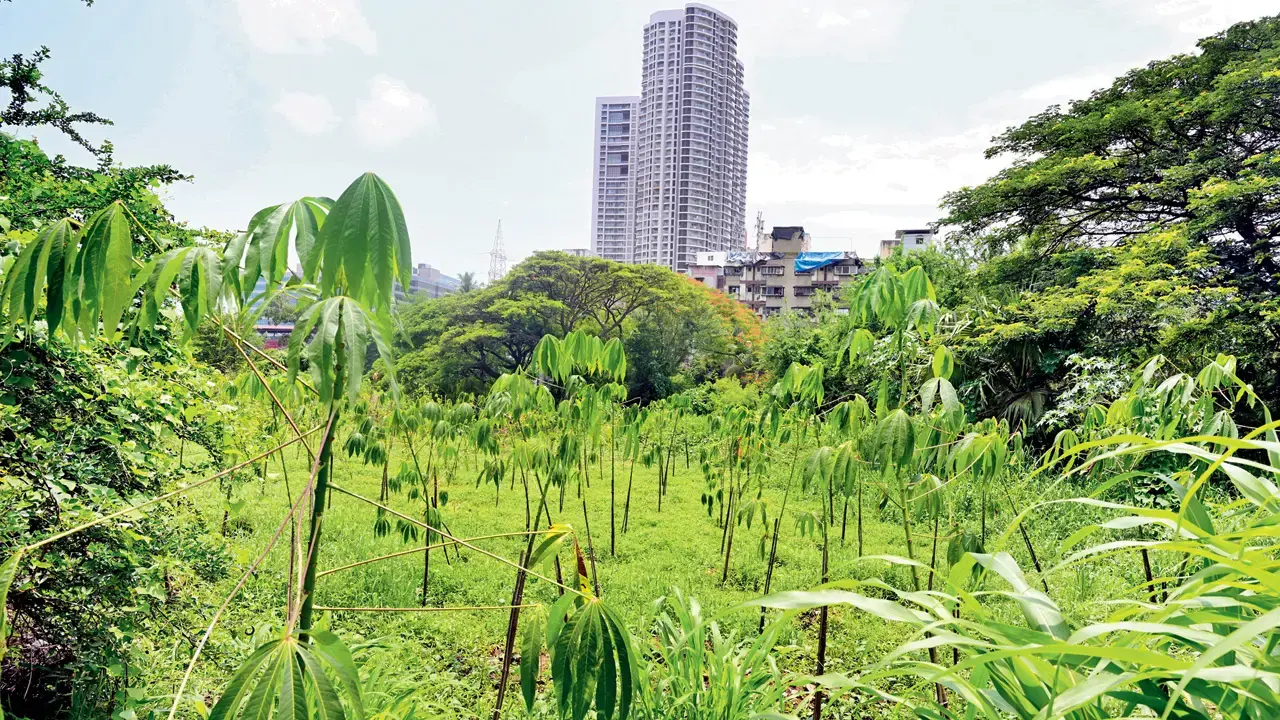
Thane Climbs Environmental Rankings With 82k Trees
Maharashtra has unveiled one of its most ambitious environmental initiatives to date — a state-wide mission to plant 300 crore trees by 2031 — as part of a broader strategy to enhance green cover, mitigate climate change, and support inclusive rural employment. Announced during a high-level review in Mumbai, the plan reflects a growing recognition within the state government that ecological restoration must be woven into urban and regional development trajectories.
The plantation drive, slated to run in mission mode from 2026 through 2031, aims to elevate Maharashtra’s tree cover toward its statutory goal of 33 per cent. Officials say this will be coordinated by a proposed Green Maharashtra Authority, a specialised entity tasked with planning, implementation and monitoring of large-scale afforestation efforts. Initial targets include planting around 20 crore trees in the first year, with sapling production to be supported by government nurseries, private growers and community groups.Urban planners and climate experts have welcomed the scale of the proposal but caution that success hinges on quality and longevity, not just numbers planted. They point out that plantation drives often falter when species selection, site conditions and post-planting care are not aligned. To address this, the mission emphasises planting species suited to local agro-climatic zones and native ecosystems, and explicitly excludes afforestation in sensitive grasslands and wetlands to avoid ecological disruption.
The mission represents a strategic pivot in land use policy, especially in a state balancing rapid urbanisation with persistent ecological stress. Maharashtra’s expanding urban regions — from the Mumbai Metropolitan Region to Pune and Nagpur — face rising heat-island effects, particulate pollution and stormwater management challenges. Tree canopy expansion, if coupled with urban greening and green infrastructure frameworks, could help relieve these pressures by enhancing shade, improving air quality and promoting groundwater recharge.Socio-economic dimensions are integral to the plan. Officials highlight that rural employment generation is a core objective, with plantation and maintenance roles linked to schemes such as MGNREGA and CAMPA, and bolstered by involvement of local self-help groups and youth collectives. This people-centric design aims to ensure the programme supports livelihoods in forest-edge communities while embedding environmental stewardship within rural economies.
Monitoring and transparency are also receiving heightened attention. The plan calls for digital and satellite-based monitoring systems to track plantation progress and tree survival rates in real time, a move that could set a precedent for data-driven forest governance in India.However, analysts stress that operational success will require coordination across departments, clear land rights protocols, and sustained funding for post-planting care over the long term. Water availability, soil health and community engagement are critical variables that will determine whether the new green cover takes root and thrives.
As Maharashtra positions itself at the intersection of urban growth and environmental stewardship, the sheer scale of the tree plantation mission presents both an opportunity and a test: whether ecological restoration can be integrated into a climate-resilient development agenda that benefits both cities and rural hinterlands. Continued stakeholder engagement, robust governance mechanisms and adaptive management will be essential in turning saplings into enduring forests.