


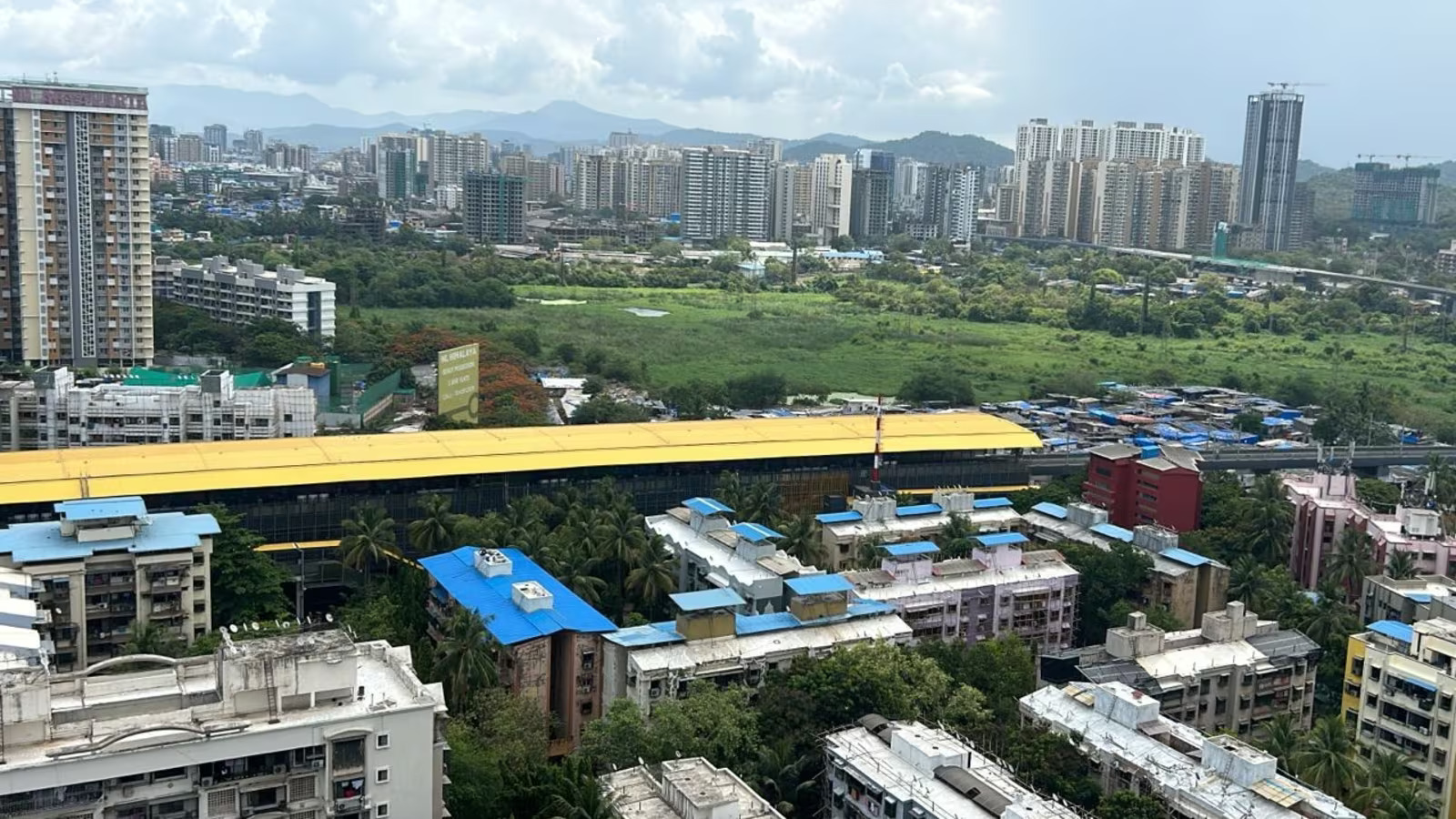
Maharashtra government has proposed relocating high-frequency transmission towers from Dahisar to Gorai, offering to bear the full relocation cost through the city’s municipal corporation. Officials have written to the Airports Authority of India (AAI) for the fourth time, urging swift action to unlock commercial viability for redevelopment.
The towers, installed by AAI at Juhu, Andheri West, and Dahisar, have triggered strict height restrictions since a civil aviation notification in December 2020. The curbs, intended to safeguard air navigation, have inadvertently rendered several redevelopment projects financially unviable, especially in densely populated zones. This has left thousands of residents in limbo, awaiting delayed housing upgrades. According to senior officials in the state’s urban development department, the proposed plan offers AAI nearly 20 acres of prime land in Gorai, free of cost, for relocating the Dahisar high-frequency receiving stations. The Brihanmumbai Municipal Corporation (BMC) would not only fund the move but also undertake all site development, infrastructure creation, and secure boundary works.
In a significant green-city clause, the government has suggested that the vacated Dahisar plot, which will remain under AAI’s ownership, be developed into a public-access garden or park. “The open spaces between the high antenna masts in Gorai can also be earmarked for afforestation,” the letter noted, aligning with the city’s climate-resilient urban goals. However, officials have also flagged that Gorai-based projects will need to comply with AAI height restrictions post-relocation. Ongoing projects with previously granted no-objection certificates may require reconciliation to ensure compliance with air safety norms. This step, they say, is essential to balance developmental ambitions with aviation safety.
Urban planners view the proposal as a decisive move to address a critical bottleneck in Mumbai’s housing pipeline. The civic body’s willingness to absorb relocation costs reflects an acknowledgment of the broader economic and social impact of stalled projects, from inflated property prices to prolonged rehabilitation of slum dwellers. While the state government awaits AAI’s nod, developers and residents are watching closely. If approved, the tower shift could set a precedent for resolving similar infrastructure-induced bottlenecks across Indian cities, where outdated installations often collide with modern urban growth needs.
The move embodies a delicate negotiation — protecting airspace safety while unlocking vital redevelopment. For Mumbai, where every square foot is fiercely contested, the potential to convert restricted zones into thriving residential and green spaces could mark a rare win-win in the city’s urban development story.
Also Read: Mumbai Ganpati Mandals Refuse Road-Digging Penalties Unless Civic Body Fixes Potholes
