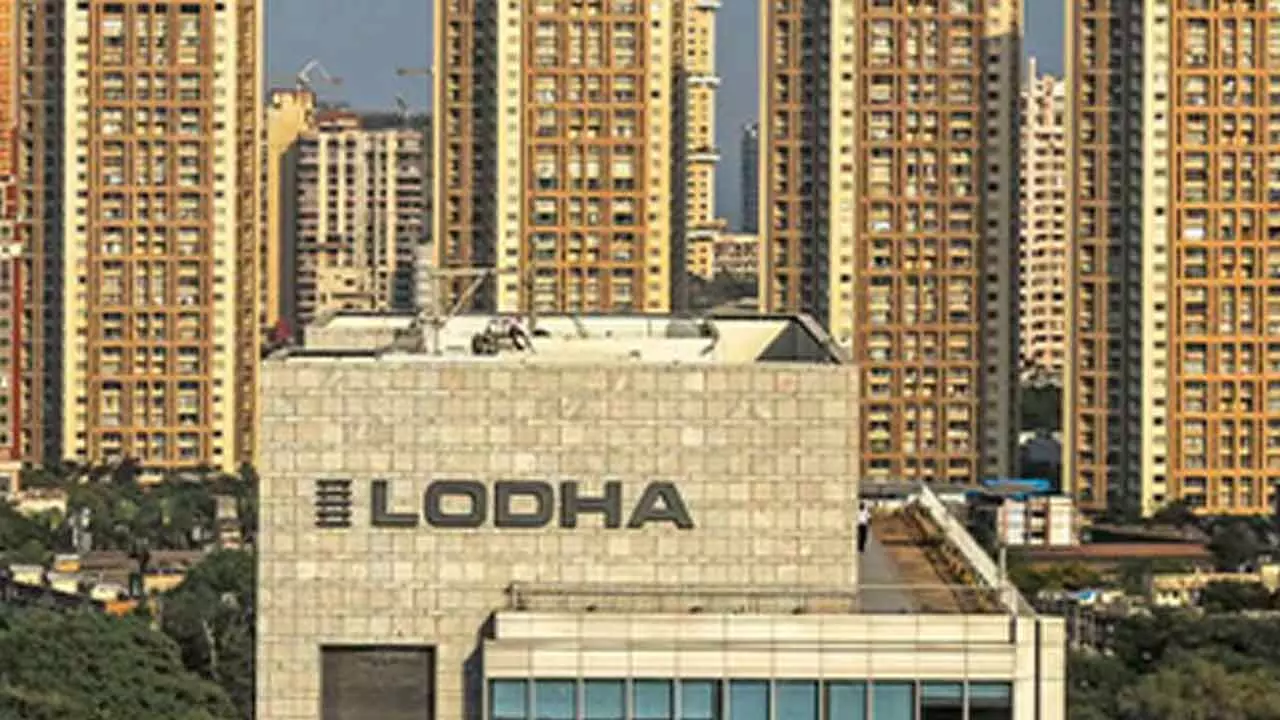
Maharashtra Expands Digital Infrastructure With Lodha Deal
In a major escalation of digital infrastructure financing, a leading Indian property developer has signed a fresh pact with the Government of Maharashtra to channel an additional ₹1 lakh crore into a mega data centre park, bringing the project’s total financial commitment to approximately ₹1.3 lakh crore. This move signals a deepening alignment between urban economic policy and technology-led real estate development in the region.
The expanded agreement, formalised on January 19 during the World Economic Forum annual meeting in Davos, extends a memorandum of understanding that the developer originally inked with the Maharashtra government in September last year under the state’s Green Integrated Data Centre Park policy. The park, planned for the Mumbai metropolitan region, is designed with about 2.5 gigawatts of capacity — making it among the largest data infrastructure endeavours in India. Urban planning and economic analysts say the deal reflects Maharashtra’s efforts to position itself as a strategic hub for digital economy infrastructure, attracting capital and capability that could accelerate the state’s broader tech ecosystem. “Securing large-scale data infrastructure investment is now part of how cities future-proof their economies,” said a senior industry strategist. “Beyond construction, it attracts tech demand, enhances connectivity, and potentially reshapes employment clusters.”
Under the expanded plan, the developer will act as the master developer for multiple global and domestic data centre operators within the site. Several major enterprises have already secured land within the park, with at least one international cloud provider confirmed to have committed to extended power supply arrangements. While data centres are pivotal to digital transformation, sustainability planners caution that these facilities must be designed for climate resilience and energy efficiency. Data centres typically consume large volumes of electricity and water, so integrating renewable energy sources and environmentally sound power management will be key to reducing the carbon footprint of such investments. “A data park at this scale needs rigorous environmental planning — from grid integration to heat management,” noted a green infrastructure expert.
Economically, officials anticipate the project could catalyse employment across construction, engineering, logistics, and operations, though actual job creation numbers often vary by phase and technology deployment. The park’s proponents estimate over 16,000 direct and indirect roles once fully operational, a figure that will be closely watched by urban economists assessing the deal’s impact on local labour markets. Moreover, the project dovetails with the state’s recent investment promotion drive, which showcased multiple MoUs across sectors during the same global forum. For city residents and planners, this underscores a pivot towards knowledge-intensive infrastructure that supports data management, cloud services, and digital services hubs.
Going forward, Maharashtra’s next challenge will be ensuring integrated delivery — synchronising land use, power supply, talent pipelines and environmental safeguards — so that the data centre complex enhances equitable growth and contributes meaningfully to urban resilience.