Maharashtra Energy Policy Mandates Large Scale Storage Capacity
Maharashtra has placed energy storage at the centre of its clean energy transition, mandating large-scale deployment as part of its new renewable energy framework. The policy signals a structural shift in how the state plans to manage power supply, particularly as renewable generation expands and urban energy demand intensifies.
At the heart of the framework is a requirement to build substantial storage capacity—estimated at around 100 GWh—to support renewable energy integration. This move aims to address a long-standing challenge: the intermittency of solar and wind power, which often leads to mismatches between generation and consumption. The policy forms part of the broader Maharashtra Renewable Energy and Energy Storage Policy 2025–2035, which outlines a roadmap to significantly increase clean energy use while ensuring grid stability. The state is targeting up to 65% of its electricity from renewable sources by 2035, with storage systems expected to support at least 10% of overall demand. For rapidly urbanising regions, this shift has immediate implications. Cities require consistent, round-the-clock power to support transport networks, digital infrastructure, housing, and industrial activity. By integrating storage into the energy system, Maharashtra is aiming to ensure that renewable power generated during the day can be used during peak demand periods, particularly at night.
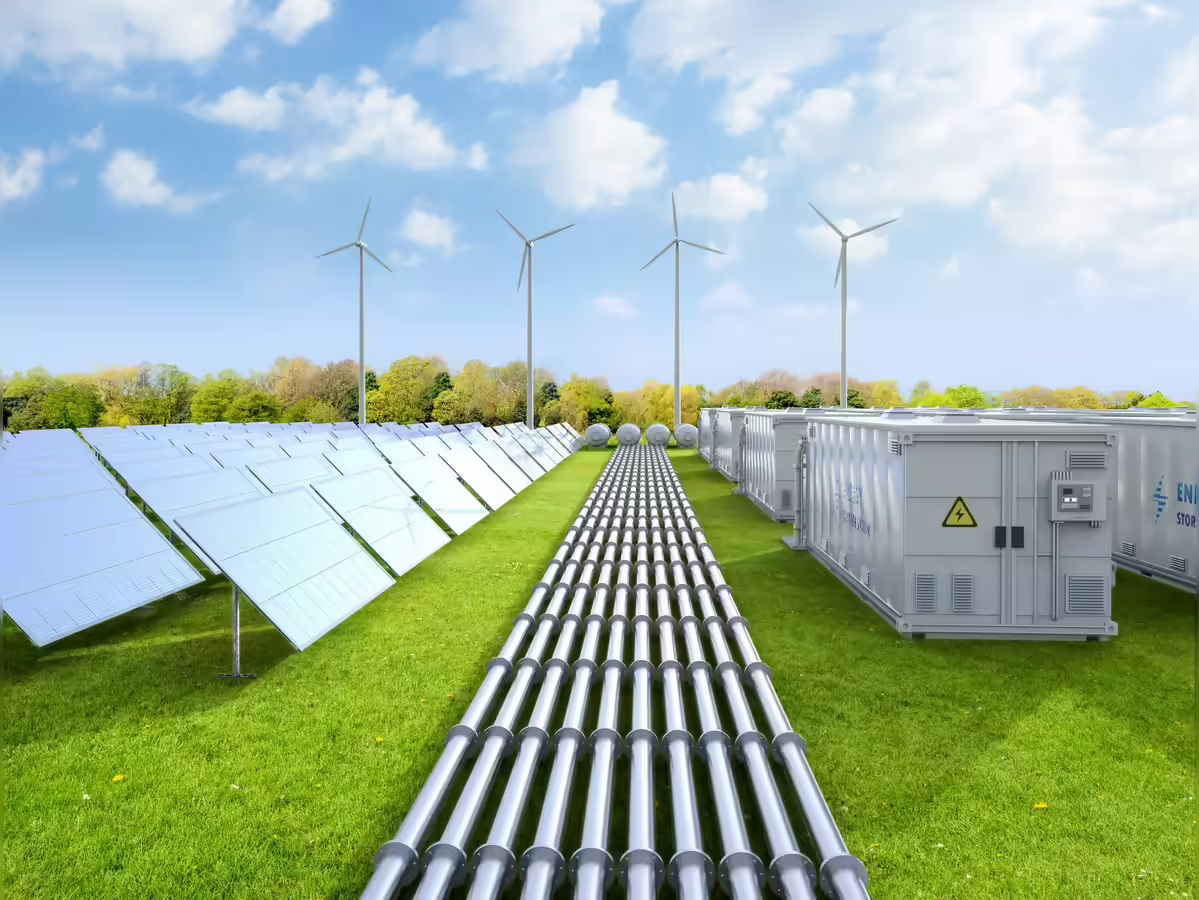
Battery Energy Storage Systems (BESS) and pumped hydro projects are expected to play a key role in achieving this target. These technologies allow excess renewable energy to be stored and dispatched when required, reducing dependence on fossil fuel-based backup generation. Urban planners and energy experts view the emphasis on storage as a critical evolution in infrastructure planning. While renewable capacity has expanded rapidly in recent years, the absence of adequate storage has limited its effectiveness. By mandating storage alongside generation, the state is moving towards a more resilient and flexible energy system.The policy also aligns with Maharashtra’s broader economic ambitions. With plans to attract significant investment into renewable and storage infrastructure, the initiative is expected to generate employment and support industrial growth, particularly in manufacturing and energy services.
However, scaling storage infrastructure presents its own challenges. High capital costs, land requirements for large projects, and integration with existing grid systems will require coordinated planning across multiple agencies. Experts note that regulatory clarity and financial incentives will be key to accelerating adoption.From a sustainability perspective, the move strengthens the state’s ability to reduce emissions while maintaining energy reliability. Storage systems can help smooth out fluctuations in renewable supply, enabling higher penetration of clean energy without compromising grid performance.The focus on energy storage also reflects a broader shift in how Indian states are approaching the energy transition. Rather than treating renewables as standalone capacity additions, there is increasing recognition of the need for integrated systems that combine generation, storage, and distribution.
As Maharashtra advances its policy rollout, the success of the storage mandate will depend on execution timelines and project viability. If implemented effectively, the model could offer a template for other states seeking to balance rapid urban growth with the demands of a low-carbon, resilient energy future.