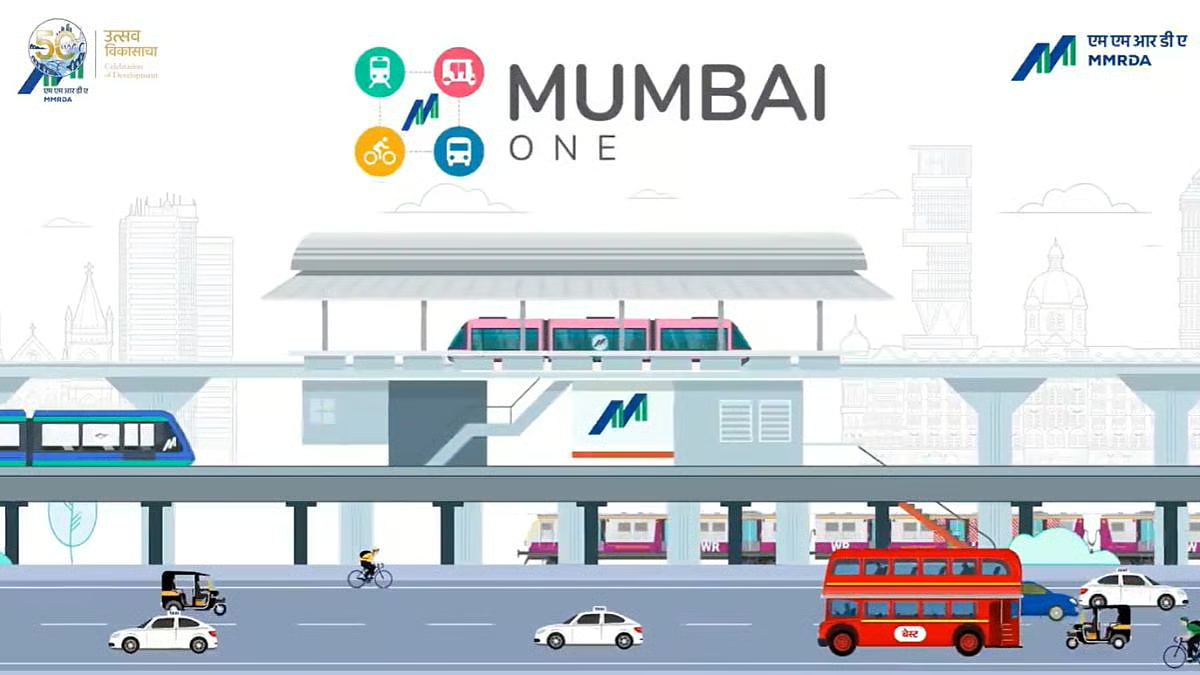
Maharashtra Drives Integrated Transit With Mumbai One
Maharashtra’s transport authorities have rolled out Mumbai One, an integrated digital mobility platform designed to unify public transport ticketing across the wider Mumbai Metropolitan Region (MMR). The initiative seeks to simplify commuter journeys across an expanding network of metros, buses, suburban rail and monorail services — a strategic digital infrastructure upgrade as the region scales up multi‑modal connectivity in tandem with rapid urban growth and dense commuter demand.
Developed by the Mumbai Metropolitan Region Development Authority (MMRDA), Mumbai One brings together 11 public transport operators under a single interface, allowing users to plan journeys and access services with a dynamic digital ticket. The app enables commuters to generate a single QR‑based ticket that covers entire trips involving multiple transport modes, reducing the friction of using separate tickets or multiple applications for interconnected services. For a megacity like Mumbai — where daily mobility patterns are shaped by sprawling suburbs, high commuter volumes and mixed transport ecosystems — an integrated ticketing solution can unlock significant efficiency gains. Urban transport planners see the app as a foundational step toward a more seamless travel experience that aligns with India’s broader “One Nation, One Mobility” vision, improving convenience for residents navigating complex travel chains within the metropolitan geography.
The inclusion of metro corridors, suburban rail lines and various municipal bus services addresses a long‑standing fragmentation in Mumbai’s transit systems. Historically, commuters needed to juggle multiple tickets and platforms — a particular challenge for those combining non‑motorised first‑ and last‑mile legs with core transit rides. By consolidating digital ticketing, Mumbai One supports operational integration that urban designers and traffic strategists view as essential for equitable and user‑centric mobility. Digital integration also bolsters regional planning goals that emphasise reduced congestion, lower carbon emissions and optimised use of public transport. Unified digital platforms can increase ridership on sustainable modes by lowering barriers to entry and reducing queues at physical counters — efficiency gains that are especially impactful during peak travel hours and major events.
While adoption has begun positively, with rapid early registrations and usage spikes, observers note that iterative refinements will be critical. Tech‑enabled mobility experiences require robust real‑time data, intuitive interfaces and strong interoperability with existing transport infrastructure. Integrating additional features such as multi‑day passes, advanced journey optimisation, or inclusive accessibility tools could further expand the app’s value for diverse commuter groups.
Maharashtra’s focus on integrated mobility reflects broader priorities in urban governance: using digital innovation to anchor physical infrastructure, enhance service quality and support sustainable growth. As Mumbai’s transportation network continues to scale — with new metro corridors, suburban rail enhancements and expanded bus services on the horizon — tools like Mumbai One will play a central role in operationalising a multi‑layered public transport ecosystem that serves both economic activity and quality‑of‑life goals.