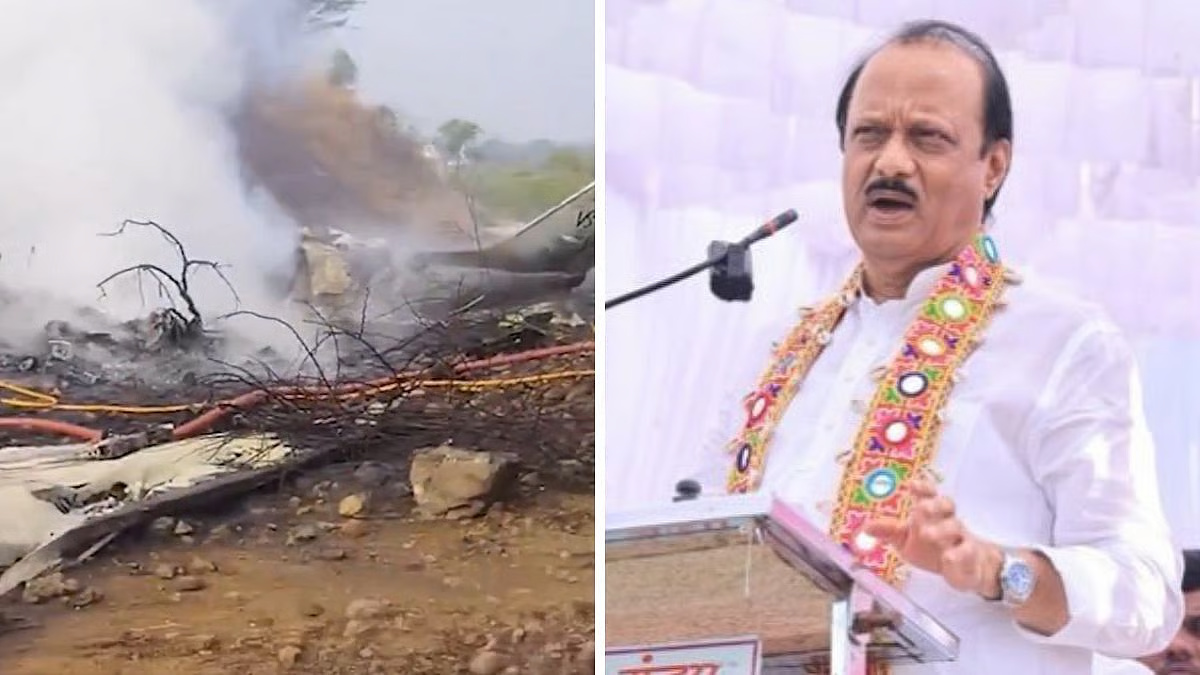
A private aircraft carrying Maharashtra Deputy Chief Minister Ajit Pawar crashed during landing at Baramati in Pune district on Wednesday morning, killing all five people on board. The fatal incident has triggered immediate administrative disruption in the state while raising broader questions around regional aviation safety, infrastructure preparedness, and the risks associated with high-frequency air travel to smaller urban centres.
Aviation regulators confirmed that the aircraft, a mid-size business jet operated by a Delhi-based charter company, went down while approaching the Baramati airstrip. Along with Ajit Pawar, the passengers included security personnel, support staff, and two flight crew members. Emergency services and district authorities reached the site shortly after the crash, but no survivors were reported. The Directorate General of Civil Aviation has ordered a detailed investigation into the Baramati plane crash, focusing on technical performance, landing conditions, runway infrastructure, and operational compliance. Officials familiar with the matter indicated that weather, airstrip limitations, and aircraft systems will all be examined as part of the probe.
The death of Ajit Pawar — one of Maharashtra’s most influential political figures — has immediate implications for governance continuity, particularly across portfolios linked to finance, infrastructure investment, and regional development. Scheduled policy reviews, urban funding decisions, and inter-agency coordination meetings are expected to face short-term delays as administrative processes adjust. Urban development experts say the Baramati plane crash also highlights a structural challenge facing India’s rapidly expanding regional aviation network. As political leaders and business executives increasingly rely on chartered aircraft to access emerging growth centres, many smaller airstrips are being used beyond their originally intended operational intensity, often without parallel upgrades in navigation systems, safety buffers, or emergency response infrastructure.
From a city-planning perspective, the incident underscores the importance of integrating aviation facilities into broader land-use and resilience strategies. Encroachments near airfields, inadequate approach lighting, and limited firefighting capacity remain persistent concerns across several tier-two and tier-three cities, particularly those witnessing accelerated real estate and industrial development. State authorities have initiated formal protocols following the loss of Ajit Pawar, while reaffirming that institutional governance mechanisms remain in place. Market observers note that policy continuity, especially in infrastructure financing and urban development programmes, will be closely watched in the coming weeks.
As investigations progress, the tragedy is expected to intensify scrutiny on how regional connectivity, safety regulation, and urban growth intersect — and whether India’s smaller cities are adequately prepared to support the mobility demands of modern governance and economic expansion.
Maharashtra Deputy Chief Minister Ajit Pawar Dies in Baramati Air Crash