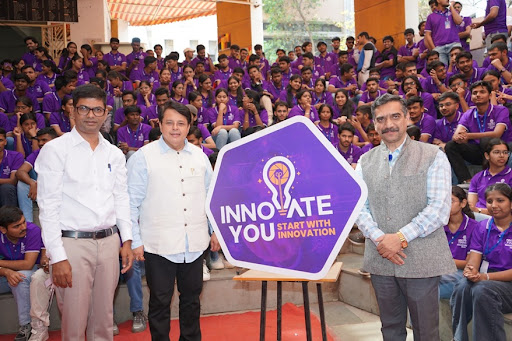
Maharashtra is preparing to introduce innovation laboratories across arts, commerce and science colleges, signalling a structural shift in how undergraduate education connects with research, entrepreneurship and the state’s urban economy. The initiative aims to embed applied learning into institutions that have historically operated outside formal research ecosystems, potentially reshaping workforce readiness across tier-1 and tier-2 cities.
Senior education officials confirmed that a statewide network of innovation labs will be developed within affiliated colleges to cultivate research aptitude at the undergraduate level. Unlike traditional university-centric research models, this approach decentralises experimentation and problem-solving capacity into district and semi-urban campuses.The move comes as Maharashtra’s urban centres — from Pune and Mumbai to Nashik and Nagpur — expand their knowledge economies in technology, manufacturing and services. While engineering institutions have long benefited from incubation centres and industry partnerships, arts and commerce colleges often remain disconnected from structured innovation pipelines. Policymakers believe bridging this gap could unlock untapped intellectual capital and diversify the state’s startup base.Education planners indicate that the innovation labs will focus on interdisciplinary problem-solving, encouraging students to work on local urban challenges such as mobility, waste management, digital governance and climate resilience. By embedding research culture early, the programme seeks to cultivate analytical thinking rather than rote learning — a shift aligned with broader reforms under the National Education Policy framework.
Urban economists note that democratising access to research infrastructure could significantly influence Maharashtra’s labour market. “When research exposure begins at the undergraduate level, it strengthens employability and entrepreneurial confidence,” said a higher-education policy analyst. “This is especially relevant for students in smaller cities where exposure to innovation ecosystems is limited.”The economic implications extend beyond classrooms. Colleges often anchor neighbourhood economies in smaller towns. Introducing innovation labs may stimulate micro-enterprise development, encourage collaboration with local industries and improve graduate retention within regional cities — easing migration pressures on already dense metropolitan cores.There is also a social dimension. By bringing research facilities into arts and commerce streams, the state is widening participation in innovation beyond STEM-dominant pathways. This inclusive model could enable first-generation learners and women students — who are often overrepresented in non-engineering disciplines — to access structured research mentorship and funding opportunities.
However, experts caution that infrastructure alone will not guarantee impact. Faculty training, industry linkages and long-term funding commitments will determine whether these labs become dynamic research hubs or underutilised spaces. Transparent evaluation metrics and partnerships with municipal bodies could further strengthen real-world application.If implemented effectively, the Maharashtra innovation labs initiative may redefine how undergraduate education contributes to urban development — positioning colleges not just as teaching centres, but as distributed engines of economic resilience and civic problem-solving.