

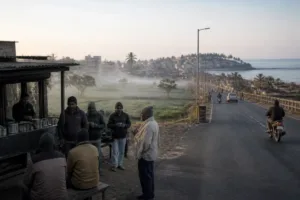
Maharashtra is seeing colder mornings and a widening contrast between night-time chill and afternoon heat, with Dhule recording the state’s lowest minimum temperature at 10.4°C and Ratnagiri registering the highest maximum at 36.1°C. The India Meteorological Department has forecast a further fall in minimum temperatures on Sunday, November 15.
The 10.4°C reading was recorded at the Agricultural College station in Dhule during the 24 hours ending Saturday morning. The minimum temperature at the Marathwada Agricultural University station in Parbhani was 10.5°C, while the Wheat Research Centre at Niphad recorded 11.5°C. Jeur recorded 12°C, and temperatures in Gondia and Yavatmal fell below 13°C.
Despite the cooler mornings, daytime conditions remained warm in several parts of the state. Ratnagiri in the Konkan region recorded the state’s highest maximum temperature at 36.1°C during the same 24-hour period. Maximum temperatures also exceeded 34°C in Dahanu, Ahilyanagar and Solapur.
The weather pattern has produced a marked difference between morning and afternoon conditions. Minimum temperatures have declined across parts of Maharashtra, while daytime temperatures remain above levels associated with sustained cold conditions. The result is a cold start to the day followed by strong sunshine and heat during the afternoon.
The temperature spread is significant for residents moving between different parts of the state. In northern and interior districts such as Dhule, Parbhani and Niphad, early-morning exposure to cold has increased as minimum temperatures have approached or fallen below 12°C. In coastal Ratnagiri, however, the maximum temperature remained substantially higher, highlighting the continuing influence of regional geography on Maharashtra’s weather.
The department has also pointed to an evolving weather system over the Bay of Bengal. A marked low-pressure area was active over the southeast Bay of Bengal on Saturday, and its intensity was increasing. The system is showing signs of developing into a cyclone over the central Bay of Bengal on Monday, November 16.
A cyclonic circulation has formed over southern Tamil Nadu and adjoining areas at an altitude of 3.1 kilometres above mean sea level. The department’s immediate forecast for Maharashtra is that the decline in minimum temperatures will continue on Sunday. The next weather assessment will indicate how the Bay of Bengal system affects conditions over the wider region.