


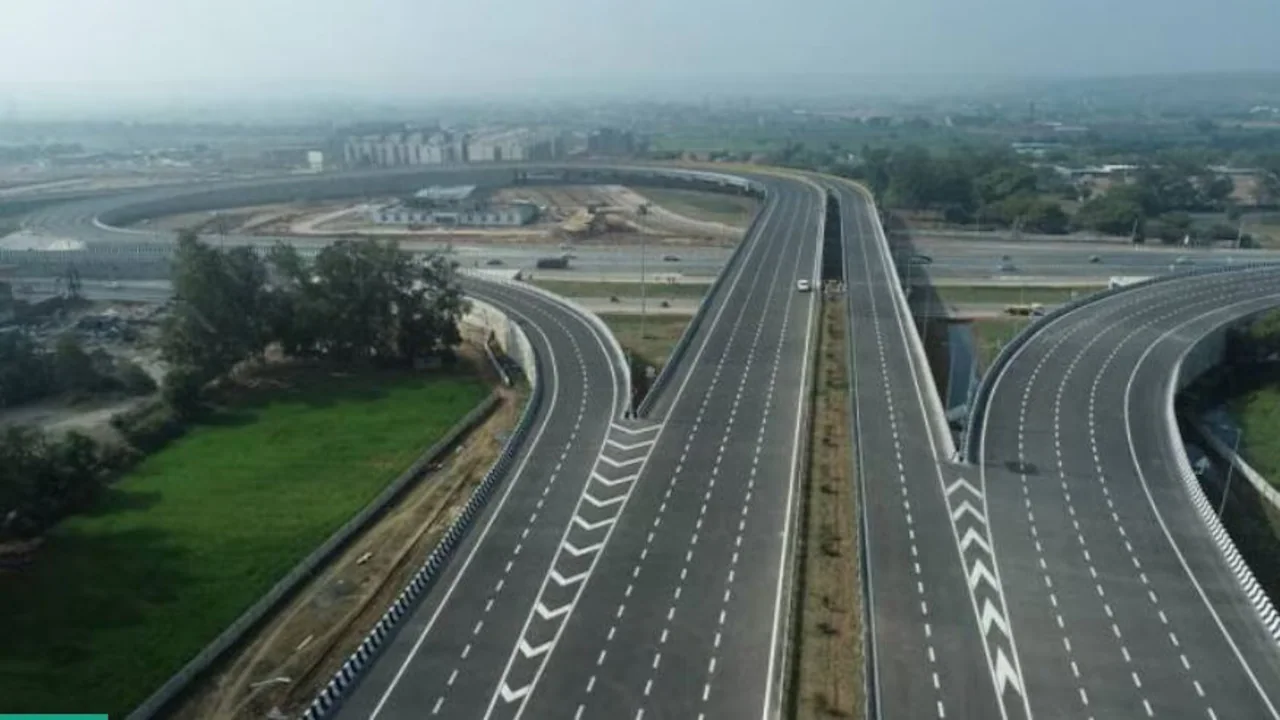
The Maharashtra government has cleared the ambitious Shaktipeeth Expressway, a ₹20,000 crore project designed to link Nagpur with Goa in just eight hours while connecting major pilgrimage sites across the state. Yet, as surveys begin, strong resistance from farmers in Kolhapur threatens to stall one of India’s largest expressway plans.
Planned as an 802-kilometre access-controlled greenfield corridor, the expressway is expected to transform both travel and tourism, cutting the current 18-hour journey between Nagpur and Goa by more than half. The project, seen as both a transport and cultural lifeline, will pass through 12 districts and touch nearly 370 villages, requiring the acquisition of over 7,500 hectares of land.
Also Watch: An Exclusive Interview with Sanjeev Jaiswal (IAS), CEO MHADA
The financial architecture of the plan is already in place, with the Housing and Urban Development Corporation approving ₹12,000 crore for land procurement. The Maharashtra State Road Development Corporation (MSRDC), which is executing the project, has been tasked with balancing infrastructure growth with regional sensitivities.However, Kolhapur district has emerged as the most difficult stretch of the expressway.Farmers argue that fertile farmlands are being unfairly acquired, threatening both livelihoods and the local agrarian economy. Agricultural belts in Shirol, Karveer, Hatkanangle, Kagal and Ajra are at the heart of this dispute, with protests gaining momentum and political support lending the movement more weight.
According to officials, land surveys and acquisition work in Kolhapur have been temporarily halted as alternative routes are being studied. While the final alignment elsewhere in the state has been confirmed, Kolhapur’s resistance is seen as a major roadblock. Experts note that unless consensus is achieved, the project’s timeline could be significantly delayed.Beyond connectivity, the government has positioned the Shaktipeeth Expressway as an eco-tourism driver, aiming to provide smoother access to revered shrines across Maharashtra. Yet, environmentalists and policy analysts warn that the large-scale diversion of fertile agricultural land could undercut sustainability goals and worsen ecological stress in regions already vulnerable to climate change.
The expressway represents a broader dilemma in infrastructure planning: balancing growth with equity. While the project promises faster travel, economic growth, and cultural tourism, the cost of displacing farming communities raises critical questions about sustainability and long-term social equity.For now, the Shaktipeeth Expressway is a symbol of both promise and protest. Whether Maharashtra can achieve a balance between infrastructure ambition and agricultural protection will decide not only the fate of the corridor but also the state’s credibility in inclusive development planning.
