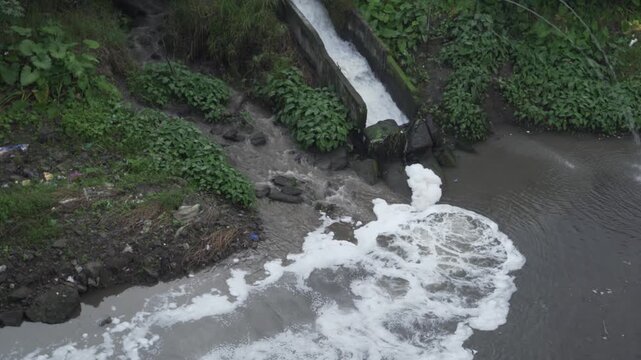
Maharashtra City Grapples With Untreated Sewage Into Godavari
Environmental advocates have raised serious alarms over the discharge of untreated sewage into the Godavari River within city limits, highlighting persistent infrastructure gaps in wastewater management that pose risks to public health, river ecology and downstream communities. The issue has ignited fresh debates around Nashik’s readiness to provide climate-resilient sanitation systems amid rapid urban expansion and changing land-use patterns.
Local activists drew attention to multiple discharge points along the Godavari’s urban stretch, where flows of blackwater and greywater are reportedly entering the river without adequate treatment. Residents living along the riverbanks say they have observed visible effluent flowing into the waterway, particularly during early morning and low-flow conditions, raising concerns about odour, water quality deterioration and threats to aquatic ecosystems.Civic officials acknowledge that Nashik’s capacity to process sewage has lagged behind its population growth. Although the city has invested in treatment plants, network coverage remains uneven, with peripheral neighbourhoods and informal settlements still relying on septic systems or direct discharge lines that bypass treatment units. The mismatch between generation and treatment capacity is typical of many fast-growing Indian cities, where ageing infrastructure and funding constraints compound operational shortfalls.
“The Godavari is not just a river; it’s central to the cultural and economic life of our region,” said an environmental campaigner. “When untreated waste enters it, we jeopardise not only biodiversity but also the health and livelihoods of communities downstream who depend on these waters for irrigation, fishing and daily use.” Independent water quality assessments in similar contexts have linked untreated sewage to elevated levels of biological oxygen demand (BOD), dissolved solids and pathogenic contamination — markers associated with ecological stress and human health risks.Urban planners say that solving this challenge requires more than ad-hoc interventions. It demands a systems-level upgrade of sewer networks, expansion of decentralised treatment facilities and stringent enforcement of discharge norms. Integrating green infrastructure — such as constructed wetlands and buffer zones — could provide additional filtration before wastewater reaches the river. These measures align with global best practices in river protection for growing cities.
Municipal authorities maintain that plans are underway to enhance treatment capacity and close gaps in the sewerage network. However, public records suggest that progress has been incremental, with some projects delayed due to land acquisition hurdles and funding approvals. A senior civic official highlighted ongoing collaborations with state and central agencies to accelerate infrastructure augmentation, including efforts to secure larger budgetary allocations and technical support.Environmental groups argue that Nashik’s riverfront — already a magnet for tourism, rituals and informal settlements — must be treated as an asset in need of proactive stewardship. Untreated sewage not only degrades water quality but can strain civic services as pollutants reach drinking water intakes and agricultural fields. The cumulative impact could widen health disparities and increase treatment costs for communities reliant on river water.
Experts stress the importance of robust monitoring and public transparency. Regular, real-time water quality data — made accessible to citizens — could help track progress and hold institutions accountable. Community participation in maintenance of sewage infrastructure, combined with enforcement of septic tank regulations, can also reduce instances of direct discharge.
As Nashik continues its urban journey, ensuring that sanitation infrastructure keeps pace with demographic and economic shifts will be crucial. Protecting the Godavari from untreated inflows is not merely an environmental priority but a test of governance, planning coherence and equitable urban development.