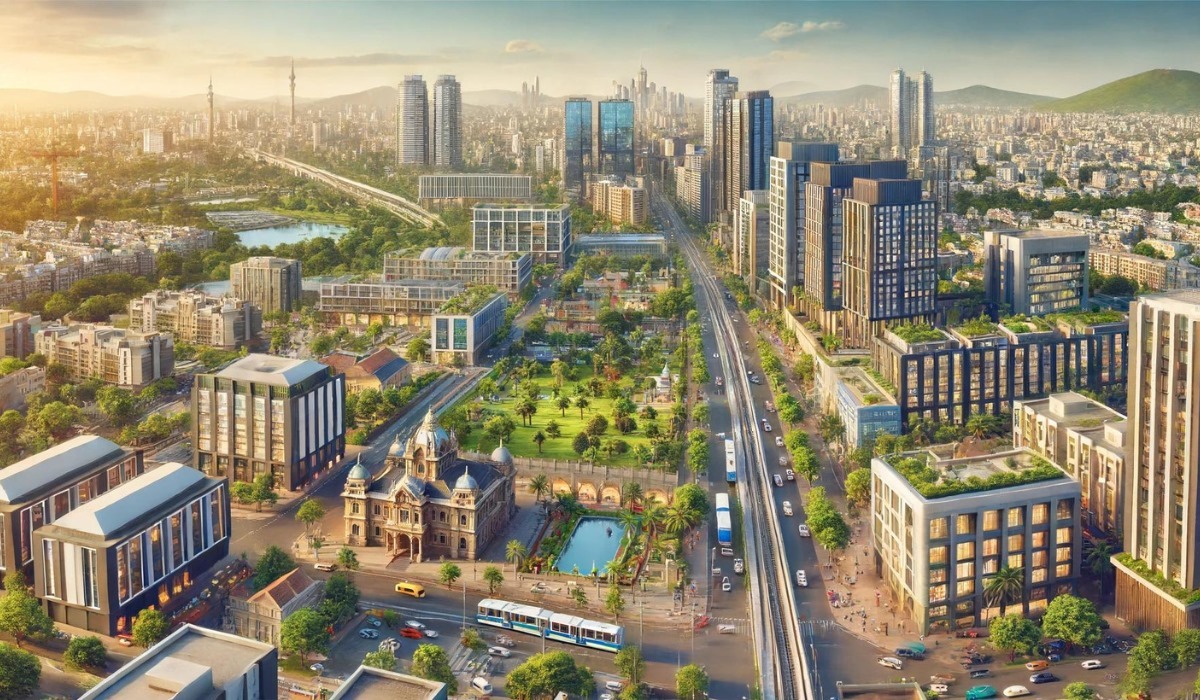
Maharashtra stands at the cusp of a new growth trajectory as the Union Budget 2026–27 commits nearly ₹1 lakh crore in anticipated funds that could reshape the state’s urban fabric, infrastructure networks and employment landscape. This infusion of capital aims to accelerate planned urbanisation, improve intercity connectivity and support tier-2 and tier-3 city expansion — with implications for real estate markets, labour demand and inclusive city growth.
Chief Minister-designate officials have highlighted that Maharashtra’s share of central taxes is set at about ₹98,306 crore, complemented by a ₹12,355 crore allocation for state-specific projects. These figures, while preliminary, suggest a deliberate tilt towards growth sectors such as transport, mobility and economic clusters in urban hubs.The budget’s infrastructure spotlight — with a ₹12 lakh crore national capex envelope — prioritises high-impact corridors and metropolitan mobility solutions that cut across the Mumbai metropolitan region, Pune and Nagpur. For example, sizeable funding is earmarked for the Mumbai-Ahmedabad corridor, metro extensions and intelligent transport systems, indicating a strategic push to unlock productivity and reduce urban congestion.
Beyond the megacity axis, the budget introduces Nagpur as one of three designated “Growth Hubs” in the state, with a committed ₹5,000 crore over five years aimed at bolstering industrial capacity, urban amenities and investment appeal. This move aligns with broader efforts to decentralise economic activity from core metros and cultivate diversified engines of growth in central India.Urban economists and planners note that these allocations could catalyse job creation across construction, services, logistics and digital sectors, especially where infrastructure upgrades intersect with business ecosystem expansion. In turn, such shifts can create multiplier effects in housing demand, commercial real estate and local entrepreneurship, strengthening medium-term urban prosperity.
However, the allocations also raise questions about balanced territorial development and equitable outcomes. Rapid infrastructure spending often favours large projects and metropolitan scales, potentially sidelining peripheral towns and rural nodes unless complementary policies address social inclusion and climate resilience. For residents and businesses, improved connectivity and new growth hubs can ease historical bottlenecks in labour mobility and economic opportunity — but realising these benefits will require integrated planning between central, state and local bodies. Aligning infrastructure investment with affordable housing strategies, green urban design and skills training will be crucial to ensure that jobs created are both sustainable and accessible. (Analytical context)
The state’s real estate sector could see renewed momentum as developers and investors recalibrate their strategies toward emerging urban corridors and secondary cities. With planned high-speed corridors and mobility networks, catchment areas around Nagpur, Pune and peripheral districts may attract new demand for mixed-use developments and climate-resilient residential assets. As Maharashtra gears up to implement these budget provisions, the next critical phase will involve translating allocations into actionable projects — particularly those that enhance inclusive growth, strengthen climate adaptation and expand economic opportunities beyond traditional urban cores.