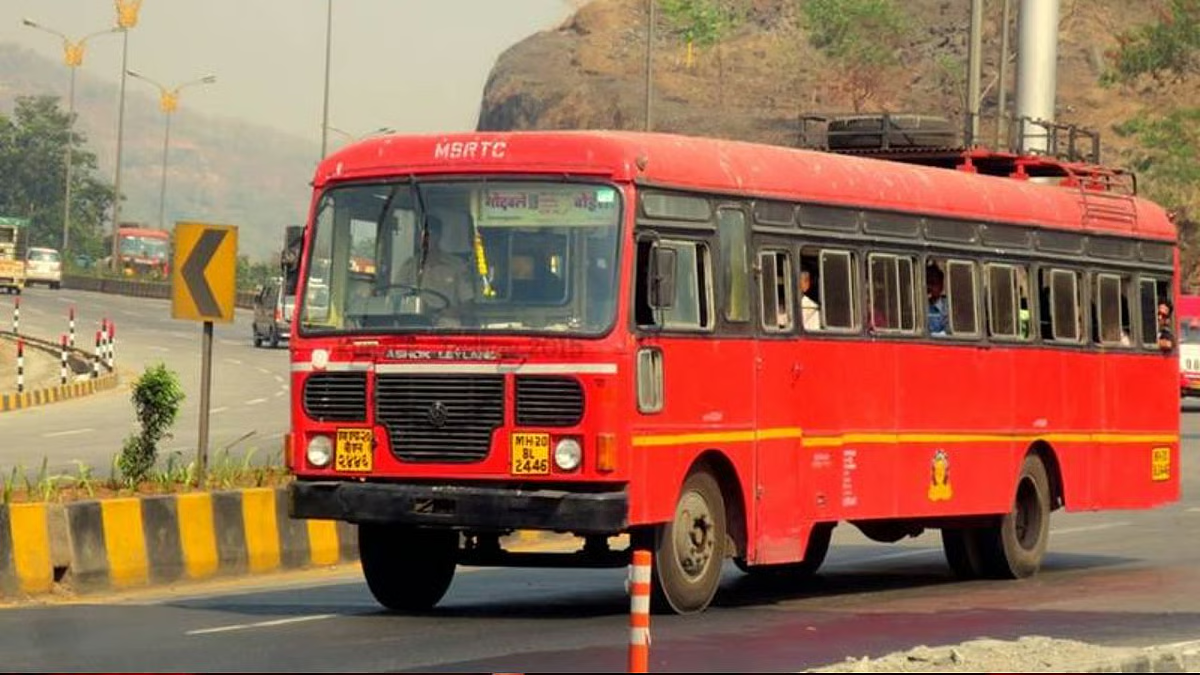
Maharashtra Boosts Public Transport With 800 New Buses
Maharashtra’s State Transport Corporation (ST) is poised to add 800 new self-owned modern buses to its fleet, a significant development in efforts to strengthen public mobility and enhance equitable access to transport across urban and rural corridors. The fleet expansion — nearing the final stage of procurement — signals a broader strategic shift towards improving state-level passenger services and phasing out old vehicles that have long shaped commuter experiences across the region.
The move comes as part of a larger initiative by the Maharashtra government to modernise its public transport infrastructure and reduce reliance on ageing buses that have been criticised for sub-standard service and emissions. Officials indicate that the induction of these buses is expected shortly, pending final formalities, and reflects state efforts to respond to persistent demand for more reliable, comfortable and accessible transport options.For everyday commuters, particularly in densely populated urban centres such as Pune and the wider Mumbai Metropolitan Region (MMR), the additional buses could ease peak-hour crowding and expand route coverage where demand has outpaced fleet capacity. Transport analysts note that increasing the number of self-owned buses, as opposed to contracting services, can strengthen operational control and support long-term service planning tailored to demographic and mobility patterns.
However, the expansion faces structural challenges. A shortage of drivers and conductors remains a pressing constraint, underlining the need for parallel investments in human capital to match fleet augmentation. Without adequate recruitment and training, service improvement may be slower than anticipated, industry experts caution.Beyond sheer numbers, Maharashtra’s transport strategy encompasses modernisation efforts that go further than basic vehicle replacement. Plans in recent years have included integrating advanced technologies into the fleet, from safety-enhancing systems on new buses to proposals for AI-enabled tracking and passenger support — reflecting an ongoing pivot to smarter, more resilient transit systems.
The decision to prioritise self-owned buses also aligns with broader environmental and climate goals. State authorities have previously announced large-scale additions of electric buses and initiatives to convert diesel fleets to cleaner alternatives like LNG — moves that dovetail with Maharashtra’s ambition to reduce transport emissions.Yet the integration of additional buses into everyday service will require careful planning. Urban mobility specialists stress the importance of complementary infrastructure, such as dedicated bus lanes, passenger shelters, digital scheduling systems and last-mile connectivity, to ensure that fleet expansion translates into tangible commuter gains. Without these enablers, new buses risk facing the same operational bottlenecks that have hampered service quality in the past.
The expansion also carries socio-economic implications beyond transport. Reliable public buses are a lifeline for low-income residents, students and workers who depend on them for daily access to education, jobs and markets. Increasing the fleet’s modern capacity can help reduce dependence on private vehicles, support traffic decongestion and improve air quality — outcomes closely tied to both equitable urban development and sustainable city objectives.
As Maharashtra moves closer to deploying the new buses, the emphasis must now shift from procurement to execution — ensuring that vehicles are staffed, routes optimised and services integrated within broader mobility frameworks. Only then can the promise of improved public transport be fully realised for the millions who rely on it daily.