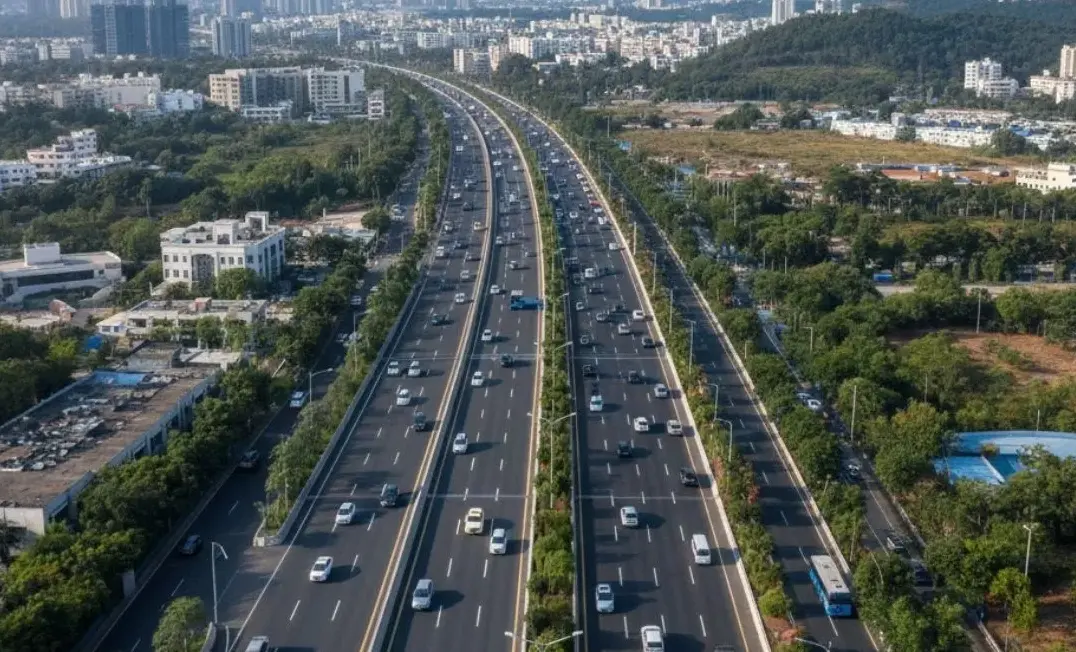
Maharashtra is embarking on an unprecedented road infrastructure expansion, with projects valued at ₹1.5 lakh crore approved to enhance connectivity, reduce travel times, and strengthen the state’s economic backbone. The investment spans highways, expressways, and urban mobility corridors, marking one of the largest transport development pushes in the state’s history. Officials indicate the initiative will improve logistics efficiency, support industrial growth, and provide a safer and faster commuter experience.
A key component is the Pune–Chhatrapati Sambhajinagar greenfield expressway, allocated ₹16,318 crore. The first phase, estimated at ₹2,000 crore, will incorporate multiple flyovers and interchanges designed to alleviate congestion and streamline traffic flow. An official highlighted that the corridor could cut travel time between Pune and Sambhajinagar to around two hours and accelerate Pune–Nagpur journeys to six hours, significantly saving fuel and operational costs for freight and passenger vehicles.
Urban mobility is a core focus. The Pune Metropolitan Region will see several elevated road projects, including the Talegaon–Chakan–Shikrapur stretch, aimed at reducing bottlenecks within the city. An urban planner noted that such corridors can simultaneously improve public transport reliability, reduce emissions by easing traffic jams, and enhance overall city liveability. Additional highway projects are also planned. The Nashik Phata–Khed corridor, with an estimated cost of ₹7,800 crore, is being developed in phases to enhance freight connectivity between industrial zones and improve commuter safety. Similarly, the Alandi Phata–Khed stretch, budgeted at ₹3,398 crore, seeks to reduce urban congestion and facilitate smoother regional transport.
Industry experts suggest that these initiatives will catalyse economic development beyond direct travel improvements. Enhanced highways can attract private investment, expand tourism opportunities, and generate employment both during construction and operational phases. Officials further emphasised the long-term sustainability benefits, citing that carefully designed corridors can reduce fuel consumption, encourage more efficient logistics, and integrate with climate-conscious urban planning.Overall, Maharashtra’s infrastructure programme demonstrates a comprehensive approach to modernising transport while embedding economic, social, and environmental benefits. By addressing longstanding congestion issues and regional disparities, the projects aim to create a resilient transport network capable of supporting sustainable urban growth. Observers note that successful execution will not only improve quality of life for commuters but also position Maharashtra as a leader in inclusive, future-ready infrastructure.
Maharashtra Approves Rs 1.5 Lakh Crore Roads Highways Expressways Projects Boost Economy