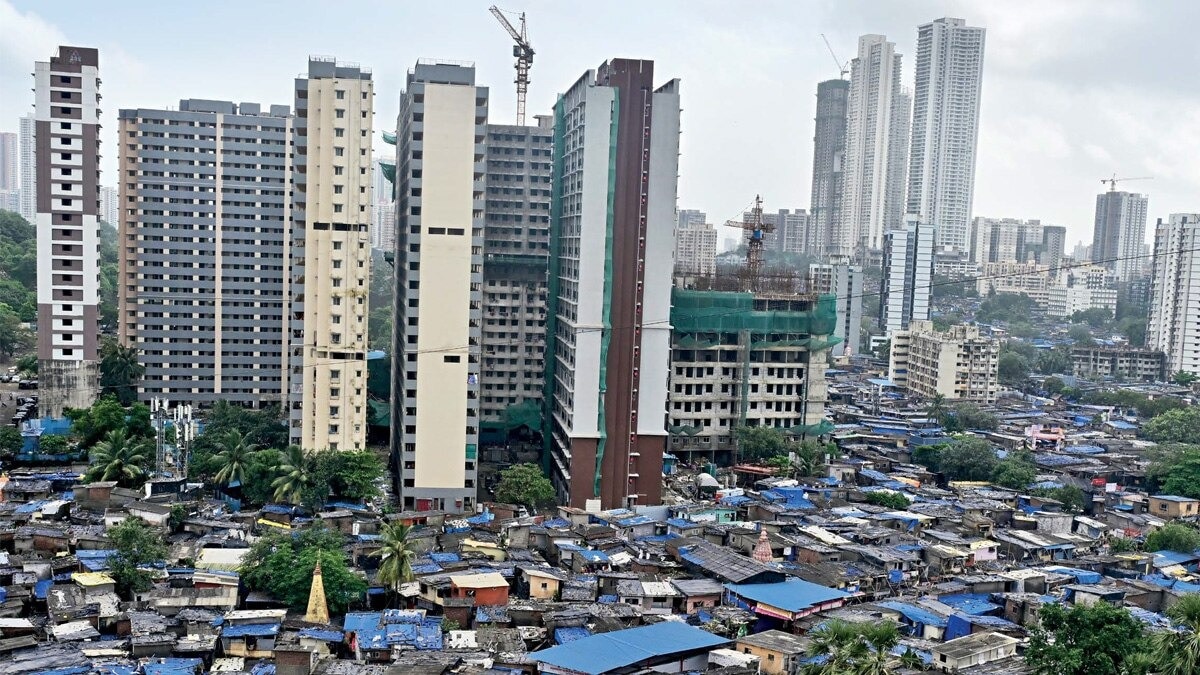
Mumbai’s efforts to modernise its built environment have taken a decisive turn with the state government approving a new framework that enables large-scale cluster redevelopment of slum-dominated areas without seeking individual consent from eligible residents. The policy, aimed at reshaping the city’s most densely populated informal settlements, applies to contiguous land parcels of at least 50 acres and is expected to significantly accelerate Mumbai’s long-stalled rehabilitation pipeline.
According to the latest government resolution, the Slum Rehabilitation Authority will act as the nodal agency for the new model. Officials say the shift is intended to reduce procedural delays that have historically slowed redevelopment proposals involving fragmented ownership and complex consent requirements. Under the revised framework, any land parcel with over half its area occupied by slum structures can be taken up for redevelopment through a unified cluster approach. In a notable expansion from earlier policies, the state has allowed the inclusion of private, government, semi-government, and even central government land, subject to approval from the relevant authorities. Planners note that this provision may unlock some of the city’s most strategically located parcels, including old chawls, hazardous buildings, rental tenements, and cessed properties that have long awaited structural upgrades.
The policy also covers areas within coastal regulation zones, provided the rehabilitation components comply with CRZ guidelines and the Development Control and Promotion Regulations 2034. This widens the possibility of in-situ rehousing in some of Mumbai’s most environmentally vulnerable stretches, though officials stress that environmental safeguards will remain central to project evaluation. Under the procurement model, public agencies may appoint private developers through public-private partnerships or open tendering. Developers who already control at least 40 per cent of a proposed cluster will receive priority to execute the project. However, if multi-storey buildings exist within the redevelopment area, developers must secure the necessary development rights to integrate them into the plan.
A high-level committee headed by the state’s housing leadership will oversee all proposals. Members will include senior officials from the Housing Department, the Brihanmumbai Municipal Corporation, the Slum Rehabilitation Authority, and representatives of the respective land-owning bodies. This centralised scrutiny is intended to ensure that redevelopment proposals meet planning norms while balancing rehabilitation needs and environmental considerations. Urban development experts say the policy could reshape the way Mumbai approaches slum rehabilitation, enabling the creation of modern, resilient neighbourhoods with better open spaces, social amenities, and mobility access. They also caution that as projects scale up, issues of equitable rehabilitation, gender-sensitive design, and climate resilience must remain embedded in implementation.
The government maintains that the policy will help deliver safer housing and renewed infrastructure for thousands of families, while unlocking land for long-term sustainable development. Its impact will depend on transparent execution, strong community engagement, and the ability to align redevelopment with Mumbai’s broader vision of an inclusive, low-carbon urban future.
Maharashtra Approves 50 Acre Cluster Redevelopment Plan To Transform Major Mumbai Slums