


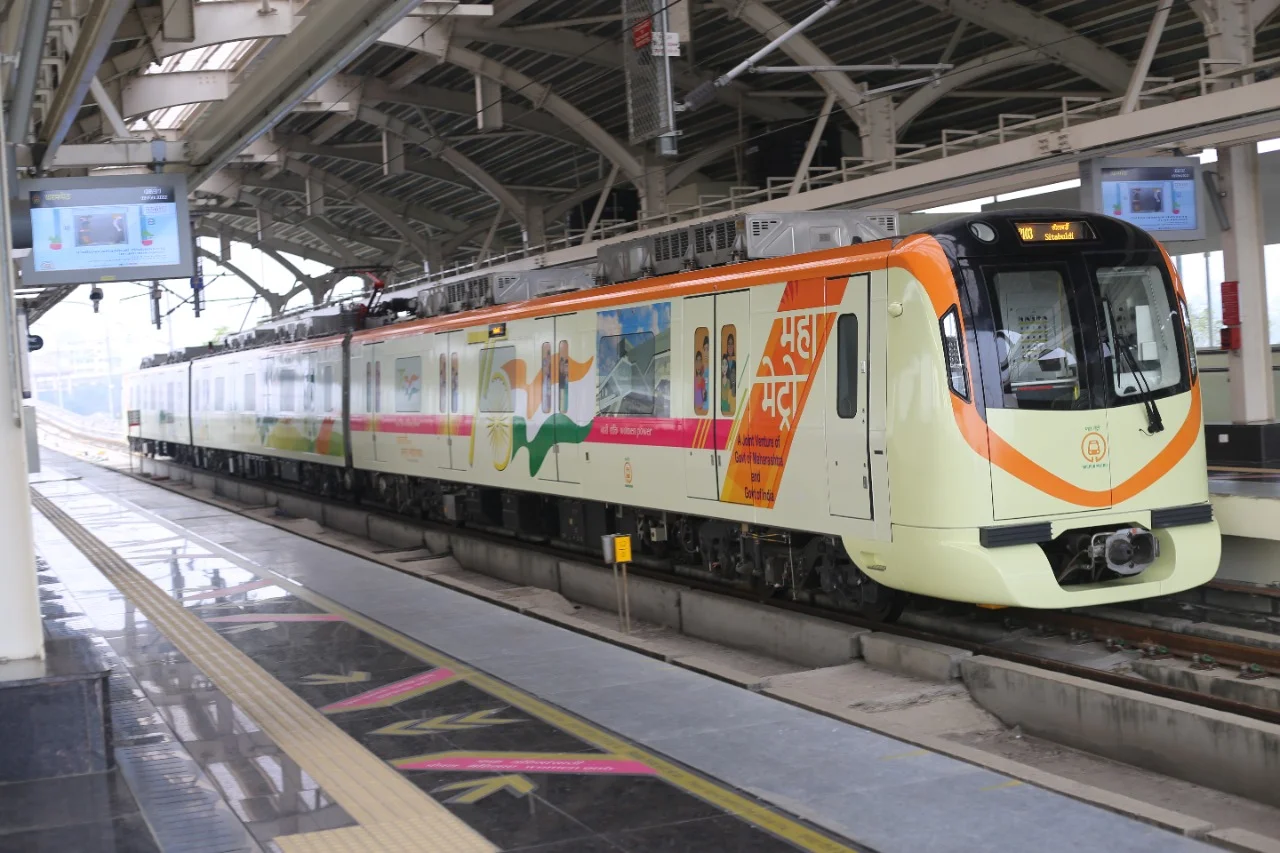
Nagpur Metro has initiated the process of preparing a Detailed Project Report (DPR) for the proposed 1.3-kilometre Kamptee extension, marking a crucial step towards expanding the city’s metro network into its northern fringes. The extension, directed by the Maharashtra government, is expected to cost around ₹300 crore and will add another vital link to Nagpur’s Phase II development.
Officials confirmed that the DPR preparation has been put on a fast track and will be submitted to the state government for review before being presented to the chief secretary and senior administrators. Once cleared at the state level, the proposal will move to the Union Ministry of Housing and Urban Affairs for central approval. The planned stretch will extend beyond Automotive Square up to Kanhan village, significantly improving accessibility for thousands of residents in northern Nagpur and adjoining areas. The project includes a major engineering feature—a 500-metre steel viaduct over the Kanhan river—which is expected to become a landmark in the city’s transport infrastructure.
With this expansion, the Kamptee corridor will grow from 12 stations to 13, while the overall network length of Phase II will exceed 45 kilometres. Experts note that such incremental additions play a vital role in boosting last-mile connectivity, reducing traffic congestion, and nudging daily commuters towards sustainable urban mobility solutions. The DPR for Phase II of Nagpur Metro was earlier prepared by RITES, which also assisted in developing the city’s Comprehensive Mobility Plan. Industry watchers suggest that a similar partnership could be forged for the Kanhan extension, ensuring consistency in planning and execution.
Civil works for the broader Phase II network are advancing steadily, with the Lok Vihar station targeted for commissioning by November 2025. More than 90% of land acquisition has already been completed, easing one of the biggest hurdles in large-scale infrastructure projects. Transport experts underline that metro extensions such as this are not merely about steel and concrete but about reshaping urban mobility patterns. In a city like Nagpur, where rapid population growth and expanding suburbs put pressure on roads, metro connectivity has emerged as a cleaner, low-carbon alternative. Officials emphasise that every kilometre of metro built today reduces the dependence on polluting private vehicles tomorrow.
For Nagpur, the Kamptee extension represents more than just a 1.3-kilometre line; it is about stitching together city and suburb, bridging mobility gaps, and setting the stage for a more sustainable, equitable, and future-ready transport ecosystem.
Also Read : Patna DM Approves Temple Relocation For Smooth Execution Of Metro And Road Works
