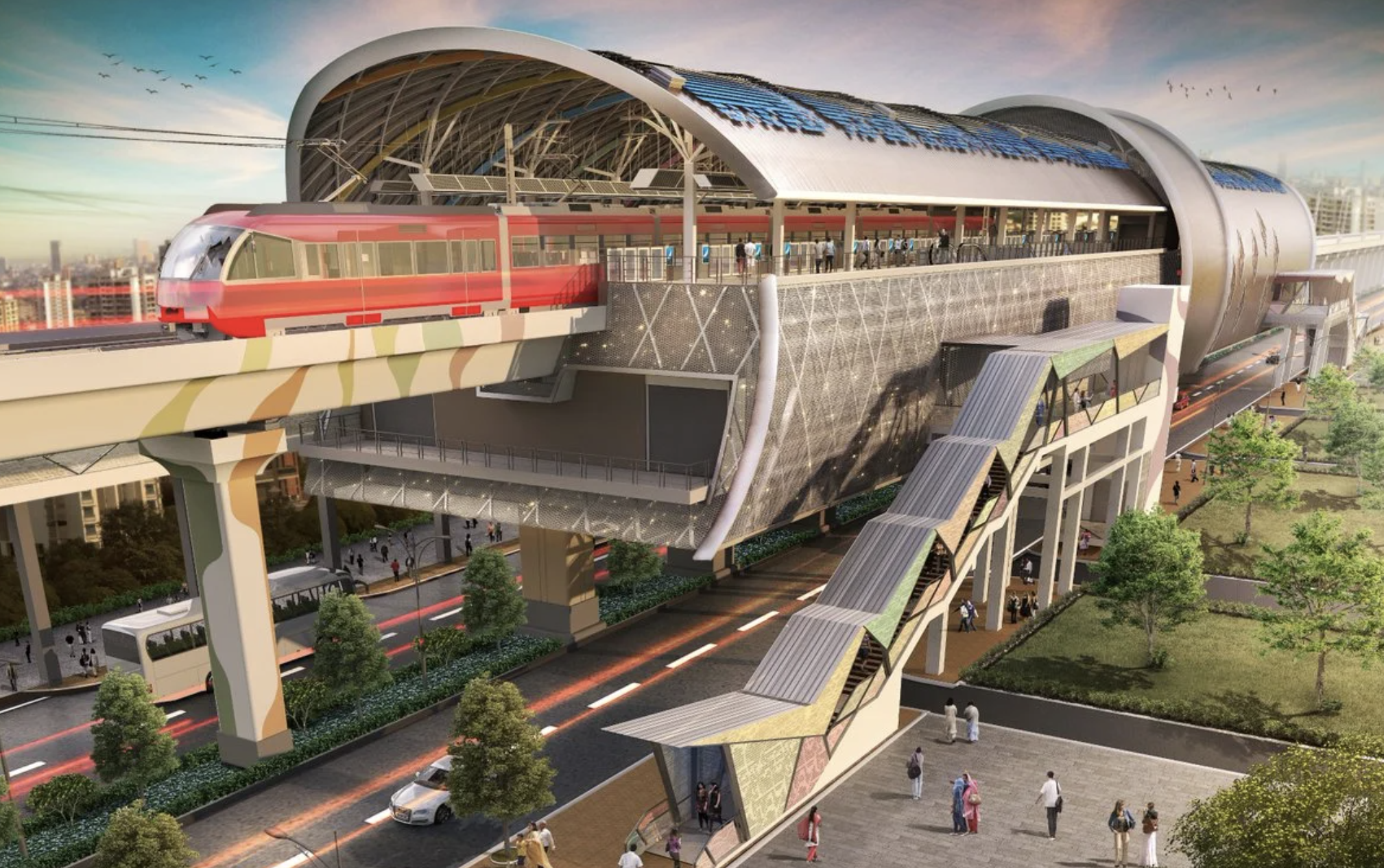
The next phase of Pune’s metro expansion has entered a critical planning stage, with the state-run metro authority inviting bids for detailed design consultancy services for Phase Two of the Pune Metro project. The move signals steady progress on two proposed corridors aimed at improving east–south connectivity and easing pressure on road-based transport in the city’s fast-growing peripheral zones.
The tender covers detailed design work for 14 elevated stations planned across two corridors—Hadapsar to Loni Kalbhor and Hadapsar to Saswad Road. Urban transport planners say the consultancy phase is foundational, as design decisions taken now will influence construction timelines, passenger accessibility, energy efficiency, and long-term operational costs. With Pune facing rising congestion, air pollution, and uneven transit access, the project is being closely watched by both citizens and the real estate market. According to tender documents, the consultancy assignment will run for 48 months from the date of the letter of acceptance. The scope includes comprehensive design services for stations along Line 4B and Line 4C, excluding viaduct design within station limits. Officials familiar with the planning process said the work will focus on structural design, station layouts, pedestrian integration, and systems coordination to ensure compatibility with the wider metro network.
The two corridors received statutory approval from the city’s civic body in early 2025, reflecting growing recognition that Pune’s urban expansion is no longer confined to its traditional core. The Hadapsar–Loni Kalbhor stretch spans over 11 km with 10 stations, while the Hadapsar–Saswad Road corridor covers around 5.5 km with four stations. Together, they are expected to serve emerging residential clusters, employment hubs, and peri-urban areas that currently rely heavily on private vehicles. Urban mobility experts note that extending high-capacity public transport into these zones could reshape travel behaviour, reduce commute times, and lower transport-related emissions. Elevated station design, they add, must balance construction efficiency with climate resilience, universal accessibility, and safe last-mile connections—particularly for women, elderly commuters, and informal workers.
The implementation of both corridors is proposed to be undertaken by the regional development authority, indicating a coordinated approach between metro planning and broader metropolitan growth strategies. This alignment is seen as crucial for integrating transit infrastructure with land use planning, affordable housing, and sustainable urban densification. As Pune continues to attract investment and population growth, the progress of Pune Metro Phase Two will be central to the city’s ability to scale without deepening inequality or environmental stress. The detailed design stage now underway will determine how effectively the new lines support a more inclusive, low-carbon, and people-first transport network in the years ahead.
Maha Metro Advances Pune Metro Phase Two Planning