


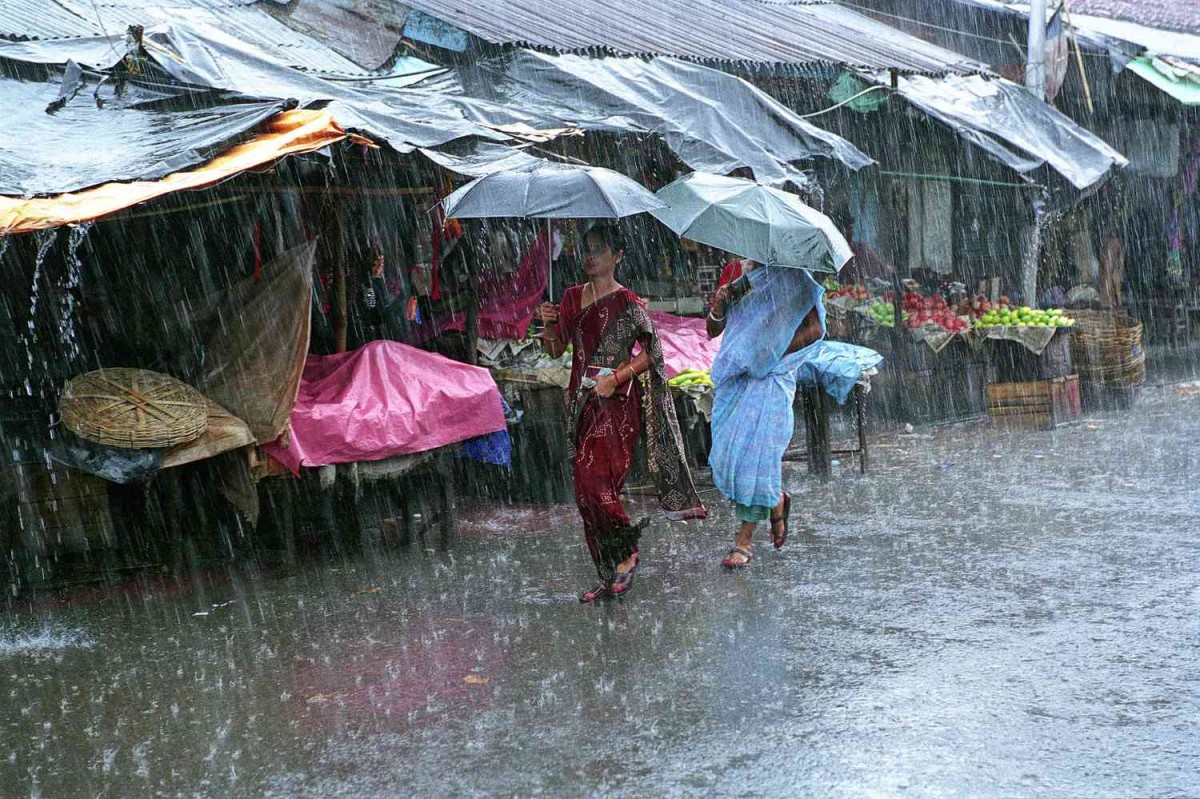
Madhya Pradesh state remained on high alert on Sunday, 17 August, after the weather department issued fresh warnings of heavy to extremely heavy rainfall across several districts till 19 August. Officials confirmed that Khargone, Khandwa, Burhanpur, Barwani, Dhar and surrounding regions are most at risk, with forecasts indicating rainfall of up to eight inches in some areas.
The Indian Meteorological Department (IMD) has categorised the impact levels into red, orange, and yellow alerts for different regions. On Sunday, very heavy showers were predicted in Khargone, Khandwa and Burhanpur, while neighbouring districts including Indore, Dhar, Jhabua, Alirajpur, Dewas, Harda, Betul and Narmadapuram were placed under heavy rainfall alerts. Bhopal, Ujjain and Gwalior were expected to receive lighter showers. By 18 August, the intensity of the downpour is forecast to peak, with a red alert in Barwani and Burhanpur as rainfall may cross the eight-inch mark. Orange alerts were issued for Khargone, Khandwa and Dhar, while several other districts including Ratlam, Seoni and Pandhurna were placed under yellow alerts.
The situation is expected to continue on 19 August, with heavy rainfall predicted in western and southern districts including Jhabua, Alirajpur, Dhar, Barwani, Khargone, Burhanpur, Betul, Seoni and Mandla. The remainder of the state is likely to see moderate showers with isolated thunderstorms. On Saturday, heavy rain in Barwani’s Rajpur area caused rivers and drains to overflow, sweeping away vehicles and damaging standing crops. Similar incidents of flooding and disruption were reported in Bhopal, Shajapur, Dhar and Seoni, where civic teams struggled to drain water from congested zones.
Weather experts attribute the rainfall to an active monsoon trough line extending from Jaisalmer to South Chhattisgarh via Kota, Guna and Betul, coupled with a low-pressure area and cyclonic circulation. A secondary trough is currently active in the southern belt of the state. In addition, a new low-pressure system is forming over the Bay of Bengal, expected to further intensify rainfall after 18 August. Authorities have urged residents to remain alert, particularly in low-lying and flood-prone zones. Disaster management teams have been deployed across vulnerable districts, while irrigation and power officials are monitoring the impact on dams, rivers and electricity supply. Emergency response units are on standby to mitigate disruptions in essential services.
For a state already grappling with challenges of rural flooding and crop loss, this spell of intense rainfall underscores the urgency of building climate-resilient infrastructure. Experts emphasise the importance of sustainable urban drainage systems, river embankments and eco-sensitive planning to withstand the mounting pressures of a changing monsoon cycle. As Madhya Pradesh prepares for three days of turbulent weather, citizen safety and uninterrupted public services remain the immediate priority, while long-term solutions will depend on sustainable and equitable planning.
Also Read : Mumbai faces heavy rains; waterlogging in Mahim, Thane, Sion, traffic jams, high tide
