Lucknow Voter Data Shifts Raise Urban Governance Concerns
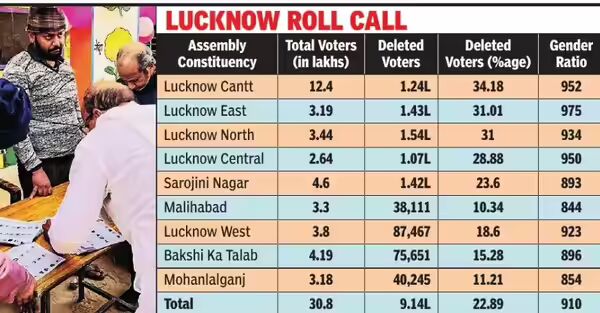
A sharp fluctuation in voter numbers across Lucknow during the Special Intensive Revision (SIR) process is drawing attention to deeper structural challenges in urban data systems, migration patterns, and governance accuracy. The city’s electorate figures moved from nearly 3.99 million to 2.79 million, before stabilising around 3.08 million—highlighting the scale of recalibration underway.
The variation is linked to successive stages of the SIR exercise, a large-scale verification drive aimed at updating electoral rolls by removing duplicates, deceased voters, and those who have shifted residence. Across Uttar Pradesh, nearly 2.89 crore names were removed in the draft stage alone, reflecting one of the most extensive voter database clean-ups in recent years. In Lucknow, the fluctuation underscores the complexities of managing voter data in a rapidly urbanising environment. Officials indicate that the initial drop in numbers was largely due to non-submission of verification forms and identification of ineligible entries, while subsequent increases reflect corrections, re-registrations, and inclusion of previously missed voters. Urban analysts suggest that such volatility is not merely administrative—it reveals how migration and mobility shape city demographics. A significant portion of the population in cities like Lucknow frequently relocates within or outside the city, leading to outdated or duplicate entries in official records. Earlier assessments found large numbers of “untraceable” and shifted voters in the city, pointing to high levels of urban churn.
The Lucknow voter revision process also highlights gaps in last-mile data collection. During enumeration, a notable share of voter information remained uncollected or unverifiable, particularly in dense urban constituencies where residents are harder to track due to rental housing, informal settlements, and high population turnover. From a governance perspective, accurate voter rolls are foundational to democratic processes, but they also serve as critical datasets for urban planning. Population figures influence resource allocation, infrastructure planning, and service delivery. Discrepancies or delays in updating such data can lead to mismatches between demand and provision in sectors like water, transport, and housing. Experts argue that the Lucknow voter revision exercise reflects a broader need for integrated urban data systems. Reliance on periodic, manual verification drives may not be sufficient in cities experiencing rapid demographic change. Instead, continuous digital updating, inter-agency data sharing, and stronger linkage with identity systems could improve accuracy and reduce large-scale fluctuations.
At the same time, the scale of deletions and additions has triggered political scrutiny, with concerns raised over potential exclusion of eligible voters. Authorities maintain that grievance redressal mechanisms—including claims and objections windows—are built into the process to ensure that genuine voters are not left out. The final stabilised figure suggests that the system is moving towards a more accurate representation of the electorate, but the process has exposed the fragility of urban data ecosystems. For policymakers, the lesson extends beyond elections: cities require real-time, reliable population data to function effectively. As urban India continues to grow and evolve, the experience in Lucknow highlights a critical transition—from static records to dynamic data systems—necessary for both democratic integrity and responsive urban governance.