


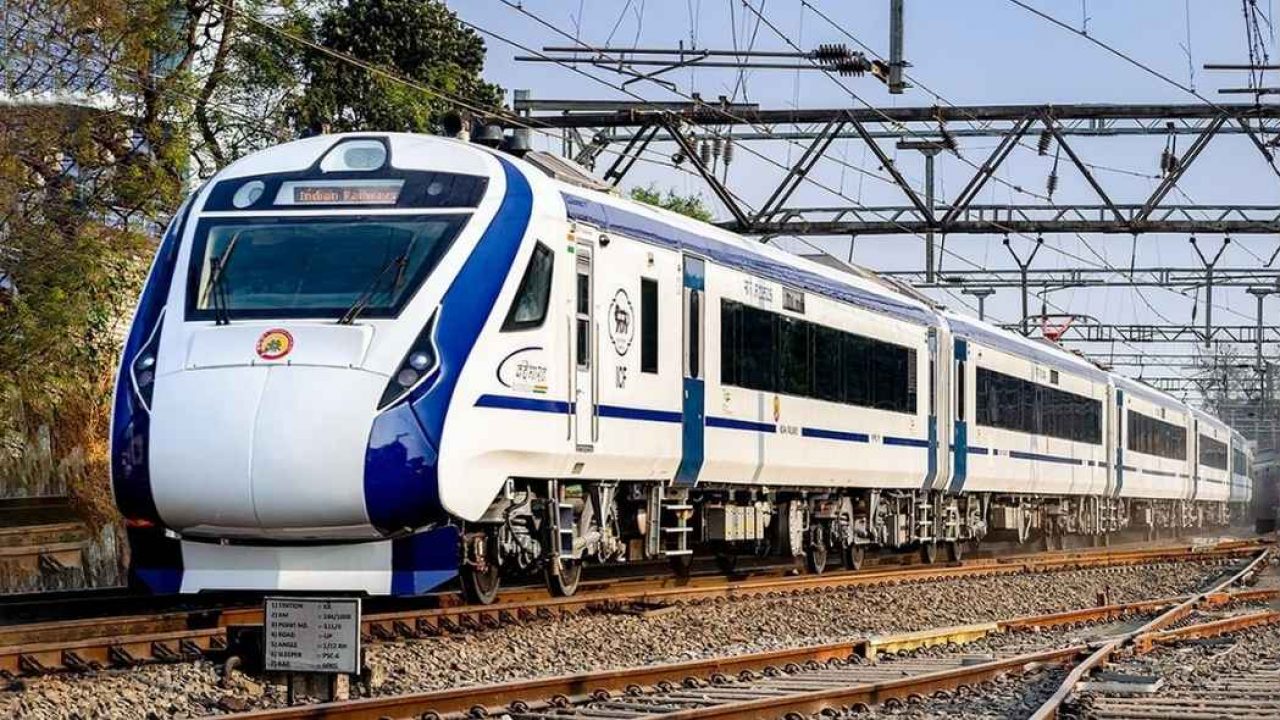
The Indian Railways has announced a major boost to intercity connectivity in Uttar Pradesh by extending the Meerut–Lucknow Vande Bharat Express service to Ayodhya and Varanasi. Effective from 27 August, the high-speed train will directly connect Meerut with the twin spiritual cities, offering passengers faster, more sustainable, and equitable travel options.
The extension transforms this service into the first direct high-speed rail link between Meerut and Varanasi, passing through Moradabad, Bareilly, Lucknow and Ayodhya. Officials said the new alignment is expected to improve seat occupancy, enhance passenger convenience, and reduce dependence on road-based travel in one of India’s most densely populated belts.The travel time from Meerut to Ayodhya will be about 7 hours and 13 minutes, while the stretch to Varanasi will take approximately 9 hours and 45 minutes. The journey duration has been carefully optimised, making the service competitive with existing trains such as the Nauchandi Express and Rajya Rani Express. By integrating more destinations, the Vande Bharat now offers better value to passengers who previously preferred conventional express services.
Also Watch: An Exclusive Interview with Sanjeev Jaiswal (IAS), CEO MHADA
Fares for the extended route have been set at Rs 1,915 for Chair Car, inclusive of catering, and Rs 3,525 for Executive Class. Experts note that the pricing remains reasonable compared to the convenience, reduced carbon footprint, and time efficiency that the service offers.The railways emphasised that the decision is not merely about passenger comfort but also about encouraging a modal shift towards greener mobility. Unlike private vehicles and buses, high-speed rail emits significantly less carbon per passenger kilometre, thereby contributing to India’s net-zero carbon ambitions. By expanding Vande Bharat to Ayodhya and Varanasi, authorities are attempting to position high-speed trains as a sustainable alternative to short-haul flights and road travel.
Transport experts believe this expansion will have wide socio-economic implications. With the Ram Temple in Ayodhya and the Kashi Vishwanath corridor in Varanasi drawing millions of visitors annually, direct high-speed connectivity is expected to boost religious tourism, generate employment, and support gender-neutral, inclusive access to urban centres. The emphasis on punctuality, affordability, and accessibility ensures that women, senior citizens, and differently-abled commuters can travel more confidently and comfortably.
Officials associated with the project stressed that the broader agenda of the Vande Bharat network is to transform India’s mobility landscape.
