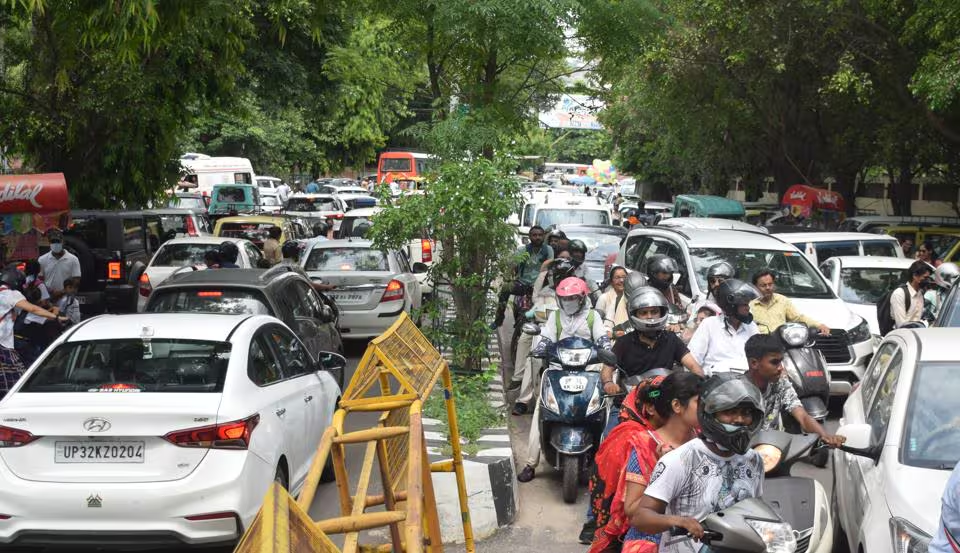
Encroachments and unregulated parking are narrowing Lucknow’s wide arterial roads into traffic choke points, affecting commuters, pedestrians and mobility infrastructure performance.
Despite several principal thoroughfares being built with generous carriageway widths, unchecked encroachments and informal roadside uses are shrinking them into persistent choke points that hamper mobility, aggravate congestion and undermine pedestrian safety in Uttar Pradesh’s capital. The situation highlights a wider urban governance challenge: preserving infrastructure design intent amid rapid commercial activity and weak enforcement.
Major connectors such as Shivaji Marg, Latouche Road and the Naka area were engineered to carry two lanes each way, facilitating efficient movement across dense commercial districts. However, early-morning street trading, unauthorised displays, roadside parking and ad-hoc structures are steadily encroaching on the legally designated right-of-way, reducing effective carriageway width by more than half during peak hours. This reduces traffic speed, increases collision risk and creates severe discomfort for non-vehicle users. Urban planners point out that the phenomenon is emblematic of a broader “functional shrinkage” of public space — where static urban infrastructure like roads, footpaths and cycleways are treated as informal commercial or parking space by local actors. Over time, this erodes capacity and performance, particularly when enforcement is sporadic and reactive. Residents say short anti-encroachment drives have marginal effects without sustained monitoring and behavioural incentives, causing structures to reappear within days.
The encroachment impact is multi-dimensional. For motorists and public transport operators, narrowed road space causes regular gridlocks that lengthen travel times and increase fuel consumption. Two-wheeler users — a large proportion of the commuting public — weave unpredictably between displaced pedestrians and parked vehicles, elevating crash risk. Pedestrians, including women, older adults and children, are often forced onto carriageways for lack of continuous footpaths, exposing them to moving traffic and collisions. Such pressures also interact with parking norms and land use. Developers of recent commercial buildings in the affected stretches often provide inadequate off-street parking, pushing customers and employees to occupy roadside space. This “supply gap” in parking infrastructure reinforces street usage that conflicts with the original road design, fuelling congestion and disorder. Urban governance experts argue that mobility planning must integrate parking management with land-use controls to prevent such friction points.
The Lucknow Municipal Corporation (LMC) and traffic police acknowledge the problem and have pledged fresh enforcement actions, including removal of unauthorised structures and stricter supervision of parking norms. However, commuters say they want sustained, not episodic, action — including clear designation of vending zones, community-driven reporting mechanisms and digital monitoring of compliance — to protect road capacity and restore intended functionality.
This encroachment-driven shrinkage of wide roads underscores a critical urban planning insight: infrastructure dimensions on paper do not automatically translate into functional capacity on the ground. Without coordinated policy, enforcement and community involvement, even well-designed streets can devolve into congestion zones, undermining mobility, economic productivity and equitable access. A forward-looking strategy will need to marry enforcement with systemic planning reforms that prioritise safe, inclusive and efficient use of urban road space.