


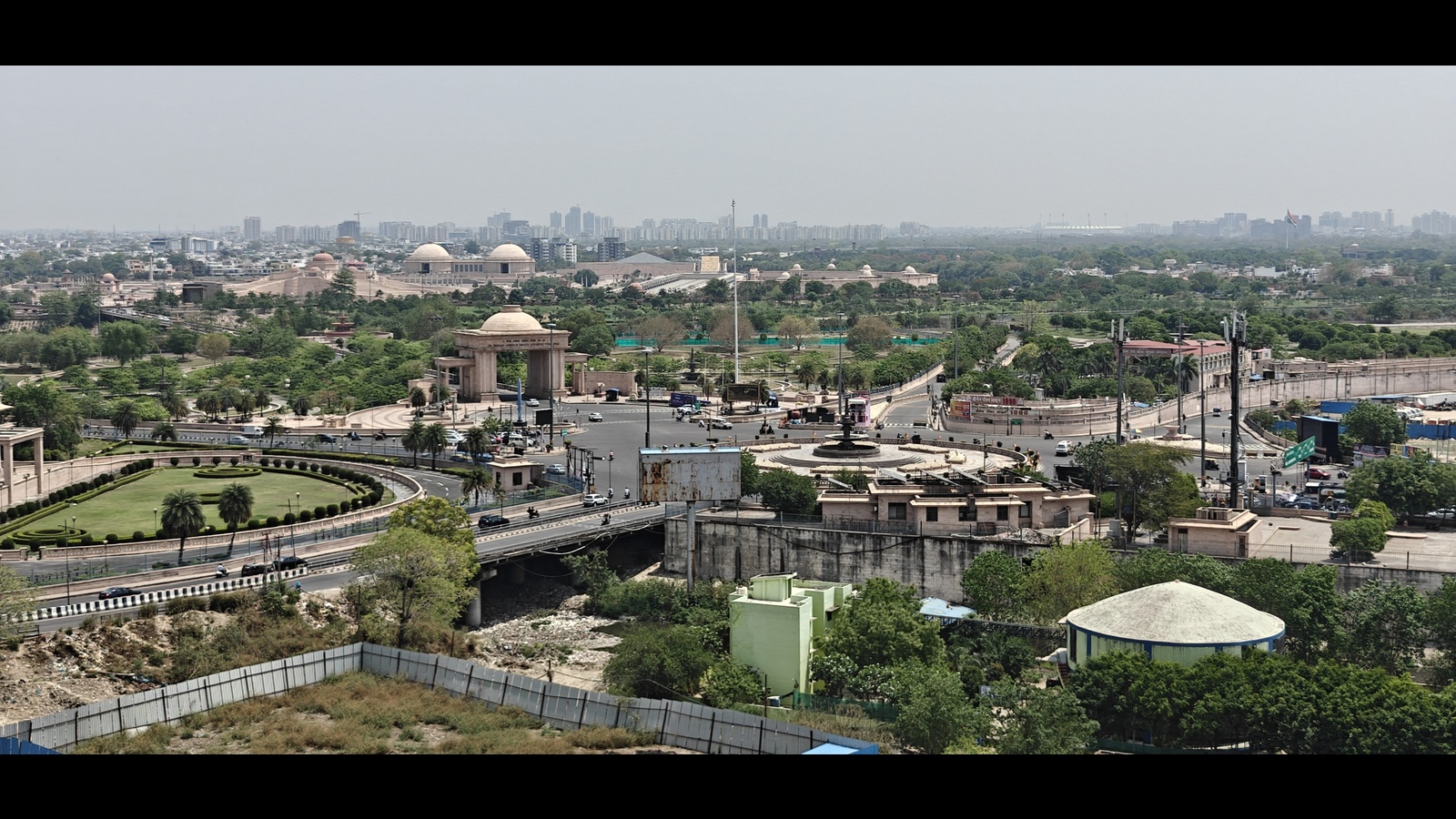
Lucknow is witnessing a coordinated push across transport modernisation, administrative reform and digital public services, signalling a broader recalibration of urban governance in Uttar Pradesh. Recent developments — including the rollout of a new Vande Bharat chair car rake, renewed emphasis on ease of doing business and the integration of artificial intelligence in primary healthcare — underscore the city’s evolving role as a regional growth anchor.
Railway officials confirmed the induction of an upgraded chair car configuration under the Indian Railways Vande Bharat programme, aimed at enhancing intercity connectivity from Lucknow to key commercial centres. Improved rail frequency and faster turnaround times are expected to support business travel and reduce reliance on road corridors, contributing to lower per-capita transport emissions.Urban mobility analysts note that such upgrades are critical as Lucknow expands outward. Faster rail links can shape real estate demand around transit nodes, influencing mixed-use development and transit-oriented housing. The Lucknow Urban Infrastructure Push, therefore, extends beyond trains to land use and spatial planning.
Parallel to mobility reforms, state officials have reiterated their focus on streamlining regulatory clearances for industry and small enterprises. Digitised approval systems and time-bound processing are being positioned as tools to improve investor confidence. Economists argue that administrative efficiency directly impacts urban employment generation, particularly in manufacturing and services clusters around Lucknow and Kanpur.Healthcare delivery is also undergoing a technological shift. The state has begun piloting artificial intelligence tools in primary health centres to assist with early disease detection and patient triage. Public health experts say that AI-based diagnostics can reduce referral delays and improve outcomes in peri-urban and rural belts connected to Lucknow. If scaled effectively, such systems could relieve pressure on tertiary hospitals in the state capital.
The Lucknow Urban Infrastructure Push is unfolding against the backdrop of rapid population growth and expanding municipal boundaries. Urban planners stress that infrastructure investments must be paired with sustainable design standards, including energy-efficient public buildings, waste management upgrades and climate-resilient drainage systems.In Chandigarh, meanwhile, civic authorities have intensified regulatory enforcement in waste processing and industrial compliance, signalling a broader north Indian trend of stricter urban oversight. While geographically distinct, such measures reflect a shared policy direction: improving governance credibility alongside infrastructure expansion.
For Lucknow, the convergence of mobility upgrades, digital governance and healthcare innovation signals a multi-sector approach to urban transformation. The challenge lies in integrating these initiatives into a cohesive development framework that prioritises inclusivity and environmental resilience.As capital expenditure and administrative reforms gather momentum, the city’s trajectory will depend on execution discipline — ensuring that infrastructure upgrades translate into tangible improvements in quality of life, business confidence and long-term urban sustainability.
Also Read:Bengaluru builder faces Karnataka RERA action
Lucknow Urban Infrastructure Push Gains Pace
