


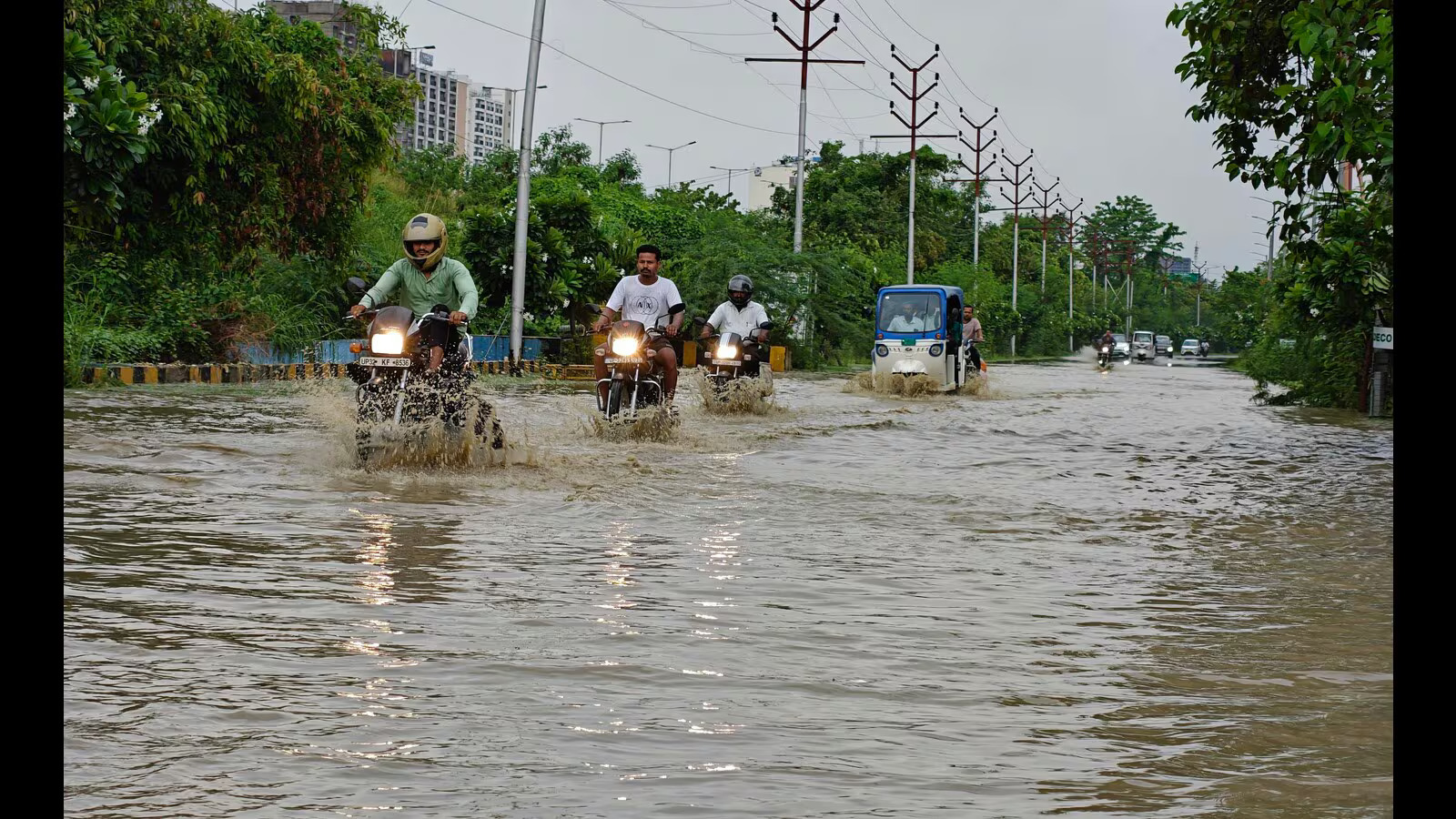
Heavy downpours over the weekend turned the streets of Lucknow into waterlogged corridors of civic failure, raising serious questions about the city’s sanitation preparedness despite being ranked third in the million-plus population category under Swachhta Survekshan 2024. Widespread dumping of waste, poor drainage, and inadequate on-ground response converged to create floating garbage yards across multiple neighbourhoods, exposing the fragile state of infrastructure in the Uttar Pradesh capital.
The situation escalated following two consecutive days of rain, with roads in several parts of the city inundated. Localities such as Vibhuti Khand, Sitapur Road, and Arjunganj-Sultanpur Road saw waste overflow onto roads and nullahs, choking drainage systems and impeding movement. Residents navigating knee-deep water shared their discontent, accusing the civic body of delay and indifference. A commuter near Kisan Bazaar in Vibhuti Khand described the area as a “flooded lane of garbage” after roadside waste was scattered by the downpour. Near the Engineering College flyover, residents claimed that consistent dumping had converted the roadside into a floating waste stream during the rains. For many, these recurring scenes have become the norm, revealing a disconnect between the Lucknow Municipal Corporation’s (LMC) on-paper action and ground realities.
While LMC claimed emergency operations were launched in all eight zones, citizens noted that responses are often delayed, superficial, or limited to media optics. An official from the LMC acknowledged that road-side garbage played a critical role in choking nullahs, causing rapid water accumulation during spells of rain. Despite clear links between uncollected waste and waterlogging, systemic waste management reforms remain elusive. In response to growing complaints, senior officials initiated deployment of pumping sets and drain-clearing teams. The municipal control room was placed on high alert, with real-time monitoring and grievance redressal handled through a dedicated helpline. Officials urged citizens to report problems and stay indoors during downpours. However, many residents believe these measures are reactive rather than proactive.
The timing of the crisis is particularly jarring given Lucknow’s high national ranking for cleanliness. Critics argue that such accolades do little for residents when infrastructure collapses during seasonal rains. With visible failures in managing solid waste, maintaining clean drains, and enforcing dumping norms, the city risks eroding public trust. While LMC’s swift emergency action may ease immediate inconveniences, lasting change demands structural reform, consistent waste clearance, and a participatory civic model that includes citizens in policy implementation. The crisis underscores the need to move beyond rankings towards resilient, inclusive, and sustainable urban governance.
Also Read : Nashik Launches Rs 2100 Crore Road Upgrade For Kumbh 2027
