


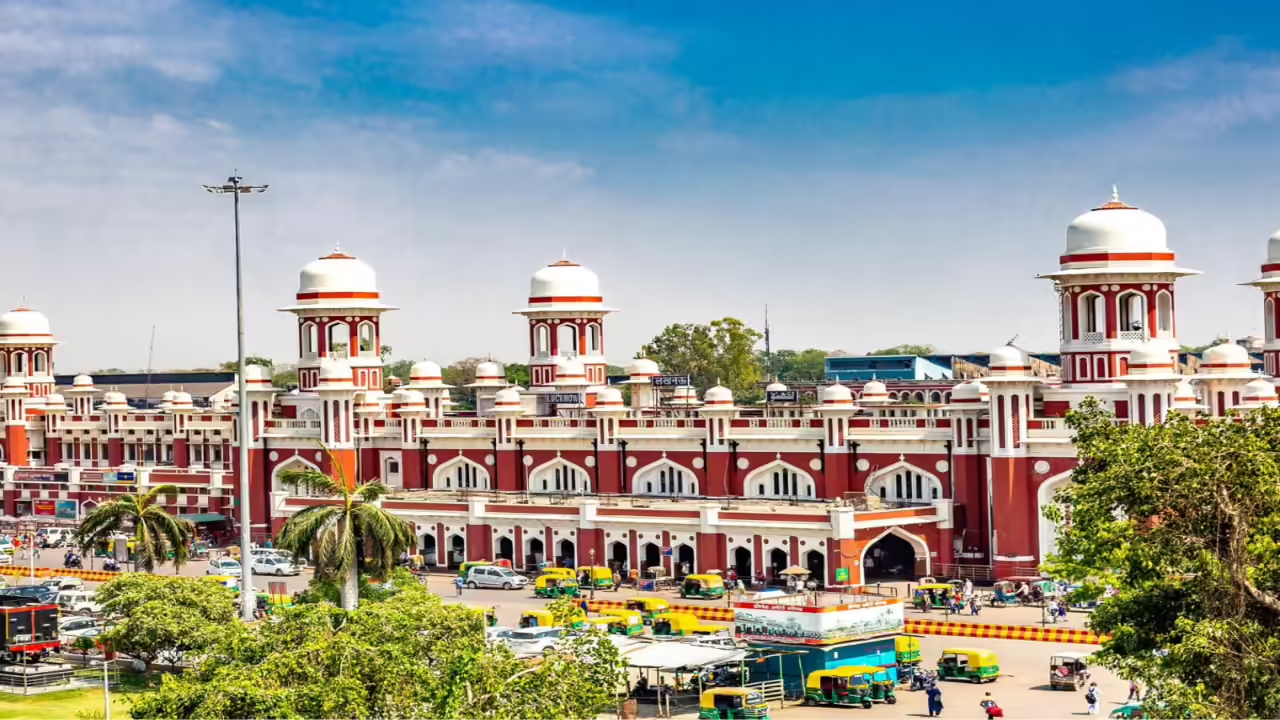
A recently circulated social media video has turned an unassuming railway station in Lucknow into a national talking point, drawing attention to how public transport infrastructure in non-metro cities is quietly undergoing a design and service transformation. The station, located in the Gomti Nagar area, has been widely compared to an airport terminal prompting renewed debate on what meaningful urban development looks like beyond India’s largest metros.
The clip, which initially presents visuals of escalators, wide concourses and contemporary waiting areas, resonated strongly with viewers precisely because it challenged familiar assumptions. For many, modern transport architecture is still associated with airports or select metro stations in cities like Delhi or Mumbai. The surprise lay in discovering that the setting was a suburban railway station serving daily commuters. Urban infrastructure experts say the attention is less about visual appeal and more about a shift in planning philosophy. Railway stations are no longer viewed merely as transit points but as public spaces that shape commuter experience, safety, and accessibility. Improved lighting, clear circulation, universal access features and climate-responsive design are increasingly being treated as essential, not optional. Gomti Nagar station is among a growing number of redeveloped railway assets being managed under structured private facility management frameworks, where long-term maintenance standards are contractually defined. Officials familiar with such models note that this approach allows Indian Railways to focus on operations while ensuring that stations remain clean, safe, and functional over time addressing a long-standing gap in public infrastructure delivery.
From a city-planning perspective, investments of this nature have wider implications. Well-designed stations encourage public transport use, reduce dependence on private vehicles, and support compact, transit-oriented development. In cities like Lucknow, where urban expansion is accelerating, such infrastructure plays a critical role in limiting sprawl and lowering transport-related emissions. The social media response also highlights a changing public expectation. Citizens are increasingly vocal about equitable distribution of infrastructure quality across regions. The praise directed at a Tier-II city station reflects fatigue with development narratives centred only on mega projects, and growing appreciation for improvements that directly affect daily life. Urban economists point out that high-quality transit infrastructure can influence real estate patterns, local commerce, and employment accessibility. Stations that are safe and efficient tend to attract higher footfall, support small businesses, and improve last-mile connectivity benefits that extend well beyond the rail network itself.
As India invests heavily in rail modernisation, the challenge will be consistency rather than exception. Experts caution that isolated success stories must translate into system-wide standards. If replicated at scale, such projects could redefine how citizens experience public transport making everyday travel more dignified, inclusive, and environmentally sustainable.
Also Read: Surat Mixed Use Project Gains National Real Estate Recognition
Lucknow Station Redefines Public Transport Infrastructure
