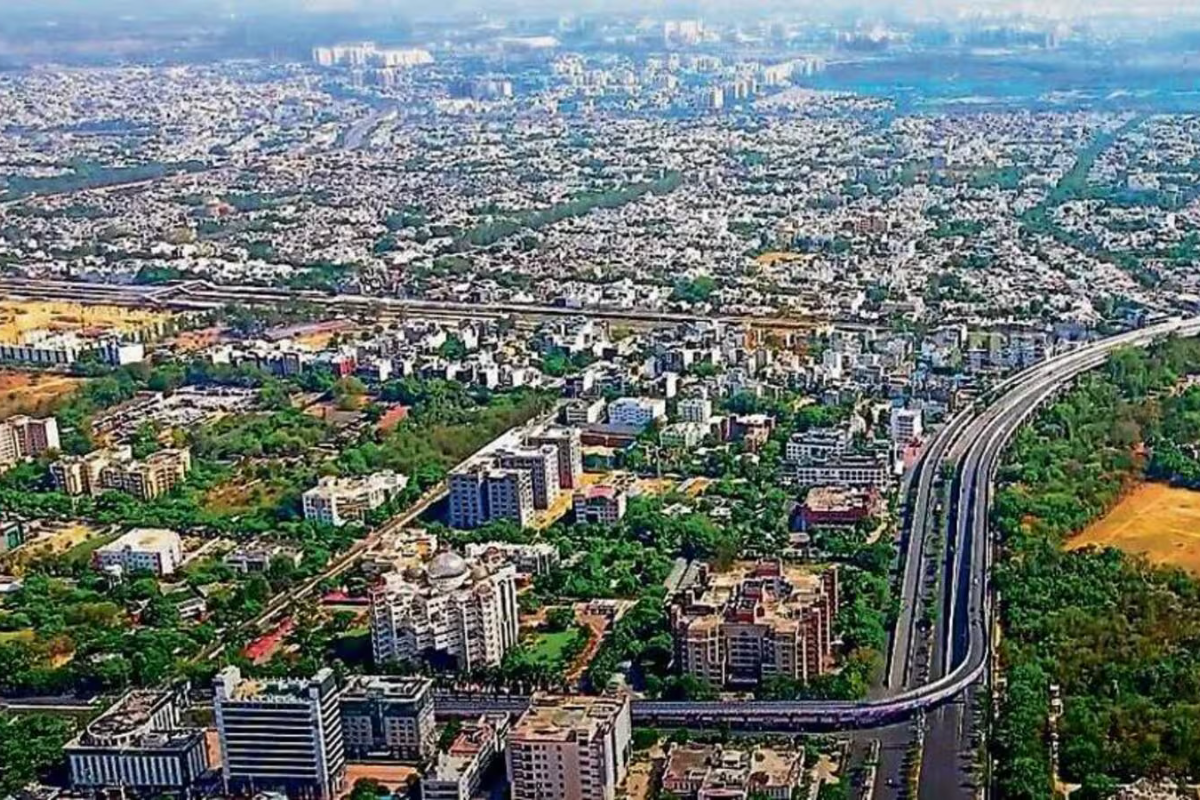
The city’s urban landscape is poised for a major transformation with the greenlighting of the Aerocity project near Chaudhary Charan Singh International Airport. In a recent board meeting, the Lucknow Development Authority (LDA) approved several key infrastructure and development projects that could significantly shape the city’s next phase of growth, while also drawing attention to sustainable urban expansion.
The Aerocity, planned on the unused land of a defence institute along Kanpur Road, is expected to evolve into a premium hub featuring a seven-star hotel, convention centre, commercial spaces, and integrated lifestyle amenities. City officials confirmed that land acquisition would commence immediately following the report of a specially constituted feasibility committee. A portion of the earmarked land currently hosts the Haj House and will be carefully integrated into the broader master plan. Positioned strategically near the international airport, the Aerocity project aims to unlock economic opportunities through hospitality, tourism, and business travel. Authorities believe that the development will not only boost the city’s real estate sector but also create jobs, drive local enterprise, and elevate Lucknow’s status as a regional commercial centre.
The move is aligned with the city’s broader vision of creating self-sustaining urban nodes that reduce dependency on core zones and contribute to reduced emissions via transit-oriented design.Alongside the Aerocity initiative, the LDA also approved the major expansion of the Naimish Nagar Residential Scheme. Spread across 2,504 acres on Sitapur–Raitha Road in Bakshi Ka Talab, the scheme now includes four more villages Paschim Gaon, Dhobaila, Umrabhari, and Duggaur raising the total to 18. The project is set to deliver housing, education, health infrastructure, and logistics support for over two lakh citizens, offering a more balanced mix of urban and peri-urban lifestyles.
The authority’s decisions reflect growing emphasis on decentralised, inclusive development. Officials noted that both projects are designed with climate-resilient planning and land-use optimisation in mind. These efforts are part of a broader campaign to make Lucknow a model for carbon-neutral, people-centric cities.Meanwhile, the LDA has also taken administrative steps to improve transparency and public confidence. It has terminated contracts with certain developers after repeated grievances from allottees, and clarified that existing property registrations under cancelled partnerships will remain valid. In another long-pending development, work at Nehru Enclave will resume following the army’s handover of 58 acres, unlocking infrastructure benefits for nearby villages. Urban planners have welcomed these decisions as bold but overdue, emphasising the need for continued vigilance in ensuring timely execution and transparent stakeholder engagement. With two landmark urban development zones now in motion, Lucknow could be on the cusp of redefining its socio-economic geography provided implementation stays on track.