HomeLatestLucknow Residents Face Worsening Smog This Week Lucknow Residents Face Worsening Smog This Week
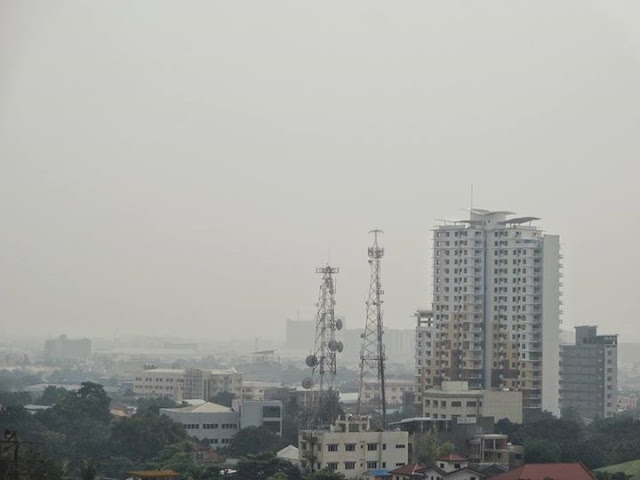
Lucknow’s air quality slipped into the ‘poor’ bracket for the second consecutive day on Monday, heightening concerns about the city’s winter smog cycle and its long-term implications for public health and sustainable urban development. With the Air Quality Index reading 205, experts warn that continued temperature drops will trap pollutants nearer to the ground, accelerating smog formation in the days ahead.
Real-time monitoring across the city revealed a sharp spike in fine particulate matter, particularly PM2.5 levels, at several traffic-heavy and construction-adjacent locations. In some pockets, recorded concentrations were more than five times the national permissible limit, prompting renewed scrutiny of how transport and infrastructure growth are being managed. PM10 also remained consistently above safe levels, suggesting that coarse dust from roadworks and construction remains a persistent contributor. According to air-quality researchers, vehicular emissions remain the single largest driver of winter pollution in Lucknow. “Traffic congestion and stop-and-go movement significantly increase fuel burn, and this accumulates as smog when temperatures fall,” explained an academic specialising in environmental sciences. The expert added that the effects compound when large, open construction sites are not adequately covered or monitored.
Urban planners note that Lucknow’s pollution pattern mirrors that of many fast-growing Indian cities where mobility demand, real-estate expansion, and insufficient mitigation systems create seasonal public-health hazards. The problem is particularly acute in neighbourhoods with limited green cover and constrained pedestrian spaces, areas where residents experience both poor walkability and toxic outdoor air. Authorities have initiated measures such as road sprinkling to suppress dust, enforcement of green nets at construction sites, and plans to decongest high-traffic corridors. However, analysts argue that the strategy remains largely reactive. The absence of long-term interventions such as improving last-mile public transport, incentivising electric mobility, and ensuring stronger environmental compliance for real-estate projects continues to expose citizens to recurring winter health risks.
Doctors have already reported a rise in cases of wheezing, headaches and throat irritation, especially among children, senior citizens and outdoor workers. Public health advocates warn that without sustained structural change, emergency short-term actions will offer only temporary relief. As winter progresses, Lucknow’s experience is likely to determine how emerging Indian cities balance growth with clean air targets. Cleaner mobility, greener construction practices and inclusive public spaces form the backbone of a sustainable, zero-carbon urban future not just for environmental reasons, but to ensure that development does not come at the cost of basic breathing rights. The coming weeks will test the city’s willingness to prioritise long-term environmental governance over short-term fixes.
Lucknow Residents Face Worsening Smog This Week