Lucknow Migrant Exodus Exposes Urban Labour Vulnerability
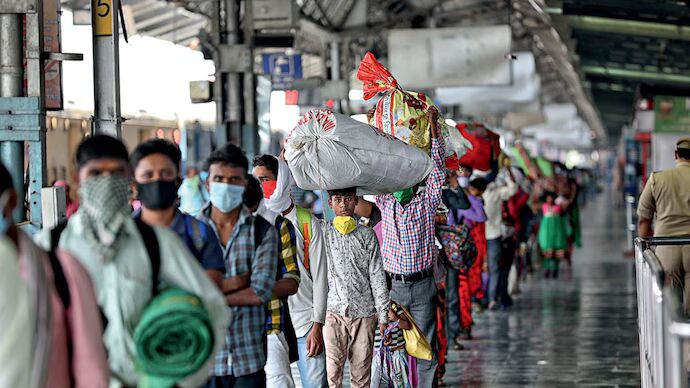
A wave of reverse migration from Lucknow to Assam ahead of the April 9 assembly elections is exposing the fragile dependence of urban systems on migrant labour, with visible disruptions emerging in sanitation and essential services across parts of the city.
A significant number of migrant workers—many employed in waste collection, housekeeping, and informal urban services—have begun returning to their home districts in Assam to participate in the electoral process. For these workers, voting is not only a civic responsibility but also a means of safeguarding identity and ensuring their inclusion in official records. The movement is already affecting daily urban operations. Resident welfare groups and municipal officials have reported irregular garbage collection and gaps in sanitation services, particularly in neighbourhoods heavily reliant on outsourced labour. In several areas, the absence of workers for even a few days has raised concerns over public health and waste accumulation. Urban analysts note that this pattern reflects a deeper structural issue in Indian cities—where essential civic functions are often sustained by a transient, low-income workforce with limited social security. Migrant workers form a critical backbone of urban service delivery, yet remain administratively and politically tied to their home states, creating periodic disruptions during events such as elections. The Assam assembly elections, scheduled for April 9, involve over 24 million registered voters, making participation a significant exercise in democratic inclusion.
For migrant workers, absence from the electoral process can lead to fears of being marked as “shifted” or excluded from voter rolls, reinforcing their decision to travel long distances despite economic constraints. Experts point out that such migration cycles are not new but are becoming more visible as cities expand and dependence on informal labour intensifies. In Lucknow, where rapid urbanisation has increased demand for sanitation, construction, and domestic services, the absence of even a segment of the workforce can disrupt service continuity. The situation also highlights the lack of portability in civic and social entitlements. Unlike some welfare schemes that are gradually becoming portable across states, voting rights remain geographically fixed. This forces workers to choose between daily income and civic participation, often resulting in temporary labour shortages in destination cities. From an infrastructure and planning perspective, the episode raises questions about resilience in urban service systems. Cities with limited redundancy in workforce planning are particularly vulnerable to such shocks. Experts suggest that municipal bodies need to diversify labour pools, invest in mechanisation, and strengthen workforce formalisation to reduce over-reliance on seasonal migration patterns.
The economic implications are equally significant. Informal workers not only sustain civic services but also contribute to local consumption economies. Their temporary exit affects both service delivery and micro-level economic activity, particularly in low-income urban clusters. As Indian cities continue to grow, the intersection of migration, governance, and infrastructure will become increasingly critical. The current disruption in Lucknow serves as a reminder that urban resilience is not just about physical infrastructure, but also about the stability and inclusion of the workforce that keeps cities functioning.