


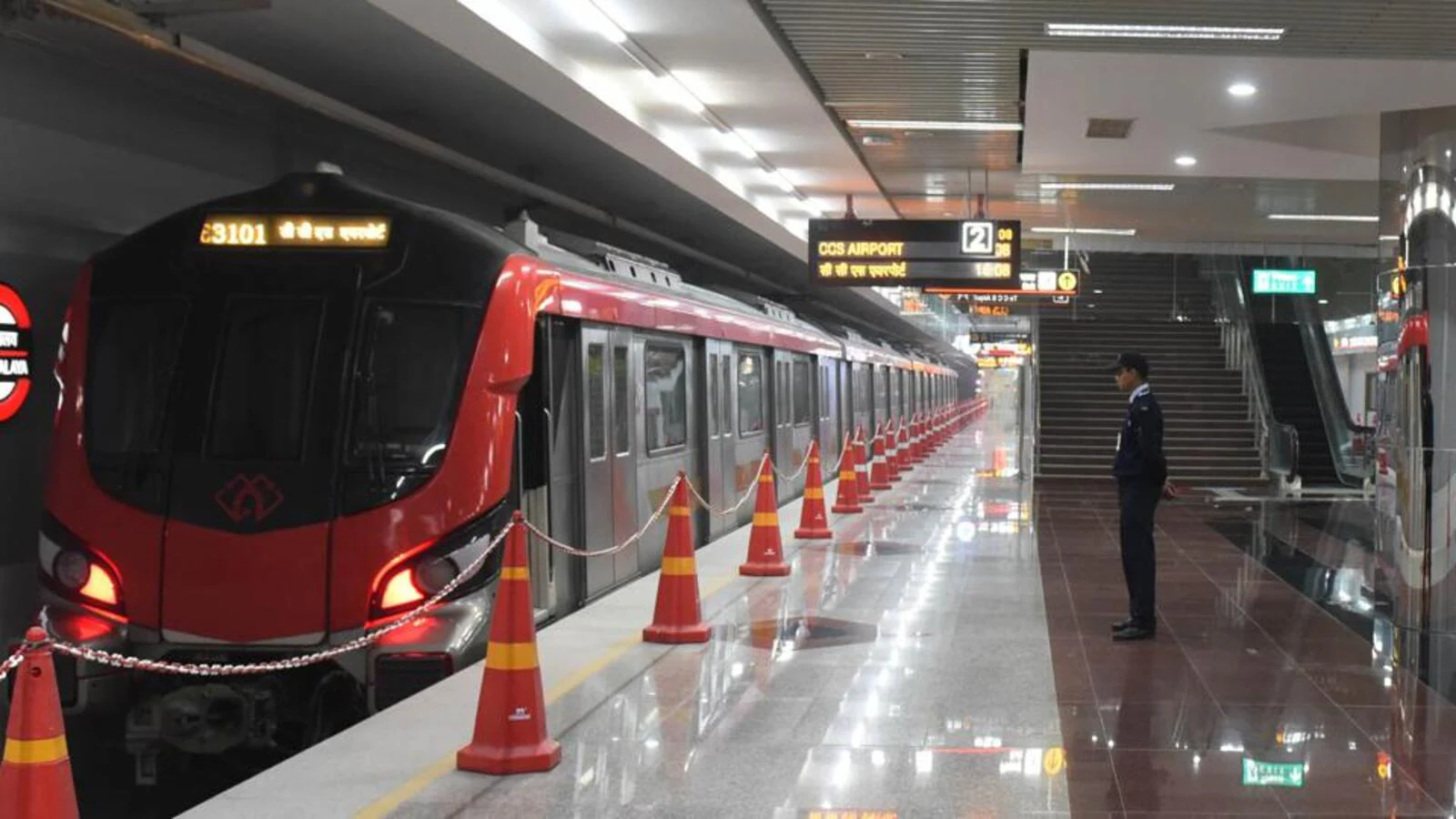
A fresh allocation in the Union Budget 2026–27 has accelerated progress on Lucknow’s long-planned East–West metro corridor, strengthening the city’s push towards balanced, low-emission urban mobility. The central government has committed roughly ₹1,450 crore towards Lucknow Metro Phase 2, signalling renewed momentum for a project expected to reshape daily travel patterns, reduce surface congestion, and support more compact urban growth across older and emerging neighbourhoods.
Lucknow’s current metro system operates solely along a north–south axis, connecting the airport with residential clusters in the city’s north-east. While this spine has improved commute reliability for thousands, planners have long flagged the absence of an east–west connection as a structural gap in the network. The proposed corridor, stretching a little over 11 kilometres between Charbagh and Basantkunj, is designed to address that imbalance by linking dense commercial districts, heritage zones, and growing residential areas through a mix of underground and elevated sections.With an estimated project cost of ₹5,801 crore, Lucknow Metro Phase 2 follows the standard shared-funding model adopted for large urban rail projects. Central and state governments are expected to contribute comparable equity, while the implementing agency will raise the remaining funds through long-term borrowing. Urban finance experts note that such blended financing, while capital-intensive, helps cities lock in mass transit infrastructure that delivers economic returns over decades through land value stabilisation, reduced fuel consumption, and improved labour mobility.
Preparatory work has already moved beyond the planning stage. Officials involved in the project confirm that detailed design assessments are under way, including studies on station-area commercial use and passenger services. Tenders have been floated for key elevated stretches and depot access infrastructure at the western end of the corridor, alongside five elevated stations that will serve mixed-income neighbourhoods currently dependent on buses and informal transport.Further tenders for underground stations and interchange facilities near the main railway hub are expected shortly. These stations are likely to play a critical role in integrating regional rail, metro services, and last-mile connectivity, a factor urban planners say is essential for maximising ridership while keeping operational emissions low.
Beyond mobility gains, the corridor carries broader urban implications. By improving access to older markets, medical districts, and employment hubs, the project could ease development pressure on the city’s outskirts and support more inclusive growth within established areas. Environmental specialists also point to the long-term climate benefits, as each additional kilometre of high-capacity public transport reduces dependence on private vehicles in a rapidly expanding city.As construction activity gathers pace, attention will turn to execution timelines, pedestrian-friendly station design, and seamless integration with buses and non-motorised transport. How effectively these elements are delivered will determine whether Lucknow Metro Phase 2 becomes merely an extension of track, or a catalyst for a more resilient and people-focused urban future.
Also Read:Mumbai Metro Line 4 Advances With Key Bhandup Works
