


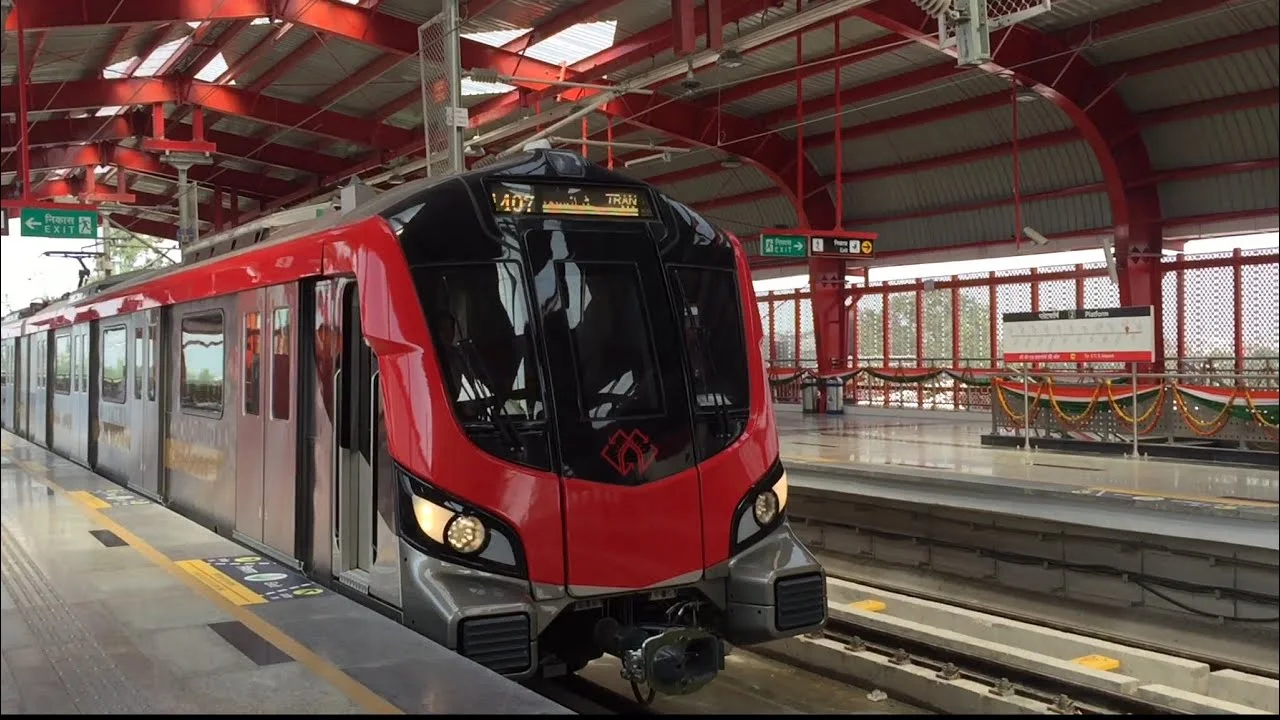
Lucknow’s long-awaited east–west mass transit link has moved from planning to execution, with the state metro authority finalising its first major consultancy contract for the next phase of the city’s rail network. The decision marks the formal start of implementation work for the East–West Corridor under Phase 1B of the Lucknow Metro, a project expected to reshape mobility across some of the city’s most congested and historically dense neighbourhoods.
The contract covers detailed design responsibilities for Metro Line Two, which will connect the central railway hub at Charbagh with the expanding residential districts towards Vasant Kunj. Urban transport planners view this step as critical, as detailed design work lays the technical foundation for civil construction, systems integration and long-term operational efficiency.According to officials familiar with the process, the consultancy has been awarded following a competitive bidding exercise, with the selected firm securing the assignment on the basis of cost and technical evaluation. The contract value stands at just under ₹16 crore, with a delivery timeline extending over five years. During this period, the consultant will prepare engineering designs for elevated and underground sections, stations, traction systems, electrical and mechanical components, and the proposed operations depot.
The East–West Corridor spans a little over 11 kilometres and is designed to address a long-standing gap in Lucknow’s public transport network. While the existing north–south metro line serves newer parts of the city, east–west movement continues to rely heavily on road-based transport, contributing to congestion, longer commute times and rising emissions. The new corridor is expected to link traditional commercial areas, dense residential zones and institutional districts that currently lack high-capacity transit.Project documentation indicates that roughly two-fifths of the corridor will run on elevated viaducts, while the remaining stretch will be underground to minimise surface disruption in built-up areas. Seven underground stations are planned through the city’s older core, reflecting a design approach that balances heritage sensitivity with modern mobility needs.
With an estimated overall project cost of nearly ₹5,800 crore, the corridor represents a significant public investment. Economists tracking urban infrastructure note that such metro expansions often generate wider economic benefits, including improved labour mobility, more predictable travel times and increased attractiveness for compact, transit-oriented development. Real estate analysts also expect the corridor to influence land use patterns along the alignment, particularly around station areas.Officials have indicated that this consultancy award is the first in a sequence of contracts that will eventually lead to full-scale construction. Subsequent tenders for civil works, systems installation and rolling stock are expected once design packages are finalised.
As Lucknow continues to grow both in population and spatial footprint, the success of the East–West Corridor will depend on timely execution, integration with buses and non-motorised transport, and attention to affordability and accessibility. For now, the move from concept to design signals a clear step forward in the city’s push towards lower-carbon, people-focused urban mobility.
Also Read:Chennai Civic Infrastructure Push Reshapes Urban Services
Lucknow Metro Expansion Enters Design Phase
