


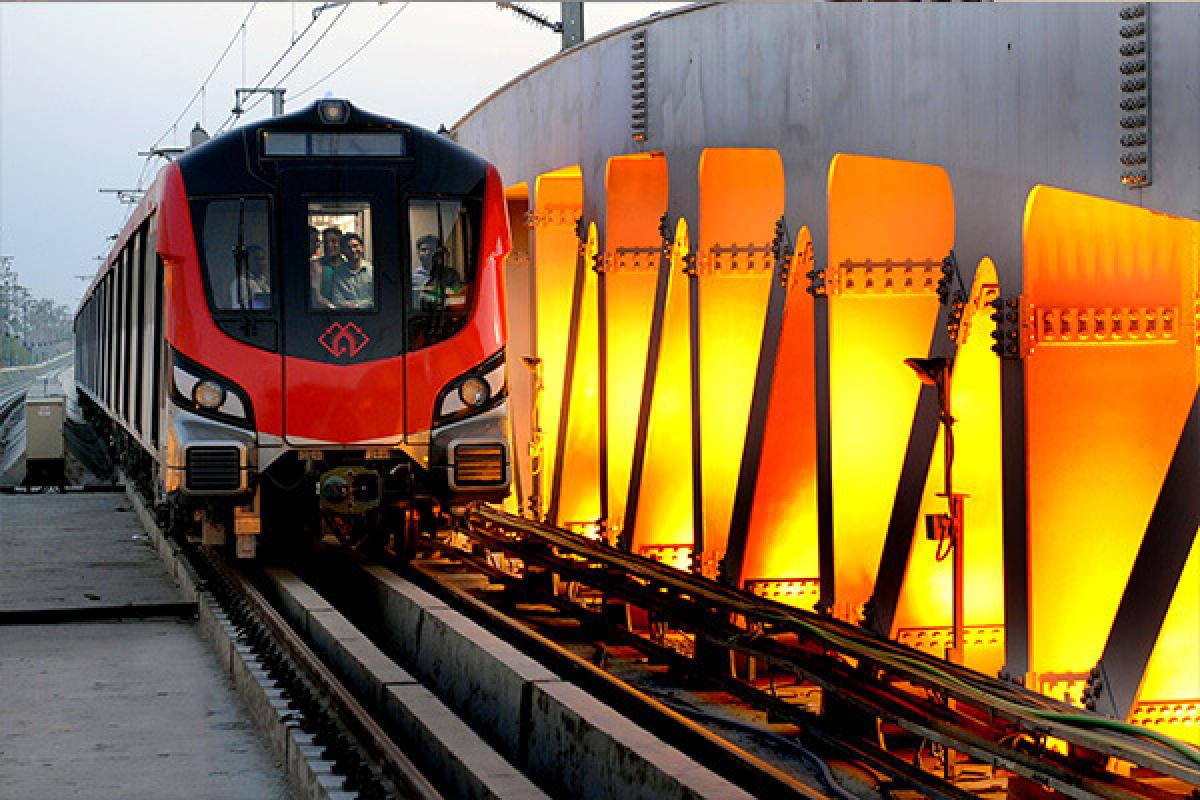
Lucknow’s long-awaited East–West Metro corridor has moved from planning to execution, with the State-run metro agency awarding its first construction-linked consultancy contract for the project. The decision marks a critical transition for the city’s second metro line, signalling that detailed engineering work is now underway for one of the most complex urban transport investments in Uttar Pradesh.
Officials confirmed that an international–Indian joint venture has been selected as the Detailed Design Consultant for Line-2 of the Lucknow Metro under Phase 1B. The consultancy assignment, valued at nearly ₹16 crore, follows a competitive bidding process and covers comprehensive design responsibilities for both elevated and underground sections of the corridor. Industry observers view the award as the formal starting point of on-ground implementation after years of planning and regulatory approvals.The East–West corridor received central clearance in August 2025 and carries an estimated project cost of ₹5,801 crore. Spanning just over 11 km, the line will link the city’s primary railway hub at Charbagh with the western residential precinct of Vasant Kunj, passing through dense and historically sensitive areas of Old Lucknow. Urban transport planners note that this alignment is expected to significantly reduce surface congestion while improving access to employment zones, markets and intercity transport nodes.
Project documents indicate that the corridor will be split between elevated and underground construction. An elevated stretch of over 4 km will connect the western suburbs, while nearly 7 km of tunnelling will run beneath the older parts of the city. This mixed configuration reflects engineering and urban design constraints, particularly in heritage zones where land acquisition and surface disruption must be minimised.Under the consultancy scope, the design partner will prepare detailed civil, architectural, electrical and mechanical drawings, along with traction systems and depot planning at Vasant Kunj. Transport experts say such early-stage design decisions are crucial for long-term operational efficiency, energy consumption and passenger safety—especially as cities push for lower-carbon public transport solutions.
Officials indicated that additional tenders are already in motion. Contracts for elevated civil works have been floated, while procurement for the underground section and depot construction is expected shortly. This phased tendering strategy is intended to accelerate timelines while spreading financial risk across packages.Beyond mobility gains, the corridor carries broader urban implications. Metro connectivity through Old Lucknow is expected to unlock economic activity, support small businesses and improve last-mile access in neighbourhoods traditionally underserved by mass transit. Real estate analysts also anticipate gradual redevelopment around stations, provided it is guided by inclusive planning norms and infrastructure capacity.
As Lucknow continues to grow outward and densify inward, the East–West Metro corridor will test the city’s ability to balance heritage conservation, climate resilience and modern mobility. The success of the design phase will play a decisive role in determining whether the project delivers not just faster travel, but a more liveable and equitable urban future.
Also Read:Uttar Pradesh Signals Deeper Global Logistics Investment
Lucknow Metro East West Corridor Clears First Milestone
