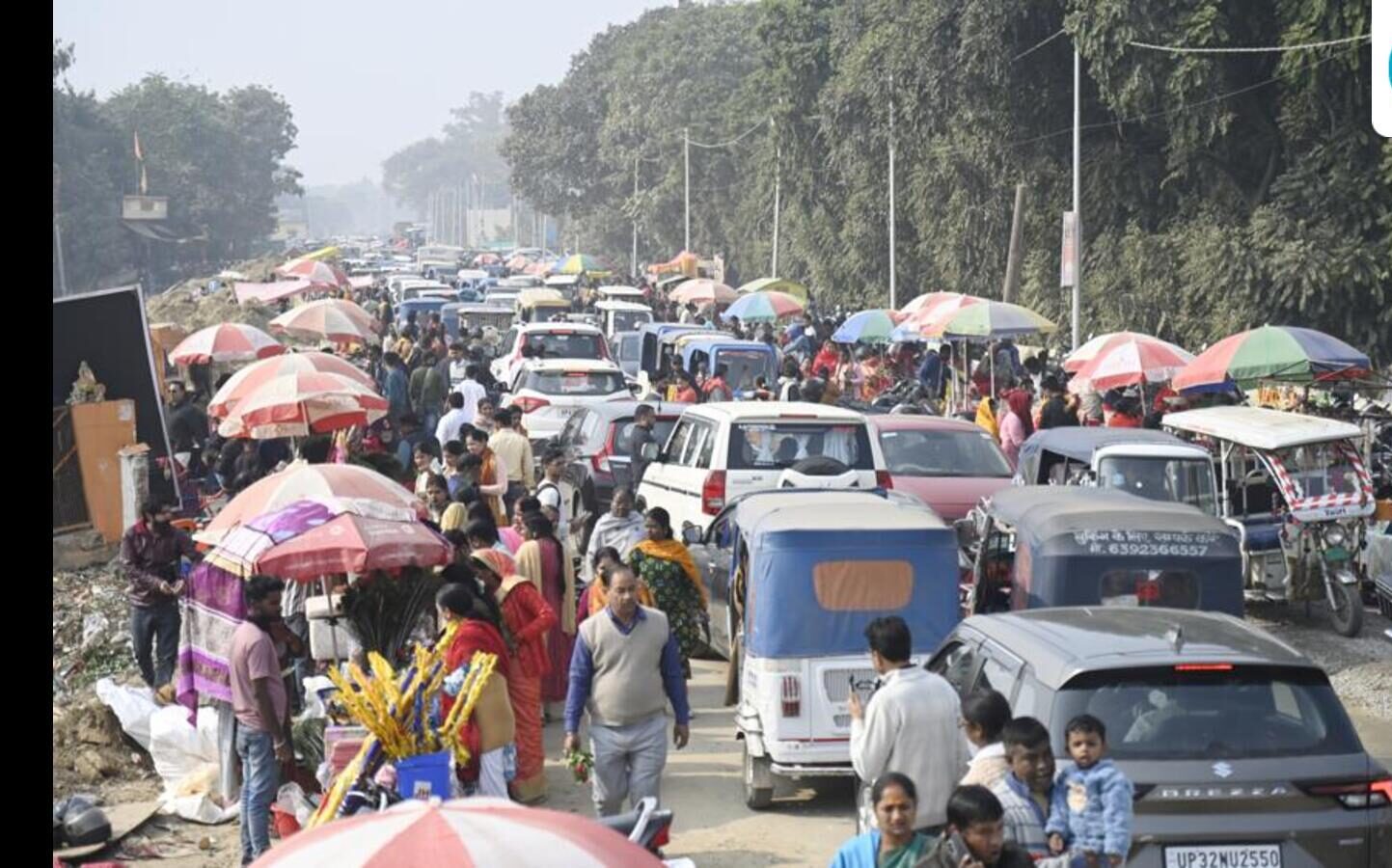
Lucknow’s ambitions to deliver a modern green mobility corridor along New Hyderabad Road are facing fresh uncertainty, as persistent encroachments threaten to derail the project’s December completion deadline. The Lucknow Development Authority’s ₹42 crore corridor, designed to widen and green a critical urban stretch, has progressed unevenly, raising concerns over planning execution and last-mile enforcement in the city’s infrastructure drive.
The project aims to transform a 1.1-kilometre section between Smriti Vatika and Hanuman Setu from a narrow seven-metre carriageway into an 18-metre-wide green corridor. Officials say construction has been completed along only 600 metres of the stretch, while work on the remaining 500 metres remains stalled due to roadside vendors, informal stalls, and unauthorised parking occupying key sections of the road. Urban officials acknowledged that congestion on New Hyderabad Road—an important connector leading towards Lucknow University and the Gomti riverfront—has further complicated construction activity. With traffic already constricting available space during daytime hours, the presence of encroachments has limited the movement of machinery and slowed material deployment.
The delay comes at a sensitive time, as the corridor is among several projects being prioritised ahead of a proposed high-profile inauguration event in the city later this month. Authorities are reportedly considering opening only the completed section of the green corridor if full completion proves unfeasible within the original timeline. An official overseeing the project said the issue has been repeatedly flagged with civic enforcement agencies, but coordinated action on the ground remains limited. “Without sustained clearance and vendor management, linear infrastructure projects in dense urban areas face unavoidable delays,” the official noted.
Site inspections reveal multiple stretches where construction remains half-finished, with exposed soil, loose aggregates, and partially dismantled road edges. While work has resumed intermittently in smaller pockets, illegal parking and informal commercial activity continue to block uninterrupted progress. Urban planners point out that the situation reflects a broader governance challenge confronting Indian cities—balancing livelihoods of informal workers with long-term public infrastructure goals. Experts argue that without clearly demarcated vending zones and integrated street management plans, green mobility projects risk becoming fragmented and reactive rather than transformative.
The authority has formally acknowledged encroachments as the primary cause of the slowdown but has not yet confirmed whether time-bound clearance directives have been issued. With officials also engaged in parallel city-level redevelopment works, attention and manpower constraints have further stretched project management capacity. As Lucknow seeks to position itself as a greener, more liveable city, the fate of the New Hyderabad Road corridor underscores the importance of coordinated urban governance—where transport infrastructure, public space management, and inclusive economic planning move forward together rather than at cross purposes.
Lucknow Green Corridor Project Delayed As Encroachments Disrupt Construction Timeline