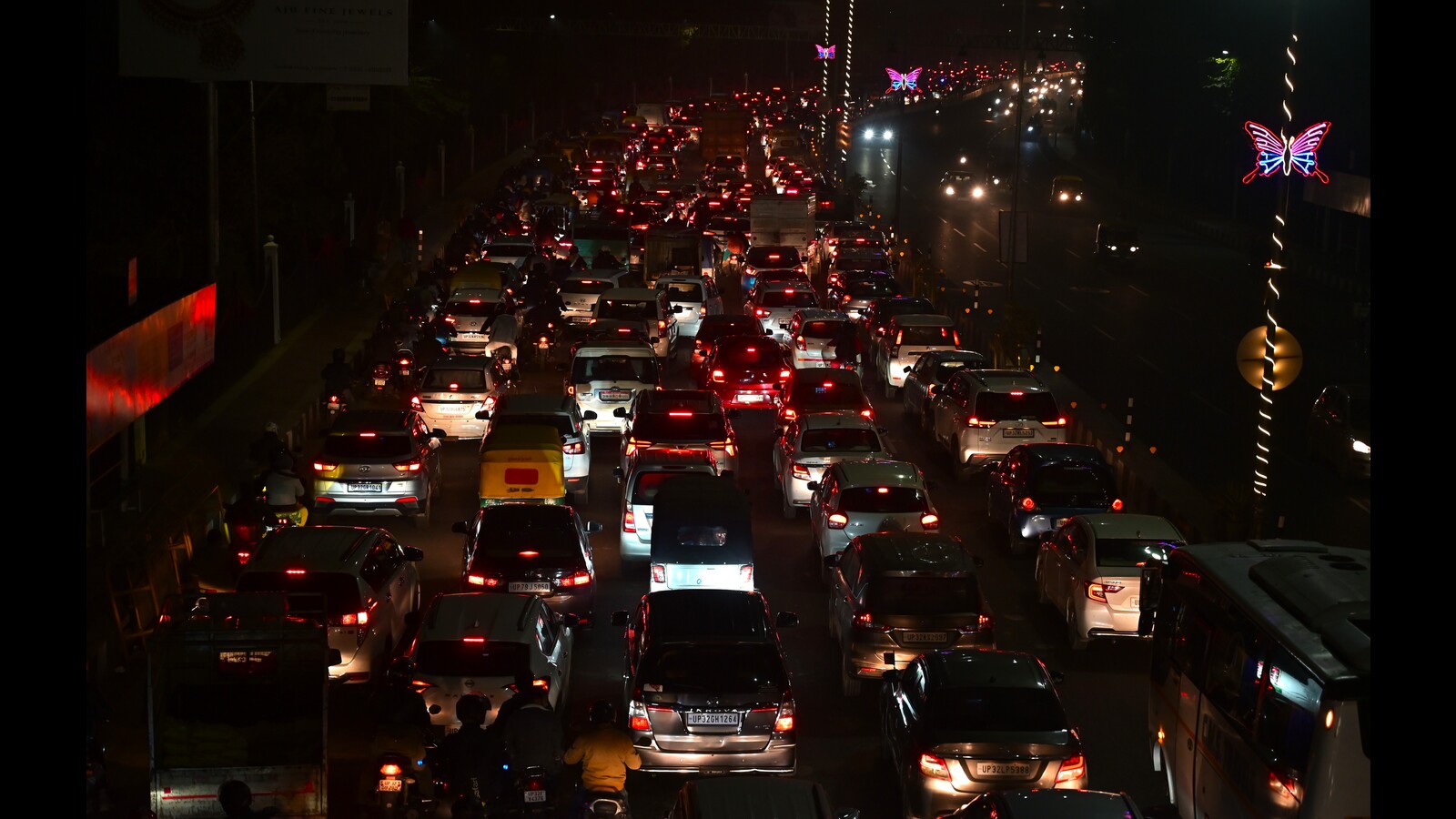
Lucknow Faces Congestion Surge During New Year Rush
The city’s New Year began under significant traffic strain as an unprecedented influx of pedestrians and vehicles tested the limits of Lucknow’s urban mobility infrastructure. From early morning to late evening, major thoroughfares experienced near-standstill conditions, highlighting both the city’s cultural vibrancy and persistent transport management challenges.
Devotees visiting key religious sites created concentrated pressure points. Hanumant Dham in Hazratganj recorded queues exceeding one kilometre, coinciding with the culmination of an 11-month strict fast observed by the temple’s mahant. Chandrika Devi temple in Bakshi-Ka-Talab witnessed similar early-morning surges, reflecting the enduring role of devotional activity in shaping urban movement patterns. Urban planners note that such seasonal spikes underscore the need for flexible transport planning in heritage-dense city centres.Recreational and tourist spaces compounded traffic loads. Parks, memorials, historical landmarks, and zoos drew large crowds, while flower markets near arterial roads added further congestion. Locations such as Rashtriya Prerna Sthal, Ambedkar Memorial Park, Janeshwar Mishra Park, Bada Imambara, and Ghantaghar became focal points for both pedestrian and vehicular density, illustrating how leisure and cultural tourism intersect with everyday mobility challenges.
Traffic authorities implemented diversions and designated parking zones near temples and high-footfall areas. Enforcement measures included fines for vehicles parked outside notified areas, but even with these strategies, congestion persisted throughout the day. Key stretches — including Sikanderabad Chauraha to Nishatganj, Shaheed Smarak, Daliganj, Swasthya Bhawan Chauraha, IIM Road, Basant Kunj, Medical College area, and Dariya Wali Masjid — reported standstill traffic lasting several hours.Daily commuters and gig-economy workers were particularly affected. Office-goers reported delays of two hours to cover short distances, while food delivery personnel faced service disruptions, highlighting the wider economic ripple effects of urban congestion during festival periods. Analysts observe that such events provide real-world stress tests of a city’s transport network, revealing capacity gaps in arterial roads, signal coordination, and crowd management systems.
Despite deployment of police and traffic management personnel across multiple intersections, authorities acknowledged that controlling the high-density movement proved challenging. Urban mobility experts sug
Lucknow Faces Congestion Surge During New Year Rush
gest that Lucknow’s experience underscores the need for multi-modal planning, including temporary pedestrian corridors, real-time traffic monitoring, and digital route management during high-footfall events. Integrating these approaches can reduce delays, improve public safety, and enhance visitor experiences without compromising cultural participation.
By late evening, traffic flow gradually normalized, but the day-long disruption serves as a reminder that rapidly growing urban centres must balance heritage-driven tourism, religious observances, and everyday mobility to maintain resilient, inclusive, and people-friendly streets.