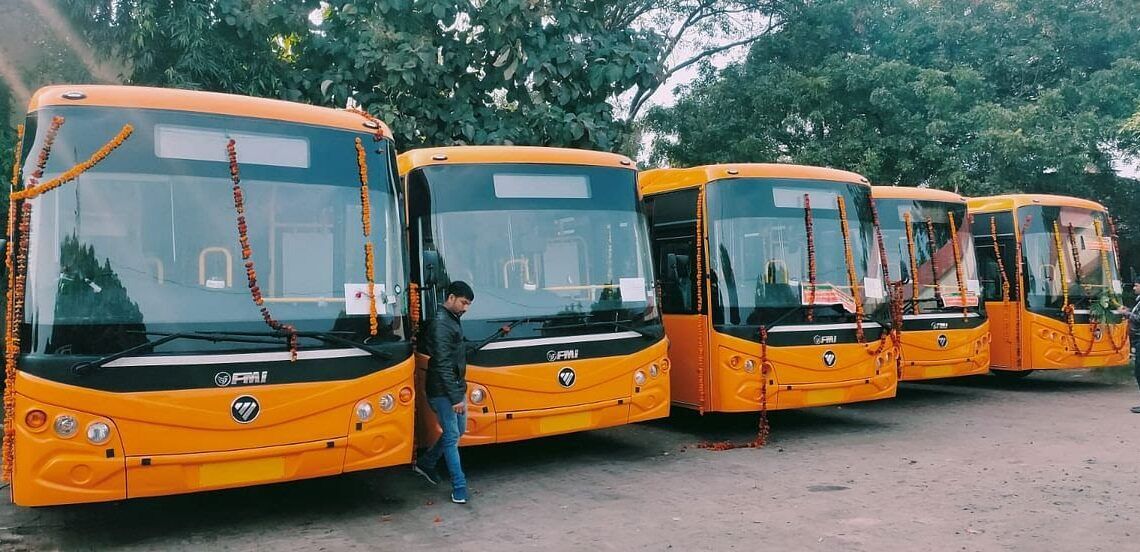
Lucknow Electric Bus Tracking To Reshape Commuting
Lucknow is set to deepen its smart mobility infrastructure with the rollout of real-time tracking for electric air-conditioned city buses, a move expected to significantly improve reliability and commuter experience. The initiative, aligned with broader urban digitisation efforts, aims to make public transport more predictable, efficient, and user-friendly in one of North India’s fastest-growing cities.
The system will allow passengers to monitor the exact location and arrival time of buses through mobile-based platforms, reducing uncertainty associated with waiting times. For a city where public transport adoption has often been hindered by inconsistent service visibility, this step could mark a turning point. The emerging Lucknow bus tracking system is designed to integrate GPS-enabled fleet data with passenger-facing applications. Officials indicate that the technology leverages real-time data processing to provide accurate arrival estimates and route updates. Such systems are already being deployed in multiple Indian cities and are increasingly viewed as critical to improving public transport efficiency. In Lucknow, integration with app-based platforms will enable users to plan journeys more effectively and minimise idle waiting at bus stops. Urban mobility experts note that real-time tracking is not merely a convenience feature but a structural improvement in transport governance. By generating continuous operational data, authorities can optimise routes, monitor fleet performance, and respond quickly to service disruptions. This enhances both commuter trust and system accountability—two factors essential for increasing public transport usage.
The Lucknow bus tracking system also complements the city’s transition towards electric mobility. As electric AC buses are introduced to reduce emissions and improve ride quality, digital tools such as live tracking ensure that these investments translate into tangible commuter benefits. Reliable information flow can encourage a shift away from private vehicles, easing congestion and lowering urban pollution levels. From a planning perspective, the integration of intelligent transport systems signals a move towards data-driven urban management. Real-time insights can help authorities align bus frequency with demand, identify high-density corridors, and improve last-mile connectivity. Over time, such systems can feed into broader smart city frameworks, linking transport with energy use, traffic management, and environmental monitoring. However, experts caution that technology adoption must be supported by consistent service delivery. Live tracking can enhance user experience only if buses operate on schedule and network coverage remains comprehensive. Ensuring seamless coordination between transport agencies, technology providers, and city administrators will be key to long-term success.
The initiative also reflects a larger shift in Indian cities towards passenger-centric transport systems. As urban populations grow, the focus is gradually moving from expanding infrastructure alone to improving service quality and accessibility. Digital tools like live tracking play a crucial role in this transition by making public transport more transparent and dependable. As Lucknow advances its smart mobility agenda, the effectiveness of the tracking system will depend on user adoption and operational reliability. If executed well, it could serve as a model for mid-sized cities aiming to combine clean mobility with intelligent urban systems—bringing efficiency, sustainability, and commuter convenience into closer alignment.