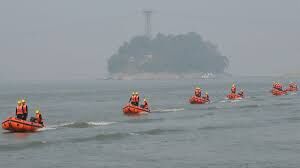
Lucknow Disaster Preparedness Gets Boost With Rescue Boats
The Uttar Pradesh government has approved a ₹4-crore-plus allocation to strengthen water-rescue capacity in the state capital, with the police set to procure dozens of inflatable boats and motors to respond more effectively to drowning incidents and seasonal flooding. The move comes as cities like Lucknow face growing climate-linked risks, particularly along riverbanks and canal networks where urban expansion has increased vulnerability.
According to the government order, the funds will be used to purchase 90 rubberised inflatable rescue boats along with an equal number of four-stroke motors. The procurement is expected to be completed within the current financial year, signalling an effort to improve response time during emergencies across the state. Officials said the initiative is aimed at enabling quicker rescue operations by police and disaster-response teams in rivers, reservoirs and flood-prone areas. The investment reflects a wider shift in how Indian cities are approaching public safety infrastructure. Lucknow, which sits along the Gomti river system, has historically faced flooding and water-related emergencies, including severe urban floods in the past that disrupted large parts of the city. Experts say that rising population density, encroachment on floodplains and unpredictable rainfall patterns have made urban rescue preparedness more important than ever.
Urban planners argue that such investments, though modest compared with large infrastructure projects, play a critical role in building climate-resilient cities. Rapid urbanisation in northern India has expanded residential areas closer to water bodies, increasing the need for specialised rescue equipment rather than relying solely on conventional police resources. The State Disaster Response Force (SDRF), which was created to strengthen the state’s ability to handle floods and other disasters, already works alongside police units during emergencies, but equipment shortages have often slowed response time in the past. The impact of the new rescue-boat plan will extend beyond disaster management. Improved water-rescue capacity is also expected to support safety in urban recreational areas, riverfront development zones and densely populated neighbourhoods near canals. As Lucknow continues to grow, planners say integrating disaster-preparedness infrastructure into urban planning will be just as important as expanding roads or housing.
For a city positioning itself as a major regional economic centre, the decision highlights a shift towards more resilient urban governance. While the immediate focus is on preventing drowning incidents and improving emergency response, the broader implication is a recognition that climate-related risks are becoming a permanent factor shaping how Indian cities invest in public infrastructure. If implemented effectively, the new rescue-boat procurement could become a model for other rapidly growing urban centres facing similar challenges.