Lucknow Connectivity Boost Through Corridor Expansion Plan
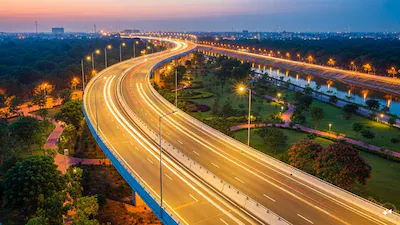
Lucknow is strengthening its urban mobility framework with a targeted upgrade of a key connector under the ongoing green corridor initiative, aimed at easing congestion and improving traffic flow across one of the city’s critical transit links. The project focuses on expanding a 1.8-kilometre stretch into a four-lane road, designed to function as a high-efficiency connector between major residential and commercial zones.
By widening this segment, authorities aim to address a persistent bottleneck that has constrained movement along adjoining arterial routes, particularly during peak hours. The Lucknow green corridor expansion reflects a shift towards precision-led infrastructure planning, where shorter stretches are upgraded to unlock network-wide efficiency. Rather than relying solely on large-scale highway projects, cities are increasingly focusing on strategic links that can redistribute traffic and reduce pressure on existing corridors. Officials indicate that the upgraded road will integrate with the broader green corridor network, which has been conceptualised to provide seamless, signal-free connectivity across key parts of the city. Such corridors are expected to improve travel times, reduce fuel consumption and support more predictable commuting patterns in a rapidly expanding urban environment. From an urban planning perspective, the significance of the Lucknow green corridor expansion lies in its role as a feeder infrastructure. By enhancing connectivity between neighbourhoods and main roads, the project can improve last-mile access while also supporting emerging real estate clusters in peripheral areas.
Lucknow’s growth trajectory has led to increased vehicle ownership and spatial expansion, placing pressure on existing road infrastructure. In this context, targeted upgrades at critical junctions and connectors are becoming essential to maintain mobility efficiency and prevent systemic congestion. The project also presents an opportunity to embed sustainability into road design. Green corridor frameworks typically incorporate features such as landscaped medians, improved drainage and pedestrian-friendly elements. If implemented effectively, these additions can enhance urban liveability while mitigating the environmental impact of road expansion. However, infrastructure experts caution that road widening must be complemented by broader transport strategies. Without parallel investments in public transport, traffic management systems and non-motorised mobility, expanded road capacity can lead to increased vehicle usage over time—a phenomenon known as induced demand. The economic implications of improved connectivity are notable. Smoother traffic flow can reduce travel time and logistics costs, benefiting local businesses and service providers. It can also increase the attractiveness of adjacent areas for residential and commercial development, contributing to the city’s overall growth.
Execution timelines and construction management will be critical, particularly in maintaining traffic flow during the upgrade process. Minimising disruption in a high-density corridor will require phased construction and effective coordination between agencies. As Lucknow continues to invest in its infrastructure network, the success of the Lucknow green corridor expansion will depend on how well it integrates with long-term urban planning goals. Beyond immediate congestion relief, the project’s impact will be measured by its ability to support sustainable mobility and balanced urban growth.