


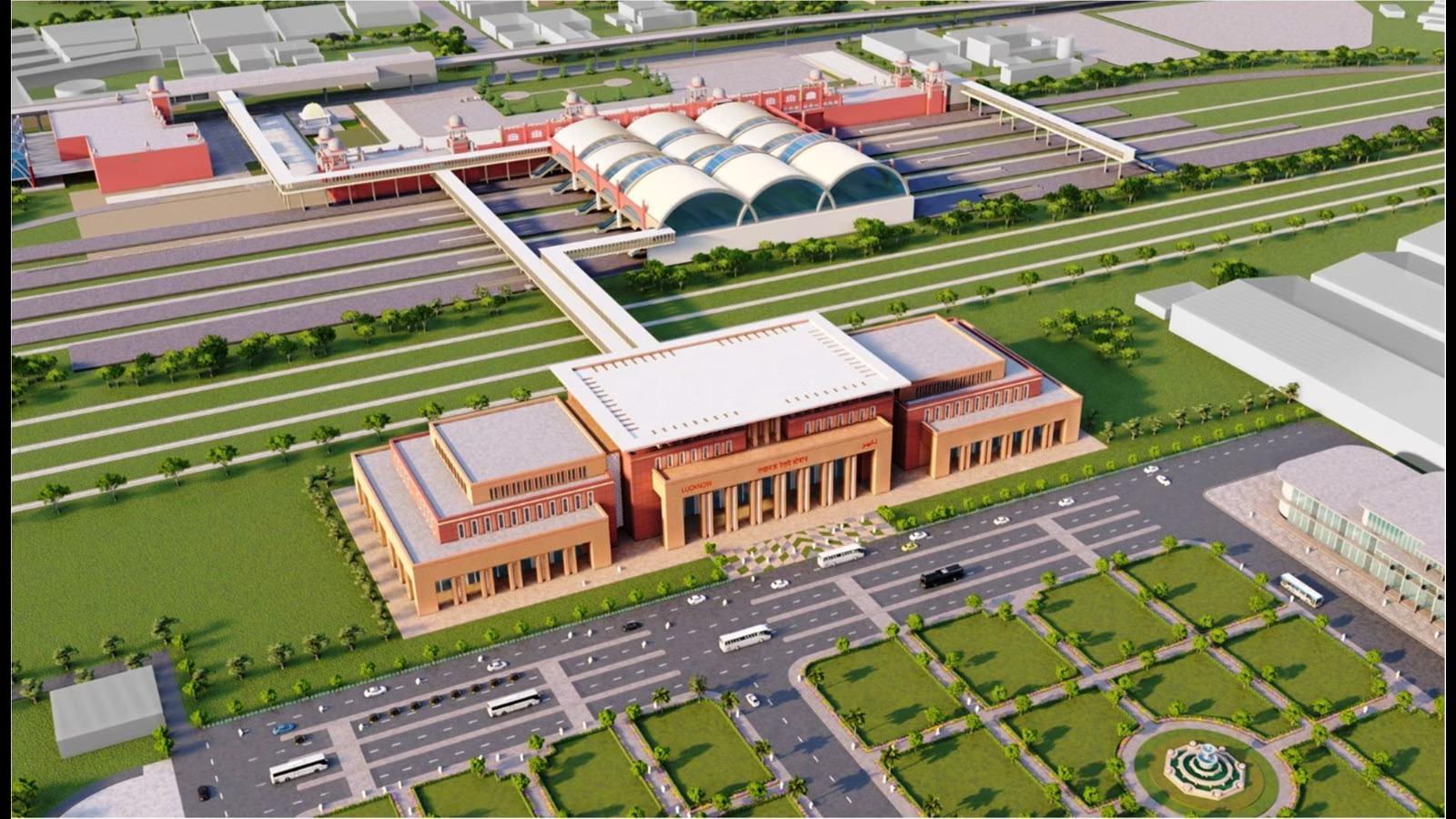
Lucknow Railway Station is set to enter a new era of mobility and commuter experience, as redevelopment work under the Rail Land Development Authority’s (RLDA) direction advances at pace. The transformation of the century-old Charbagh station, known for its architectural elegance and noise-cancelling design, is being carried out under a Rs 420 crore master plan that aims to modernise without compromising its historical character.
Once completed, the station will have the capacity to accommodate nearly 1.4 lakh passengers per day. Two grand concourses will dominate the redeveloped site—the Northern Railway (NR) side featuring a 120×115 metre hall, and the North Eastern Railway (NER) side integrating a 75×30 metre structure. These are expected to manage peak-time footfall of up to 10,000 passengers each, enabling seamless intermodal transit across platforms, Metro links, and key city roads. The redevelopment includes a multi-level terminal building covering 45,000 square metres, offering centralised amenities such as climate-controlled waiting zones, food courts, dormitories, and modernised cloakrooms. A key element is the introduction of two new platforms, bringing the total count on the NR side to eleven. These will be accessible via an elevated concourse that doubles as a public hub with retail and essential services.
Interconnected foot overbridges will link platforms and concourses with the Lucknow Metro’s Charbagh station, easing commuter movement. Separate eastern and western FOBs will align the terminal with Station Road and Kanpur Road, reducing congestion and improving walkability. Additional infrastructure enhancements include dedicated pickup-drop zones and expanded parking for 1,800 vehicles. From a sustainability perspective, the station is being equipped with rainwater harvesting systems, stormwater management structures, and landscaped open areas. RLDA is employing pre-engineered buildings and modular construction techniques to fast-track timelines while keeping resource use efficient and environmental impact low. Technological tools like Building Information Modelling (BIM) are also deployed for planning precision.
While the project is progressing steadily—with over 84% of the rear station structure complete and concourse work in advanced stages—delays have occurred. Challenges such as the relocation of existing railway utilities, preparation for the 2025 Kumbh Mela, and land availability constraints have shifted the projected completion date from December 2025 to May 2026. A 56-day platform block has been initiated to expedite the central concourse work. Officials note that once the rear entry is commissioned, operations will shift to the southern zone, paving the way for the facade restoration of the existing Charbagh building, which dates back to 1926. The objective is to ensure that the legacy of Awadh’s imperial design and British-era masonry is preserved, even as smart city elements are introduced.
Charbagh’s rebirth will culminate by the last quarter of 2026, promising to deliver an integrated urban transit hub that respects Lucknow’s heritage while embracing its trajectory as a 21st-century metropolis.
Also Read : Kochi High Court Halts Power Disconnection Over Apartment STP Compliance Issues
