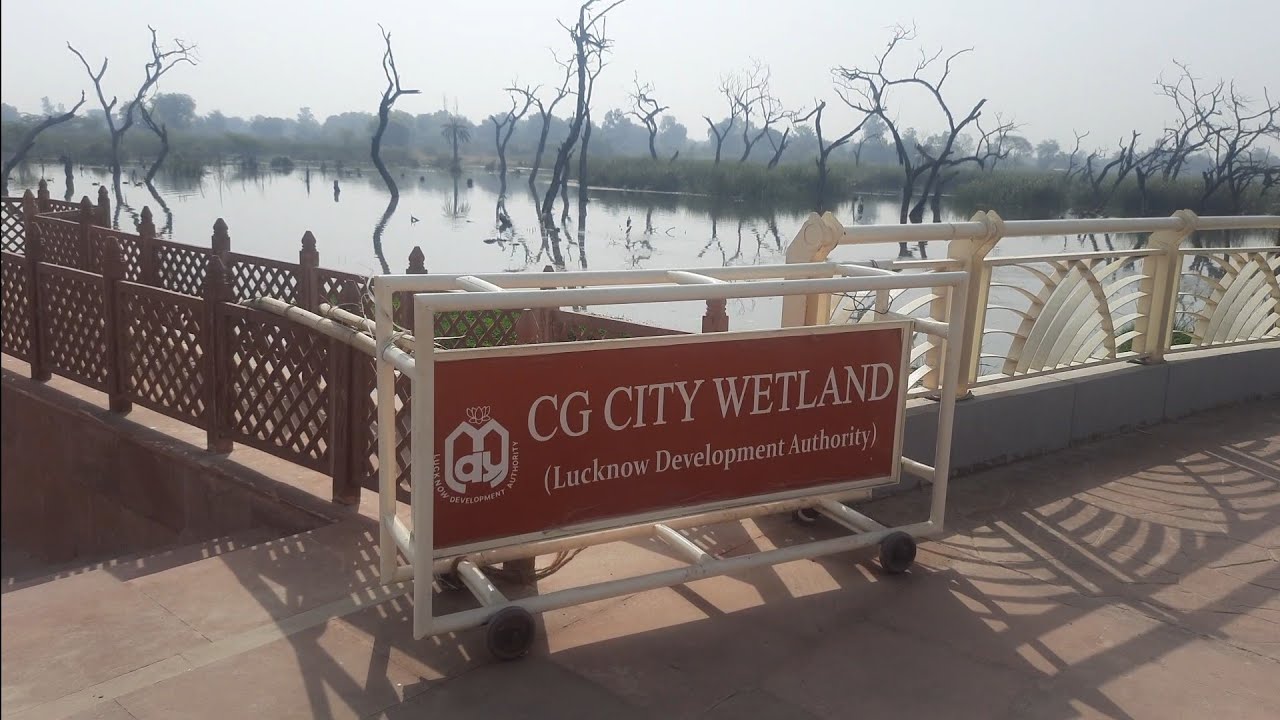
Lucknow has taken a significant step towards embedding ecological planning into urban expansion, with the city’s development authority initiating a comprehensive biodiversity assessment of the CG City wetland. Spread across nearly 37 acres near the Ekana sports precinct, the wetland has emerged as a rare urban ecological asset amid rapid real estate and infrastructure growth in the state capital.
Urban planners involved in the initiative say the exercise will create a scientific baseline of plant and animal life, helping authorities balance development pressures with long-term environmental resilience. The mapping will document tree cover, native and migratory bird species, aquatic organisms, and micro-ecosystems that have gradually evolved since the wetland’s formation. The decision comes at a time when wetlands across Indian cities face mounting risks from encroachment, waste inflows, and altered water channels. In Lucknow, where urbanisation has accelerated alongside new housing corridors and large civic projects, such natural buffers are increasingly viewed as essential infrastructure rather than passive open spaces.
Officials overseeing the project indicate that the biodiversity catalogue will support future land-use decisions, conservation planning, and eco-tourism management. The CG City wetland, located behind a major sports facility, has already begun attracting birdwatchers and local visitors, highlighting its dual role as a habitat and a public space within the city’s expanding urban fabric. Alongside biodiversity documentation, authorities plan to clearly demarcate the wetland’s boundaries. Revenue records will be reviewed and on-ground markers installed to prevent gradual land loss an issue that has plagued several urban water bodies across northern India. Experts note that such demarcation is a crucial governance step, often overlooked until irreversible damage occurs. Environmental monitoring is already underway at the site, focusing on water quality, waste management, and natural flow patterns. Conservation specialists expect that systematic data collection will help identify pollution sources early and guide corrective measures, reducing long-term restoration costs. The deployment of trained ecological experts through the forest administration is intended to ensure regular oversight rather than one-time intervention.
From an urban economics perspective, safeguarding wetlands like CG City carries tangible benefits. Studies consistently show that healthy wetlands improve groundwater recharge, moderate urban heat, and reduce flood risk services that would otherwise require expensive engineered solutions. For rapidly growing cities, this translates into avoided infrastructure costs and improved liveability. Urban designers also point out that integrating wetlands into city planning can enhance surrounding real estate value without compromising environmental integrity, provided development is regulated responsibly. This approach aligns with emerging models of people-first urban growth, where natural systems are preserved as part of essential civic infrastructure.
As Lucknow continues to expand, the CG City initiative may serve as a test case for how Indian cities can move from reactive environmental protection to proactive ecological planning. The effectiveness of this effort will ultimately depend on sustained monitoring, transparent governance, and the ability to translate scientific data into enforceable planning decisions.