HomeLatestLucknow battles Worsening Air Pollution Crisis Lucknow battles Worsening Air Pollution Crisis
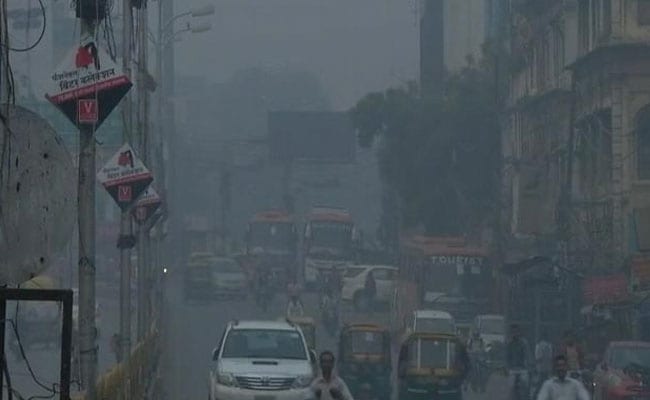
Lucknow and several districts across western Uttar Pradesh are confronting an intense spell of hazardous air, with pollution levels breaching the ‘severe’ category in multiple locations this week. The situation has raised fresh concern over the state’s ability to manage seasonal smog, industrial emissions and unchecked urban expansion issues that continue to threaten public health and the sustainability of rapidly growing cities.
Data from the Central Pollution Control Board (CPCB) indicates that pollution spikes were recorded across the National Capital Region-adjacent cities, including Hapur, Greater Noida, Noida, Ghaziabad and Meerut, where Air Quality Index (AQI) levels surpassed 400 at various monitoring stations. These districts routinely struggle with stagnant winter air combined with emissions from transport corridors, industrial clusters and dispersed construction activity—factors that experts say worsen socio-environmental inequality for residents living near polluted areas. In Lucknow, the morning AQI touched 338 before dropping marginally to 210 by the afternoon, though industrial pockets continued to report far higher values. Six locations in the city have been consistently registering elevated readings, with the Talkatora Industrial Area reaching 372, followed by Lalbagh at 280 and Central School at 231. Residential neighbourhoods such as Gomtinagar recorded moderately high levels, while Kukrail, a green zone, reported comparatively lower pollution, pointing to the protective role of urban forests in improving local microclimates.
Cities across Uttar Pradesh have also seen particulate concentrations rise sharply. Ghaziabad recorded an AQI of 338, Greater Noida 355, Hapur 394, Noida 377, Kanpur 212, and Meerut 271. According to a senior researcher at a leading engineering institute, the rise in micro and nano particulate matter is particularly concerning, as these particles penetrate deeper into the lungs and amplify long-term health risks for vulnerable groups. Health practitioners have reported an uptick in complaints related to breathing difficulty, eye irritation and aggravated asthma. An official from the state health department said hospitals usually see a predictable winter surge, but this year’s spike has arrived earlier and with greater intensity. Children, older adults and those working outdoors remain the most affected.
Urban planners note that the recurring winter pollution crisis highlights the need for more resilient city systems—cleaner transport networks, stricter industrial monitoring, accelerated transition to renewable energy, and stronger enforcement of construction dust norms. They add that equitable access to clean air must be treated as a core component of urban development, particularly in dense cities where environmental burdens disproportionately fall on low-income communities. State authorities have initiated temporary measures, including guidelines for reduced outdoor activity in schools, intensified enforcement against waste burning and advisories for industries to limit emissions. However, experts argue that only long-term structural reforms—supported by data-driven policymaking and community participation can enable Uttar Pradesh’s cities to move toward cleaner, more inclusive and climate-resilient futures.
Lucknow battles Worsening Air Pollution Crisis