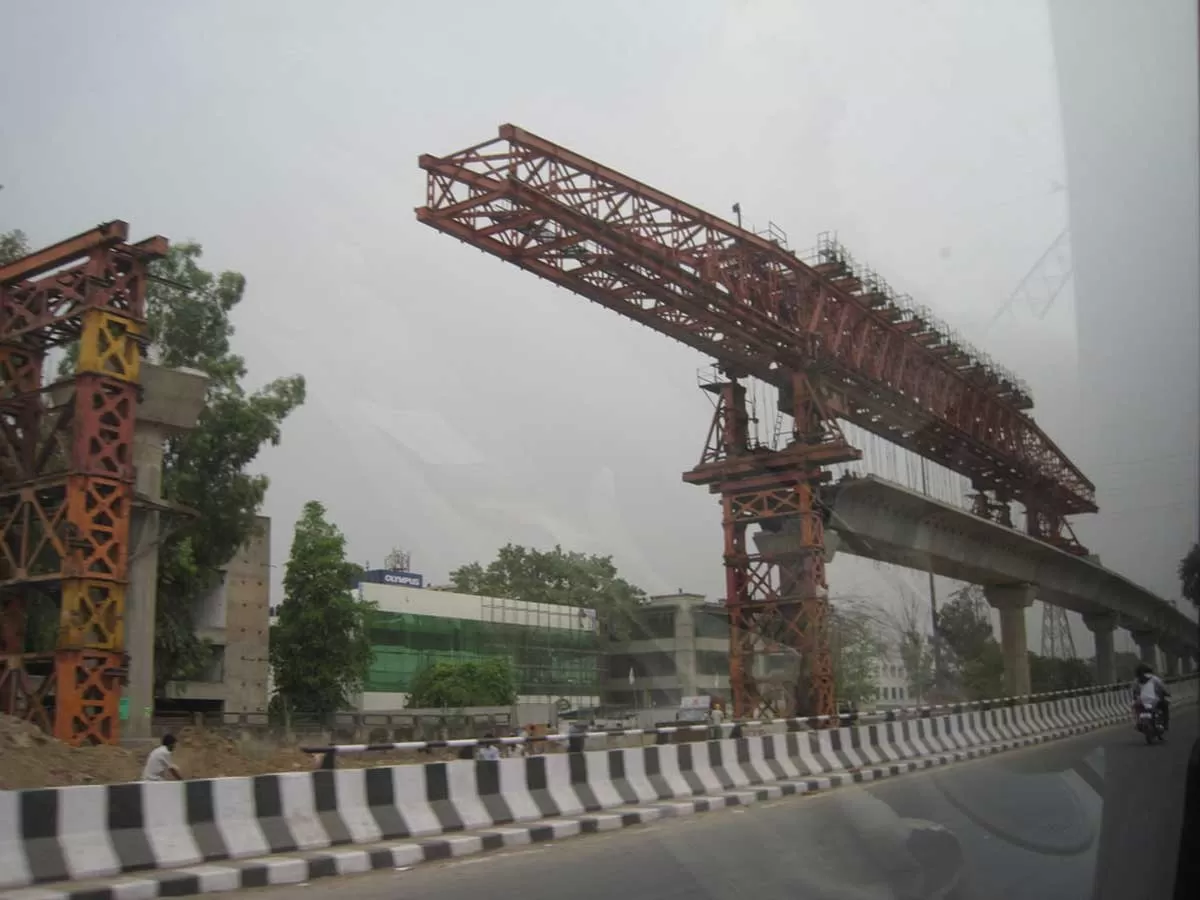
LUCKNOW — The Lucknow Development Authority (LDA) has approved a key road-widening scheme near the Summit Building and adjacent stretch feeding into the Shaheed Path slip road, a move expected to improve vehicular flow and reduce chronic congestion that has long hampered mobility in one of the city’s busiest urban corridors.
The decision comes amid broader efforts by civic planners to enhance connectivity and integrate transport infrastructure with evolving patterns of residential and commercial development in Uttar Pradesh’s capital region. The approved widening project targets a segment of urban road that has experienced increasing traffic volumes as residential densities and economic activities have expanded along its alignment. The Summit Building junction, strategically located near major institutional offices and mixed-use developments, has been a pinch point for peak-hour gridlocks, rippling delays onto the Shaheed Path ring road and its feeder lanes. By adding carriageway width and reconfiguring intersections, authorities aim to smooth traffic flow, enhance commuter safety and shorten travel times — immediate priorities for a city where vehicle ownership and trip frequencies have risen sharply.
Urban transport analysts note that incremental road widening, when coordinated with signal optimisation and traffic engineering measures, can yield measurable improvements in network efficiency. In Lucknow’s context, the Summit Building stretch connects residential hubs to key employment nodes and educational precincts, making it a vital artery for daily commuters, freight vehicles and public transport operations. Improved capacity in this corridor will benefit buses and paratransit services that share road space with private vehicles, reducing journey uncertainty and improving service reliability. The LDA’s approval follows technical assessments that considered not only carriageway expansion, but also pedestrian infrastructure, drainage augmentation and roadside utility relocations. Planners emphasised that widening works must be integrated with stormwater management systems to prevent waterlogging — a recurring challenge during monsoon spells that can negate transport gains. Upgraded street lighting and delineated walkways are also part of the conceptual design, aiming to improve safety for non-motorised road users and align with broader urban mobility goals.
The project dovetails with ongoing enhancements to the Shaheed Path corridor — a high-capacity ring road that serves as a backbone for mobility across Lucknow’s eastern and southern sectors. By strengthening feeder links such as the Summit Building road segment, the city can better distribute pressure across the transport network, increasing choice and resilience for commuters. Officials say that synchronised execution of widening works with existing road maintenance contracts will minimise disruption and maintain continuity of traffic during construction phases. Funding for the widening initiative is expected to come from the city’s capital works budget, reflecting a mix of municipal allocations and state support for strategic transport upgrades. Urban finance specialists emphasize the importance of aligning project phasing with fiscal cycles and utilising digital tracking tools to monitor progress, expenditure and quality — steps that can enhance accountability and public trust.
Residents and business groups in the vicinity have welcomed the approval, citing chronic traffic delays that have affected productivity, service access and emergency response times. However, some stakeholders also called for complementary investments in public transport, such as dedicated bus priority lanes and improved first- and last-mile connectivity, to ensure that mobility gains are equitable and sustainable. Environmental advocates point out that while road widening can ease congestion in the short term, holistic transport planning should ultimately reduce dependence on private vehicles. Integrating widened corridors with park-and-ride facilities, cycling infrastructure and pedestrian prioritisation can help Lucknow transition toward more inclusive and low-carbon mobility solutions.
With design preparations now underway, the next steps include detailed engineering, tendering and phased execution. If completed on schedule, the widened road near the Summit Building and its connection to the Shaheed Path slip road could offer tangible relief for motorists and strengthen Lucknow’s urban transport network as the city continues to grow.