


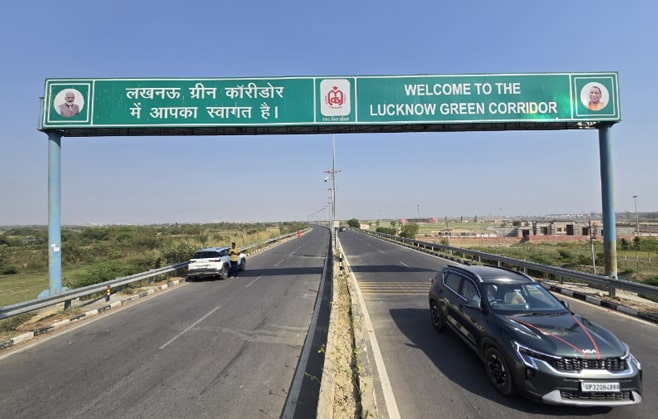
Lucknow is preparing to unlock a major mobility upgrade, with the first stretch of its new green corridor expected to open to traffic by 15 December. The project, connecting Samtamulak crossing to Nishatganj, is designed to reduce the current travel time across the 3.3-km stretch to roughly five minutes, signalling a significant shift towards faster and more sustainable commuting within the city.
The Lucknow Development Authority (LDA) has accelerated construction over the past week, with senior officials conducting on-site inspections to ensure the December timeline is met. According to project engineers, surfacing and structural work are in the final stage, and finishing activities are being prioritised to minimise delays. The corridor forms part of a larger 57-km mobility spine extending from IIM Road to Kisanpath, intended to redistribute traffic load and reduce congestion across core neighbourhoods. The ongoing phase between Samatamulak and Nishatganj includes three key components: a six-lane bridge over Kukrail, a 1.1-km embankment with widened carriageways from Kukrail to Nishatganj, and a second six-lane bridge at Nishatganj. While the combined investment of around ₹130 crore reflects the scale of the intervention, officials highlight that the cost also covers foundational works supporting long-term durability and climate-resilient infrastructure.
Urban transport specialists note that the price of fast-paced development must be weighed against environmental and social considerations. One consultant working on the corridor remarked that prioritising uninterrupted mobility “should not come at the cost of walkability, biodiversity, or community comfort”. To address such concerns, LDA has asked contractors to integrate horticulture, landscaping, and cosmetic enhancements alongside civil works instead of treating them as post-construction additions. The broader plan for the green corridor includes new bridges, road overbridges and embankments across Nishatganj–Hanuman Setu–Daliganj–Pakka Pul. If executed cohesively, the corridor is expected to divert through-traffic from residential streets, reduce fuel wastage due to congestion, and support smoother logistics for small and medium businesses that depend on intra-city road freight.
Urban policy researchers believe that the project could serve as a blueprint for medium-sized Indian cities struggling with rapid urbanisation. “A corridor like this succeeds not only when vehicles move faster, but when cities become more liveable for pedestrians, cyclists, and women commuters,” said a transport expert. Provisions such as shaded footpaths, better lighting and safe pedestrian crossings will play a decisive role in determining whether the corridor evolves into an inclusive urban asset. If the December deadline is met, Lucknow residents could experience immediate reductions in bottlenecks around the Kukrail and Nishatganj zones. More importantly, the first opening will offer an early demonstration of whether fast infrastructure delivery can be aligned with sustainability and citizen-centred design an expectation becoming increasingly central to India’s urban transition.
Also Read: https://urbanacres.in/lucknow-and-kanpur-to-get-bigger-metro-grids/
Lucknow Aims Five Minute Ride With Green Corridor
