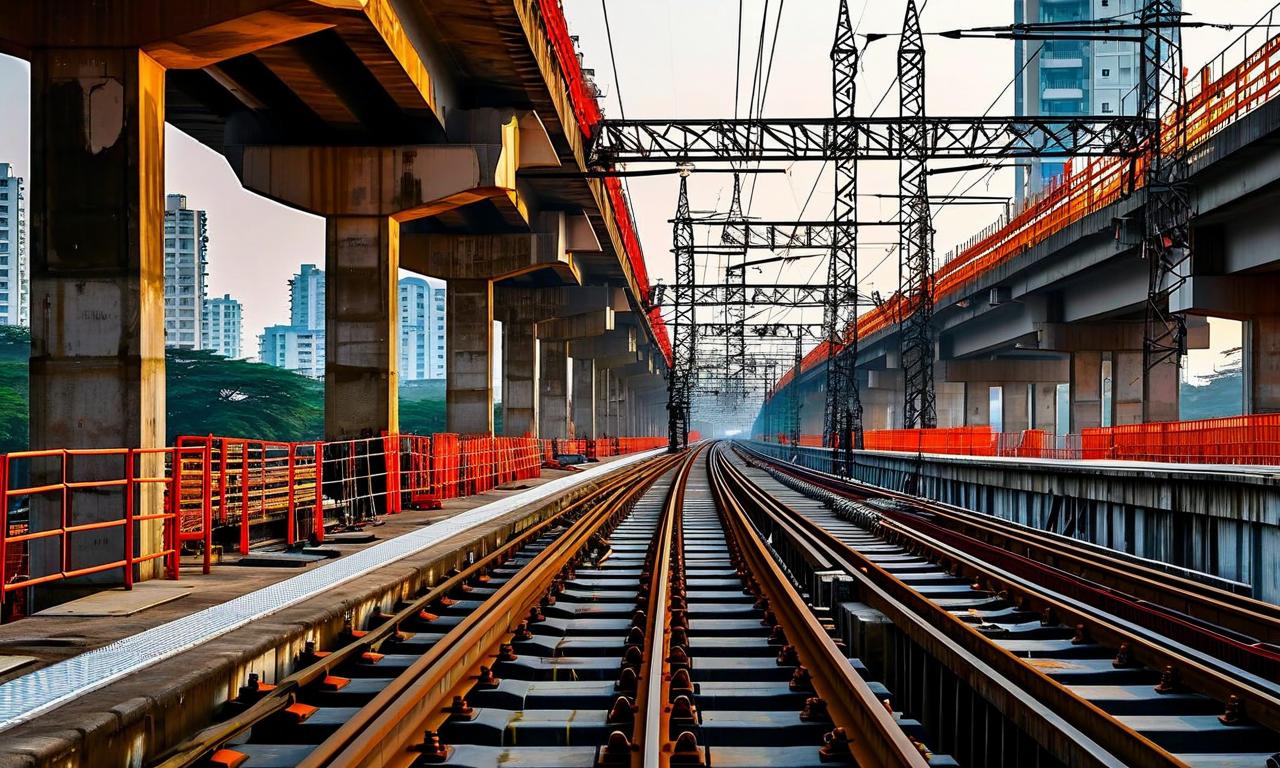
Mumbai’s rapid transit expansion has reached another milestone as a major engineering and construction conglomerate secured a high-value contract for critical systems work on Metro Line 4, reinforcing the city’s push towards cleaner and more inclusive urban mobility. The project, awarded by the metropolitan region’s transport development authority, underlines the growing emphasis on resilient infrastructure that supports economic growth while reducing the environmental footprint of daily commuting.
The contract, categorised as a significant order within the Rs 1,000 crore to Rs 2,500 crore range, covers the complete electrification and power systems for the 24.7 km elevated Metro Line 4 corridor linking Wadala with the eastern suburbs. The route is expected to serve some of Mumbai’s most densely populated residential and employment clusters, easing pressure on congested road networks and suburban rail lines. According to officials familiar with the project, the scope extends beyond basic traction systems. It includes the design, manufacture, installation, testing and commissioning of power supply infrastructure, alongside an integrated supervisory control and data acquisition system. This digital backbone will manage operations not only for Line 4 but also for the adjoining Line 4A, spanning 32 stations, depots and substations across the corridor.
Urban transport experts note that such integrated systems are essential for improving reliability, safety and energy efficiency. “Modern metro networks are no longer just about trains and tracks. Intelligent power management and automation help reduce operational losses and support future transitions to renewable energy sourcing,” said an industry expert involved in metro planning. The package also covers electrical and mechanical works for elevated stations, including lifts and escalators designed to improve accessibility for senior citizens, persons with disabilities and caregivers. A multi-year comprehensive maintenance commitment has been built into the contract, reflecting a shift towards lifecycle-based infrastructure delivery rather than short-term execution.
This marks the third consecutive package awarded to the same engineering group on the Line 4 and 4A corridors, indicating continuity in design standards and execution strategy. Officials say such consistency can help reduce coordination risks and speed up commissioning timelines in complex urban environments like Mumbai. From a broader urban development perspective, Mumbai Metro electrification is central to the city’s long-term climate and mobility goals. By shifting commuters from private vehicles to high-capacity public transport, the corridor is expected to cut local air pollution, lower carbon emissions and improve travel equity across eastern suburbs that have historically lacked high-quality transit options.
As Mumbai continues to expand its metro network, projects like Line 4 highlight how infrastructure investment, when aligned with sustainability and inclusivity principles, can reshape everyday urban life without compromising economic efficiency.
L&T Wins Significant MMRDA Order For Mumbai Metro Line Four Electrification Project