


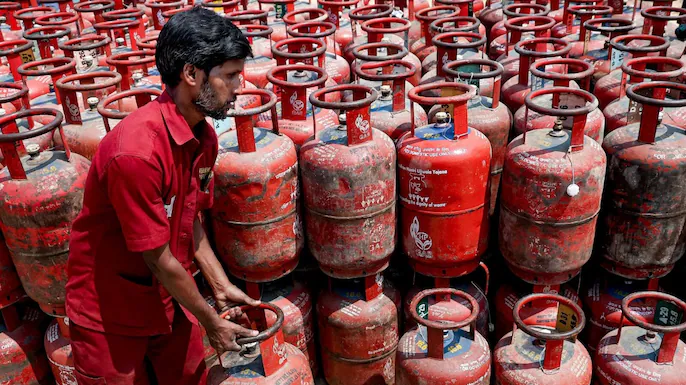
India Revises LPG Pricing Framework, Raises Cost for Non-KYC Users
India’s domestic cooking fuel framework is undergoing a shift, with authorities tightening compliance norms that could increase costs for consumers without updated identity verification.
The move affects liquefied petroleum gas users across major urban centres including Kolkata, Chennai, Mumbai, and Delhi, where pricing variations and access conditions directly influence household budgets and energy use patterns.Officials indicate that consumers who have not completed Know Your Customer (KYC) requirements may face higher effective prices for LPG cylinders. The revised structure aims to streamline subsidy targeting and reduce leakages in the distribution system. However, the LPG price rules India change also introduces new cost pressures for sections of the population that remain outside formal documentation frameworks.Energy analysts suggest that the policy reflects a broader effort to improve transparency and efficiency in fuel distribution. By linking benefits to verified users, authorities aim to ensure that subsidies reach intended beneficiaries. At the same time, the LPG price rules India framework highlights ongoing challenges in balancing administrative efficiency with equitable access to essential services.For urban households, particularly in lower- and middle-income segments, cooking fuel costs form a significant part of monthly expenditure. Any increase linked to compliance gaps could influence consumption behaviour, with some households potentially shifting to alternative fuels. Experts warn that such shifts may have environmental implications, especially if cleaner fuel adoption slows down in favour of more polluting options.
The development also intersects with urban sustainability goals. LPG has been promoted as a cleaner alternative to traditional biomass fuels, contributing to improved air quality and public health outcomes. Ensuring widespread and affordable access remains critical to sustaining these gains, particularly in densely populated cities where indoor and outdoor air pollution are persistent concerns.From a governance perspective, the emphasis on KYC compliance reflects the increasing digitisation of public service delivery. While digital systems can enhance efficiency, they also require robust outreach to ensure inclusion. Urban policy specialists note that targeted awareness campaigns and simplified processes could help bridge the gap for users who have yet to complete verification requirements.The pricing adjustments may also have indirect effects on local economies. Small businesses, food vendors, and service providers that rely on LPG for daily operations could face higher input costs if compliance issues persist. This, in turn, may influence pricing for goods and services in urban markets.A senior official associated with fuel distribution indicated that the transition period will be critical, with efforts focused on encouraging users to complete KYC formalities. Ensuring minimal disruption while improving system efficiency remains a key priority.
As India continues to refine its energy distribution systems, the evolving LPG price rules India framework highlights the complex interplay between policy, affordability, and sustainability. The effectiveness of the changes will depend on how well they balance administrative goals with the need for inclusive access to essential urban services.
Also Read:Kolkata Agartala Rail Link Boosts Regional Connectivity
