


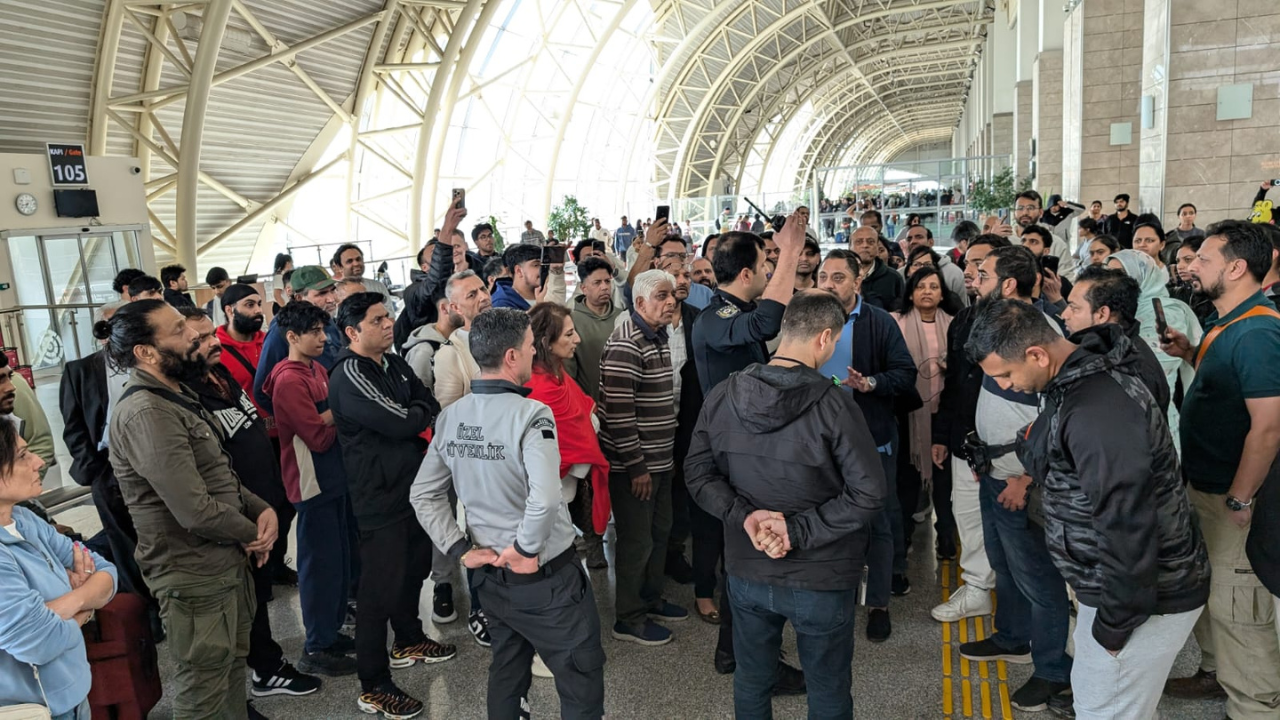
Over 260 passengers onboard a London-to-Mumbai flight have been left stranded for over 24 hours at Turkiye’s Diyarbakır airport after their aircraft was forced to divert due to a medical emergency and subsequently encountered a technical failure. The ordeal, unfolding since April 2, has spotlighted concerns around passenger welfare, communication gaps, and the broader implications of airline accountability during unscheduled disruptions.
Virgin Atlantic’s scheduled flight from Heathrow to Mumbai was en route when it had to make an emergency landing in Turkiye to address a critical onboard medical situation. Following the emergency, a technical snag rendered the aircraft unfit to continue its journey. As repair assessments began, passengers claim they were initially kept inside the aircraft for nearly five hours before being disembarked with no clarity on their onward travel or alternative arrangements. The absence of basic facilities, information and support at the remote Diyarbakır airport has triggered frustration and anxiety among those stranded, many of whom were travelling with children and elderly family members.
Passengers have alleged that the airline has neither provided adequate food, lodging, nor updates on flight status, causing considerable emotional and physical stress. Among them, passengers spoke of exhaustion and helplessness amid silence from ground staff. The prolonged delay has also exposed the limited infrastructure readiness of airports like Diyarbakır to handle international diversions, especially when dealing with large passenger volumes and long layovers. This has once again brought the focus back to the urgent need for international carriers to have robust emergency contingency protocols in place when traversing global routes.
Virgin Atlantic has stated that it is working to resolve the situation and is doing everything possible to ensure that passengers reach Mumbai as soon as feasible. However, the incident raises pressing questions on the preparedness of legacy carriers to manage disruptions in line with international passenger rights frameworks. While operational snags and medical emergencies are unavoidable aspects of air travel, the failure to deliver basic services and updates in the event of an unplanned stopover challenges the trust flyers place in premium global airlines. Moreover, in the era of sustainable and humane mobility, passenger dignity and welfare during crises cannot be an afterthought but must be embedded into airline operating standards.
This episode has rekindled debates around regulatory oversight and airline responsibility, particularly in long-haul international travel where unpredictable diversions can leave travellers marooned in unfamiliar, under-equipped territories. As the world inches towards creating equitable and human-centred transport ecosystems, this Turkiye incident underscores the urgency of reform. Passengers, regardless of origin or destination, deserve safe, dignified treatment that transcends mere compliance and reflects the ethical backbone of modern aviation.
