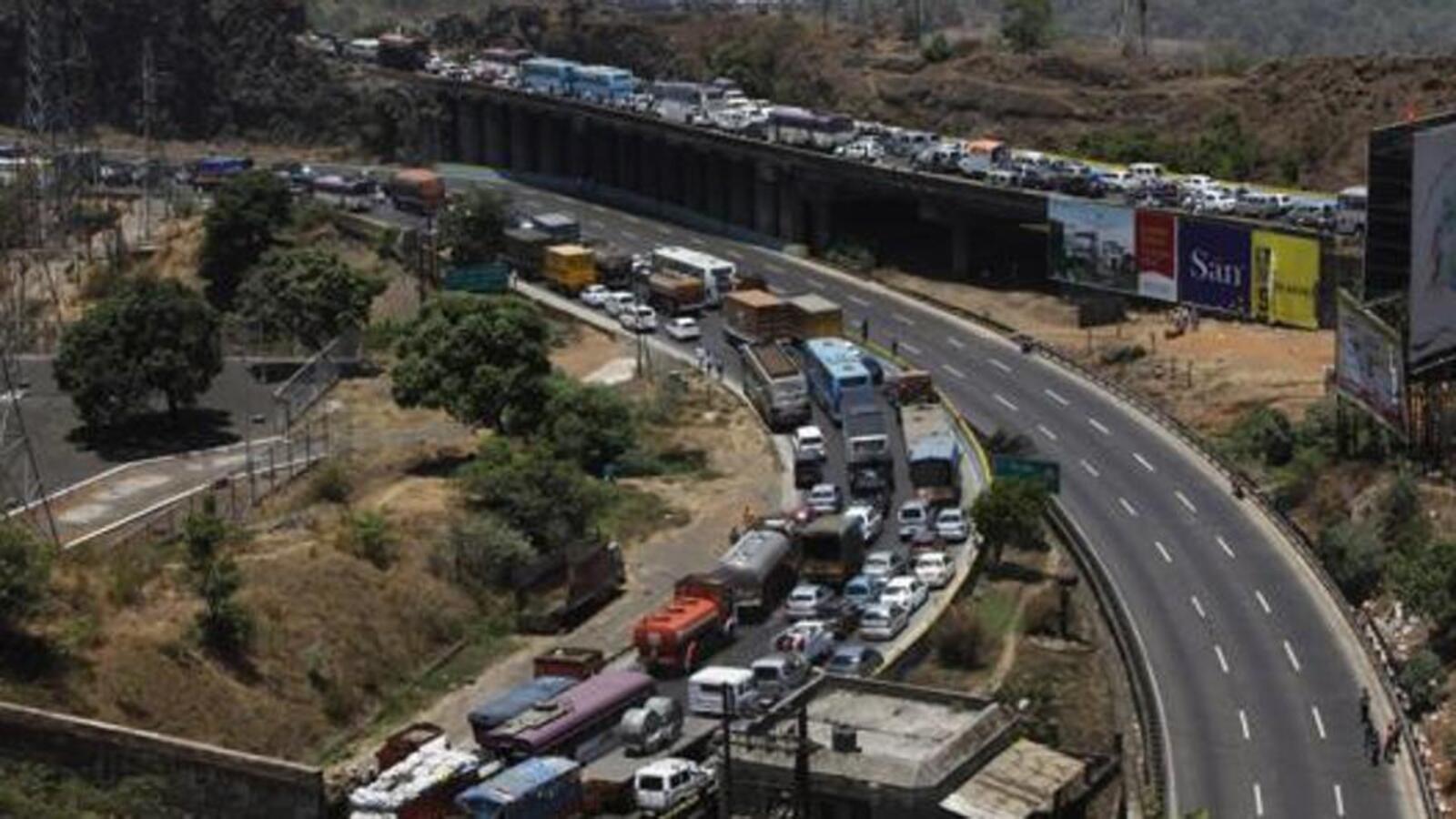
Lonavala Traffic Chaos On Pune–Mumbai Expressway Near Khandala Tunnel Today
The Pune–Mumbai Expressway witnessed yet another morning of chaos as long queues of vehicles crawled towards the Khandala Tunnel, forcing commuters to endure extended travel times and exposing persistent shortcomings in highway traffic management.
The traffic bottleneck stretched for several kilometres, with vehicles inching forward at a sluggish pace. Highway officials attributed the congestion to heavy vehicular load compounded by reduced lane capacity near the tunnel. Despite the swift deployment of traffic police and highway patrols, movement remained painfully slow through most of the morning.For thousands of daily commuters, the incident was more than an inconvenience it was a reflection of a system under strain. “Every long weekend or rush hour brings the same problem. The infrastructure simply cannot cope,” said an official overseeing the traffic operations, stressing the urgent need for smart traffic interventions.
Experts in urban transport point out that the recurring gridlocks on this critical economic corridor linking two of Maharashtra’s biggest urban centres underline the absence of sustainable planning. As the number of private vehicles continues to rise, the resulting emissions and delays not only waste fuel but also worsen air quality in the fragile Western Ghats ecosystem.Sustainable mobility advocates argue that long-term relief lies not in more lanes but in policy-driven shifts. They recommend stricter lane discipline enforcement, better public transport integration, and use of green mobility solutions such as electric buses for intercity travel. “The goal must be to move people, not just vehicles,” noted a transport policy expert, adding that poorly managed traffic also translates into significant economic losses through wasted man-hours and logistics delays.
Local commuters also voiced concerns over inadequate information systems and real-time updates. Many travellers stuck in the gridlock claimed they had no prior alert about the developing jam. Technology-enabled traffic monitoring and predictive updates, they said, could help reduce such chaos and improve driver compliance.The Pune–Mumbai Expressway, hailed as India’s first access-controlled highway, has evolved into one of the busiest corridors in the country. However, without proactive measures to manage the growing pressure, it risks becoming a daily source of frustration and carbon-intensive congestion.While the traffic was eventually cleared by noon, the episode reignited broader conversations around the need for sustainable urban mobility a vision where reduced emissions, disciplined driving, and smart infrastructure coexist. For Pune and Mumbai’s future commuters, such transformation may no longer be optional, but essential.