


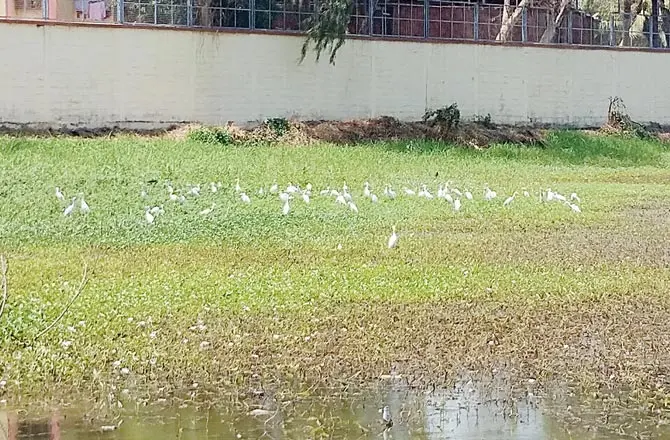
Lokhandwala Lake ecological crisis worsens with invasive plant
Lokhandwala Lake, located in the western suburbs of Mumbai, stands as a rare ecological gem amidst the urban sprawl. Home to over 100 bird species, including migratory birds from as far as Siberia, the lake has become a sanctuary for birdwatchers and nature lovers. Despite its ecological importance, the lake is under significant threat. An invasive aquatic plant, Ipomoea, is rapidly spreading, suffocating the water body and endangering its fragile ecosystem. The plant, which can cover large areas of water, disrupts both aquatic life and the biodiversity the lake supports. As if this challenge wasn’t enough, the lake still awaits official recognition as a wetland, leaving it vulnerable to further degradation.
The call for wetland status for Lokhandwala Lake has been ongoing for several years, with wildlife conservationists and local residents campaigning for protection. Without such a designation, the lake remains at risk, unable to receive the necessary legal safeguards. While the lake’s ecological significance is clear—hosting around 150 bird species, half of which are migratory—the lack of legal protection limits the resources available for its upkeep and preservation. Conservationists argue that if the lake were to be granted wetland status, it would enable authorities to take control of the growing invasive vegetation, like Ipomoea, which threatens to overwhelm the lake’s delicate habitat. This uncontrolled plant growth could lead to a loss of open water, making it impossible for birds to feed and breed.
Sumesh Lekhi, a chartered accountant, lawyer, and filmmaker, highlighted that despite Lokhandwala Lake already being classified as a wetland under various official maps, it lacks the necessary legal protection. “The lake is a thriving habitat, with over 130 bird species recorded, including more than 30 migratory ones,” Lekhi said, underscoring its significance. Despite the clear documentation and acknowledgment by the Brihanmumbai Municipal Corporation (BMC), the lake continues to operate without the benefits of protected wetland status. The situation is further exacerbated by the growing presence of Ipomoea, which, while beneficial in moderation, poses serious threats to the lake’s ecosystem when left unchecked.
From a sustainability perspective, the continued neglect of Lokhandwala Lake raises serious concerns about the city’s approach to preserving natural resources in urban spaces. Mumbai, with its limited open spaces, must focus on conserving its remaining wetlands and water bodies, which play crucial roles in maintaining biodiversity, controlling flooding, and improving air quality. A protected wetland status for Lokhandwala Lake would not only secure its long-term survival but also help maintain Mumbai’s ecological balance amidst rapid urbanisation. The situation calls for a more integrated approach to conservation, where environmental considerations are factored into urban planning, ensuring the coexistence of natural habitats and expanding cities. Authorities must act swiftly to safeguard these critical ecosystems and ensure that the people of Mumbai continue to enjoy the ecological benefits they provide.
