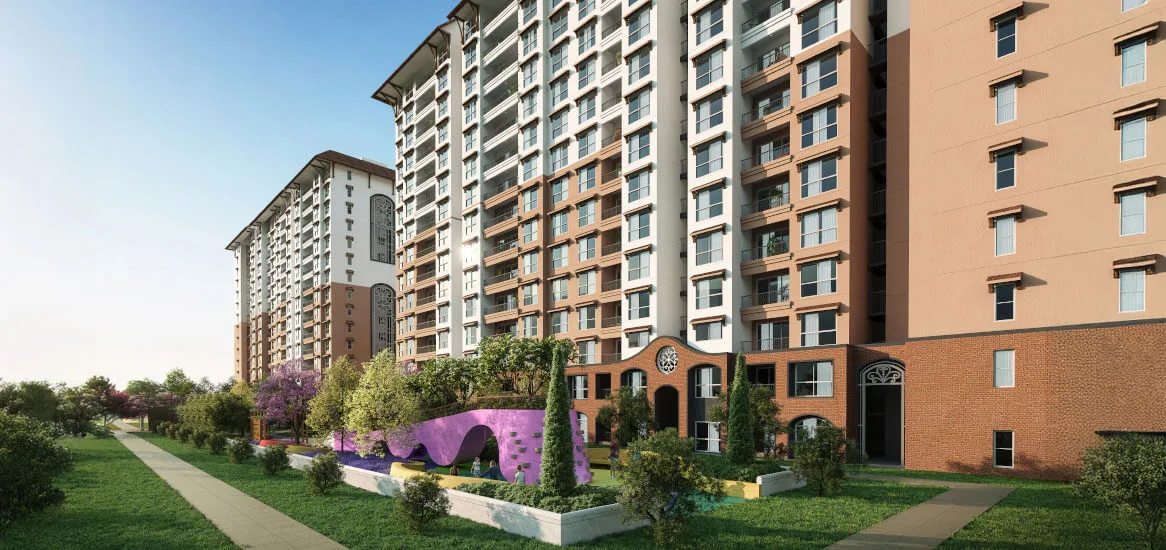
Two of India’s largest real estate developers are accelerating their expansion across major urban corridors, collectively lining up residential developments with an estimated revenue potential exceeding ₹1 lakh crore. The scale and geographic spread of these projects signal renewed momentum in the housing market, even as cities grapple with infrastructure stress and sustainability demands.
The planned developments are spread across high-growth regions including the Mumbai Metropolitan Region, Delhi-NCR, Pune and Bengaluru urban centres that continue to draw both end-users and investors. Industry observers note that the clustering of projects in these regions reflects sustained demand for housing near employment hubs, improved connectivity, and evolving lifestyle preferences post-pandemic. Land acquisition has been central to this expansion. Together, the two developers have secured around two dozen parcels during the current financial year, positioning themselves to tap into future demand cycles. While one developer has focused on consolidating its presence in western and southern markets, the other has expanded more aggressively across multiple metropolitan regions, signalling a competitive push for scale.
For cities, however, this surge in large-scale residential development raises critical questions about infrastructure readiness. Urban planners caution that while such investments can stimulate economic activity and job creation, they also place additional pressure on transport networks, water supply systems, and waste management frameworks. Without parallel upgrades in civic infrastructure, the long-term liveability of these urban clusters could be compromised. Experts also point to the growing importance of integrating sustainability into large housing projects. With India’s cities facing rising climate risks from heat stress to flooding new developments are increasingly expected to incorporate energy-efficient designs, water conservation systems, and resilient construction practices. Projects of this scale offer an opportunity to embed low-carbon solutions at the planning stage, potentially setting benchmarks for the broader real estate sector.
From a market perspective, the expansion reflects strong confidence in residential demand, particularly in mid-income and premium segments. Stable interest rates, improved transparency in the sector, and a shift towards organised developers have contributed to this trend. Analysts suggest that timely execution and pricing discipline will be key to converting this pipeline into actual sales. As the housing supply pipeline expands, the focus is likely to shift towards how these projects integrate with city planning frameworks. The coming years will test whether rapid real estate growth can align with inclusive, climate-resilient urban development ensuring that new housing not only meets demand but also enhances the quality of life in India’s fast-growing cities.