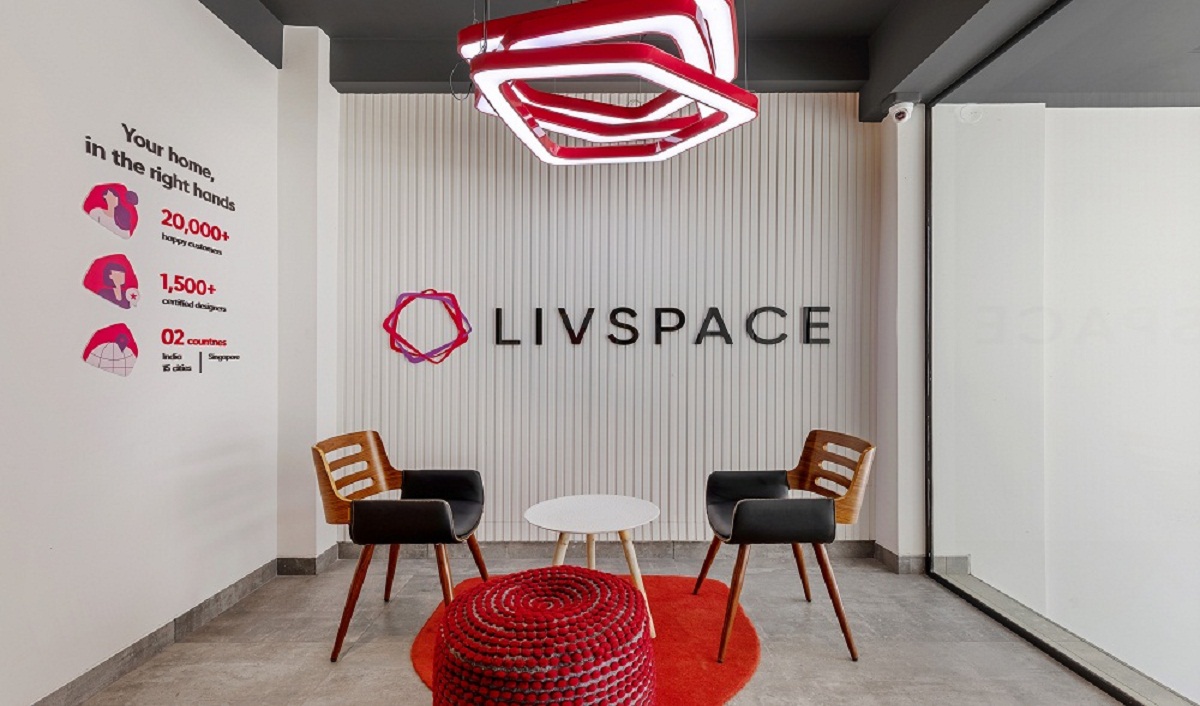
India’s home interiors and renovation platform Livspace has initiated a significant organisational restructuring, resulting in the layoff of around 1,000 employees — roughly 12 per cent of its workforce — amid a broader transition toward deep integration of artificial intelligence (AI) across its operations. The move coincides with the exit of co-founder Saurabh Jain, highlighting evolving business models in the interior design and proptech startup ecosystem.
Livspace, backed by global investment firm KKR, confirmed the workforce reduction as part of a phased reshaping of internal functions spanning design, sales, operations and marketing. Company spokespeople described the change as a strategic reallocation of resources aimed at establishing an “AI-native, agentic organisation,” with advanced AI agents and automation tools replacing several manual tasks.The layoffs are not a sudden shock but the culmination of a transition over recent months as intelligent systems were incrementally deployed across core business processes. In design workflows, AI-driven tools have reportedly accelerated mood-boarding and 3D visualisation, while sales and customer-interaction functions now leverage automated lead engagement systems. Predictive AI platforms are also being applied to operations and supply chain tasks previously managed manually.
The restructuring and leadership change occur against a backdrop of challenging conditions for India’s tech and startup sectors. While Livspace has exhibited revenue growth and narrowing losses, with its financials showing progress in the fiscal year ended March 2025, it has not raised fresh external capital in several years. This extended funding hiatus appears to have influenced strategic recalibration toward greater efficiency and automation.Co-founder Saurabh Jain’s decision to step down after more than a decade added another dimension to the unfolding narrative. Jain — whose tenure included helping scale the company from its earliest stages — is pursuing personal interests outside the business. Leadership transitions of this kind can reflect the recalibrated skill sets and strategic priorities required as companies evolve in response to technological disruption and competitiveness pressures.
For India’s home interiors and wider design market, Livspace’s changes illustrate a broader inflection point where digital transformation intersects with labour-intensive service models. As startups increasingly adopt AI and automation, the sector may see shifts in job profiles, with a premium placed on technology-oriented skill sets and data-savvy roles. Analysts suggest that while automation can enhance productivity and cost efficiency, it also necessitates reskilling initiatives to support workforce adaptability.Urban planners and housing market observers note that such structural shifts in companies like Livspace carry implications for the value chain in residential construction and renovation services. If automation enables faster turnaround times and lower operational costs, it could influence pricing dynamics and consumer expectations in urban housing upgrades and retrofit markets. However, this must be balanced with considerations around job creation and inclusive growth in service-led sectors.
The Livspace episode underscores a tension playing out across India’s startup ecosystem: balancing the promise of AI-driven efficiency with the realities of workforce transitions and leadership evolution. As companies recalibrate for long-term viability, the challenge will be in creating pathways that blend technological innovation with opportunities for human capital development — a necessary ingredient for sustainable urban economy growth.