


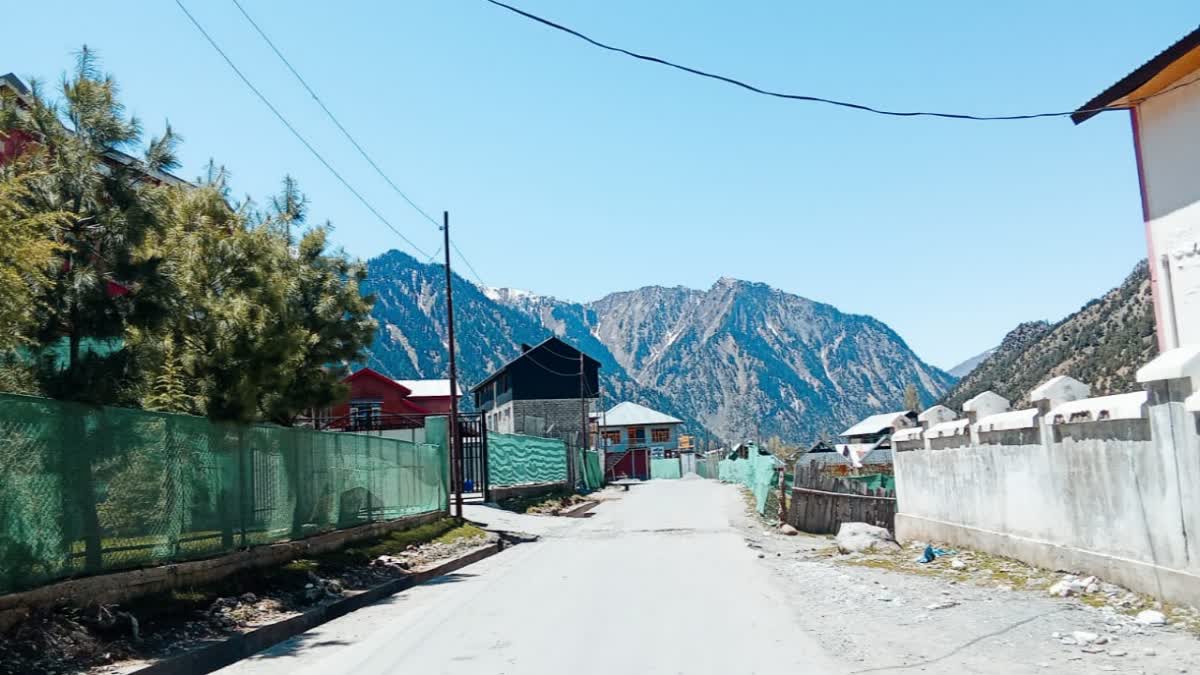
In Karnah, a border tehsil tucked deep in north Kashmir’s Kupwara district, the absence of artillery fire in recent years has offered only faint comfort to residents.
Despite an unofficial peace since the 2021 reiteration of the ceasefire agreement between India and Pakistan, the fear of sudden escalation remains embedded in daily life. With recent diplomatic hostilities rekindled following the Pahalgam terror attack that left 26 tourists dead, the silence in Karnah feels ominous — as though peace itself is on borrowed time.This anxiety isn’t merely psychological. The region’s inhabitants, many of whom live within a few kilometres of the Line of Control (LoC), recount a legacy of cross-border shelling that has maimed, displaced, and traumatised generations.
“Every loud sound — a backfiring vehicle, thunder — sends shivers down our spines,” says Fareeda Bano, a 25-year-old from Gundi Gujran whose brother lost a leg to a mortar shell when she was five. The community, still healing from past conflict, now faces a new wave of uncertainty.While spring blooms across the terraced fields of Tangdhar, Teetwal, and Karnah, with farmers planting maize and women scything grass, the backdrop remains perilous. The Indian government’s recent diplomatic retaliations — including the suspension of the Indus Water Treaty and halting cross-border transit — have heightened concerns among villagers. What’s missing from the larger discourse, say residents and local leaders alike, is a long-overdue investment in safety infrastructure and health services.
Karnah MLA Javaid Mirchal warns of a humanitarian disaster should conflict resume. “We have no trauma care, no specialists, not even an operation theatre in the vicinity,” he notes. “A patient with a critical injury has to travel for hours — that delay can cost lives.” Mirchal has repeatedly urged the central and UT governments to prioritise construction of reinforced community bunkers in border villages — not just for wartime emergencies, but as a durable civil safety measure.
These demands gain urgency amid repeated calls for equity and inclusion in India’s national development narrative. Border residents like those in Karnah are often left out of urban planning and infrastructure development, despite contributing equally to the agrarian economy. “We are not asking for urban luxuries,” says Ghulam Mohidudin, a 65-year-old farmer and former village Sarpanch. “We are asking for the right to survive when the rest of the world forgets us again.”
The lack of emergency shelters, climate-resilient housing, and medical services in border areas highlights a gap in sustainable development frameworks. While India moves toward carbon-neutral and climate-smart cities, rural and border zones like Karnah remain structurally vulnerable to both natural and man-made shocks. As policymakers focus on smart infrastructure in metros, equitable resource allocation across frontier areas is essential to avoid widening the urban-rural divide.
Today, the people of Karnah live with a quiet resilience, navigating daily life in the shadow of past trauma and future uncertainty. As 75-year-old Noor Din solemnly reflects while tilling a plot that has seen more mortars than monsoons, “We don’t want war, not for land or honour. Just peace — and maybe a place to hide.” Their plea isn’t just for peace, but for recognition, equity, and protection — the true foundations of any sustainable, humane society.
Also Read : Vande Bharat Express to Connect Kashmir by April
Living in Fear on Kashmir Border Villages
