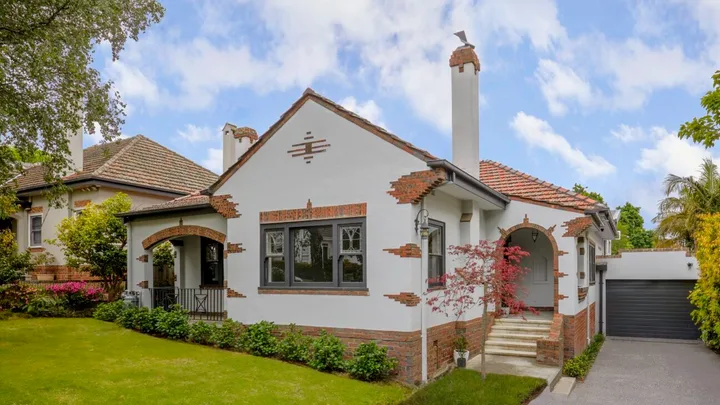
A once-aging family residence in the heart of Indore has been skilfully restored to rekindle its original 1950s Art Deco character, blending heritage design with contemporary living needs. Tasked with preserving the home’s architectural soul, the architect drew deeply from the design language of his grandfather’s era — one rooted in geometric elegance, bold forms and ornamental detailing — to bridge mid-20th-century character with 21st-century functionality.
The project, set within the 2,400 sq ft Chandurwala Residence, reflects a growing trend among Indian homeowners and designers to value historic architectural identity as urban neighbourhoods evolve. Rather than erase the past, the recent transformation honours original motifs while adding spatial clarity, improved light and modern comfort — a balancing act between legacy and livability.Designers began by carefully analysing what made the home distinctive: ornate plaster cornices, decorative archways, and signature mouldings typical of mid-century Art Deco influences. These features were meticulously preserved and, where necessary, stabilised to withstand contemporary use. In parts where original structures had deteriorated, sensitive restoration ensured that the home’s heritage craftsmanship, including its architectural mouldings and geometric forms, could remain legible for future generations.
A central theme of the redesign was opening up the plan to enhance spatial flow and bring natural light deep into the interior — a departure from the tighter, compartmentalised layouts common in post-war homes. Larger openings and expanded bedroom volumes give residents a renewed sense of openness, while carefully curated pastel hues and bold accents echo classic Deco palettes without overwhelming the senses.Furniture and finishes were chosen to complement these architectural intentions. Neo-Art Deco furnishings — with their tailored curves, streamlined silhouettes and metallic accents — interweave modern comfort with period-inspired expressions. The intention was not nostalgia for its own sake, but a design continuity that respects both past and present, ensuring spaces feel cohesive rather than museum-like.
Urban heritage experts say such projects matter not only for individual homeowners but for cities wrestling with rapid redevelopment pressures. As metropolitan regions expand, mid-century buildings — often neither protected as official heritage nor entirely disposable — sit in a precarious category. Thoughtful restoration provides a model for inclusive, character-rich urban environments, where history enriches the contemporary fabric rather than being erased.Beyond aesthetics, the project also reflects broader shifts in residential design thinking. In an age where sustainability and adaptive reuse are increasingly prioritised, restoring and updating existing structures can reduce material waste and preserve embodied energy, even as carbon-footprint concerns shape the built environment.
The renewed residence stands today as a living testament to architectural legacy — bridging generations while contributing to a richer, more nuanced urban identity. Its rebirth underscores how heritage design principles can be thoughtfully interwoven with contemporary needs, inspiring other homeowners to consider restoration as a sustainable alternative to demolition.