


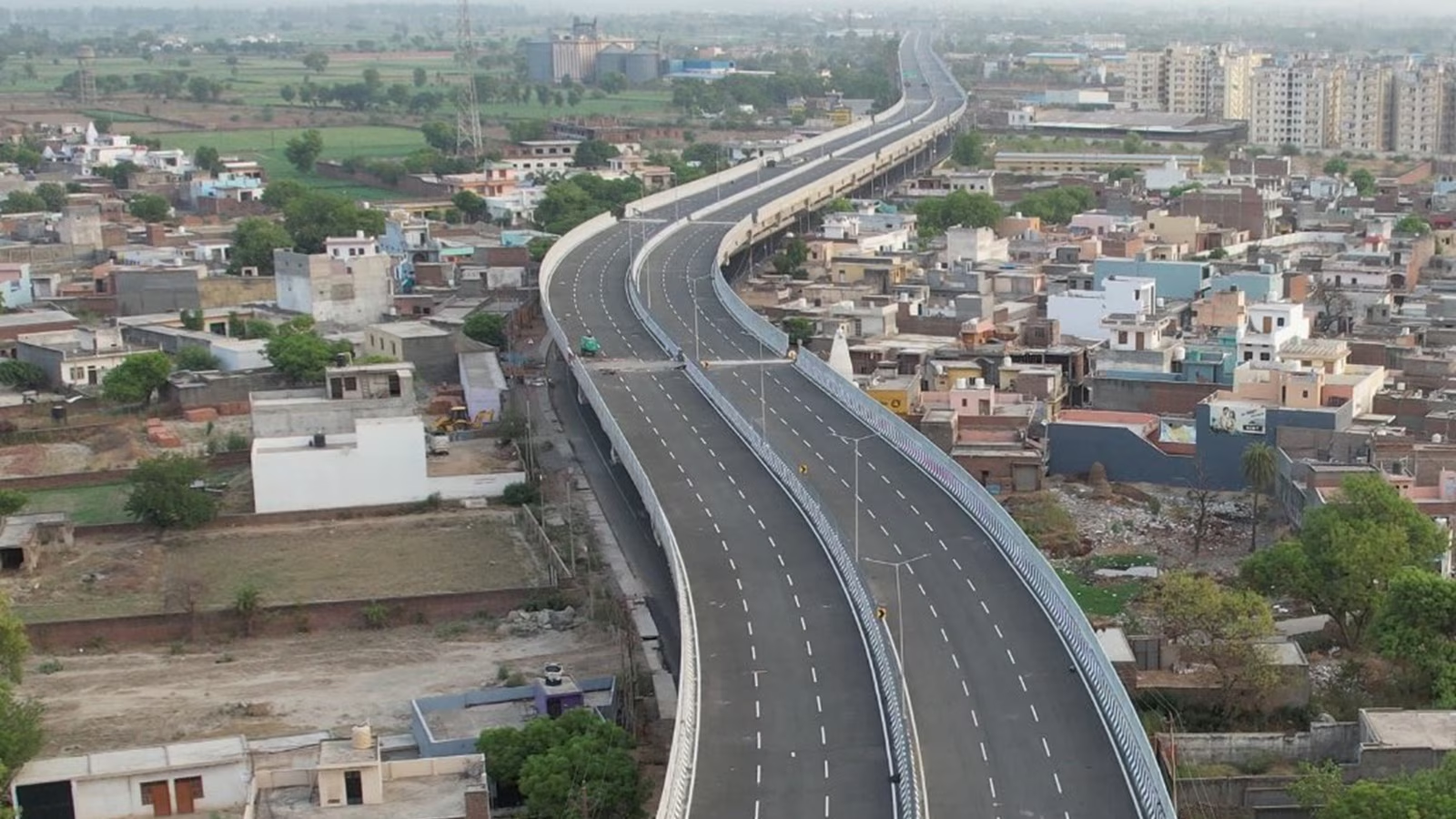
The Delhi-Dehradun Expressway, a critical infrastructure project aimed at enhancing connectivity and reducing travel time between the capital and Uttarakhand, is nearing completion. However, a single plot of land in Mandola, Ghaziabad, has become a significant roadblock, delaying its final stretch. While most landowners relinquished their properties for the project, one family’s long-standing legal battle has kept their ancestral house standing amidst an otherwise transformed landscape, underscoring the intricate balance between development and individual land rights.
The story dates back to 1998 when the Uttar Pradesh Housing Board initiated the Mandola Housing Scheme, acquiring over 2,600 acres across six villages near the Delhi-Ghaziabad border. While the majority of landowners accepted compensation, a few resisted, demanding a fairer deal. Among them was a local resident who refused to part with a 1,600-square-metre plot. Legal interventions led to a prolonged court battle, which, despite spanning decades, saw the land eventually delineated from the scheme. Meanwhile, the housing project itself never materialised, leaving the land’s fate uncertain.
When the National Highways Authority of India (NHAI) identified Mandola as a key location for constructing a ramp for the expressway in 2020, the Housing Board transferred the land parcel to the highway authority. However, the family contested the transfer, arguing that their land had never legally belonged to the Housing Board in the first place. The dispute escalated when the original landowner passed away, and his grandson took the matter to the Supreme Court, where it remains entangled in legal proceedings. The case has now been referred to the Lucknow Bench of the High Court, with an expedited hearing scheduled for April 16.
As the expressway nears completion, with over 30 kilometres between Akshardham and the Eastern Peripheral Expressway (EPE) already constructed, the house in Mandola remains the last physical obstacle. The expressway, spanning 212 kilometres, is designed to cut down travel time significantly, particularly between Delhi and Baghpat, which will be reduced to under 30 minutes. A substantial portion of the road, approximately 20 kilometres, is elevated to facilitate seamless movement. Officials acknowledge that while construction has progressed swiftly, this isolated land dispute is now dictating the project’s timeline.
The legal complexities surrounding land acquisition reflect a broader challenge faced by infrastructure projects across India. Compensation disputes, generational property claims, and bureaucratic delays frequently hinder progress, despite the overarching benefits such projects promise to the public. While the family asserts their right to due process, the authorities emphasise the expressway’s significance for regional development. As the judiciary deliberates, the question remains: how can India strike a balance between protecting individual landowners and ensuring that infrastructural advancements proceed without prolonged impediments? The resolution of this case could set a precedent for future projects navigating similar land acquisition hurdles.
