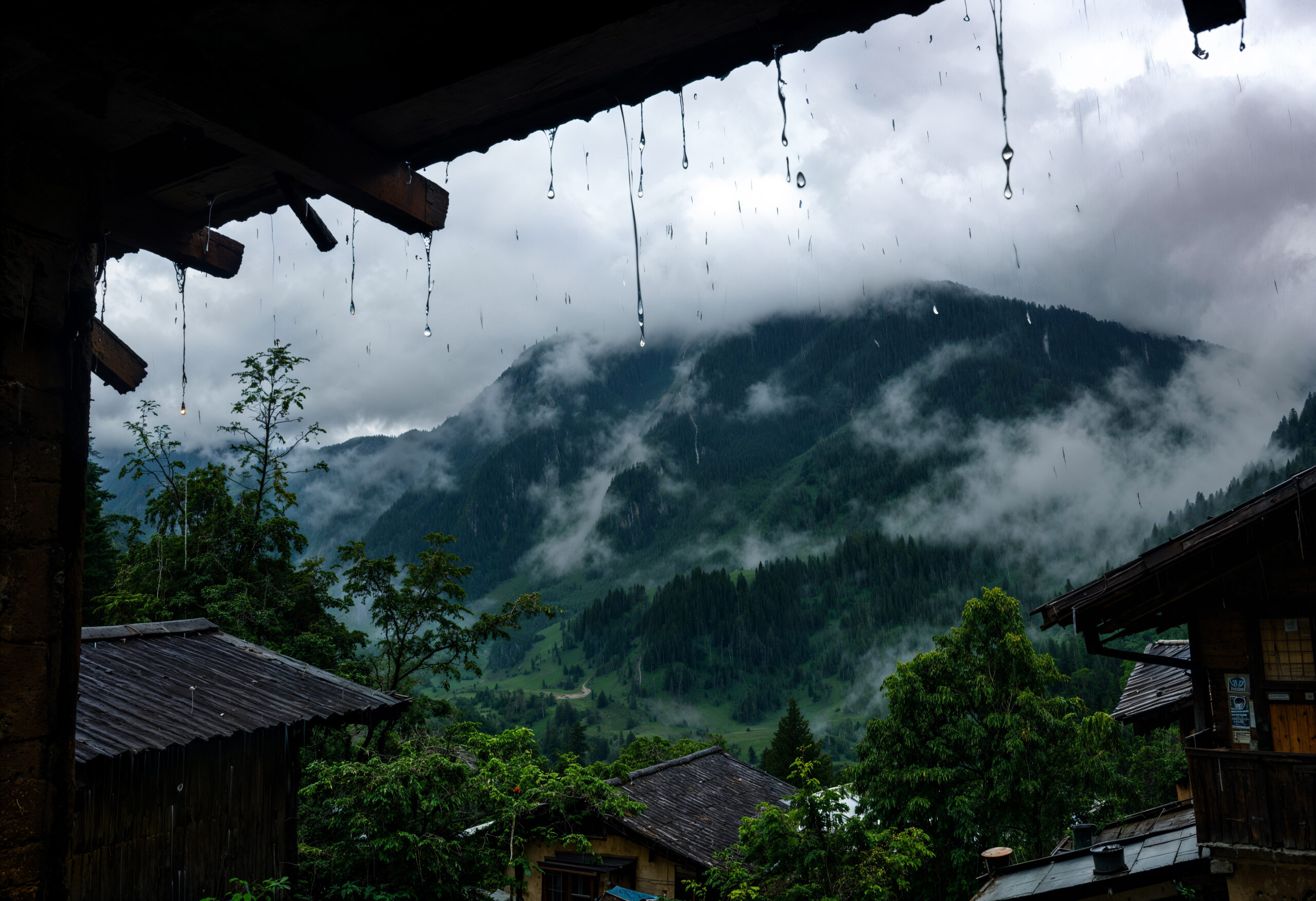
Kullu Cloudburst Shuts 400 Roads And Schools In Himachal
A sudden cloudburst struck Himachal Pradesh’s Kullu district on Monday morning, unleashing torrential rains that triggered flash floods, landslides and widespread destruction across the Lag valley. Nearly 400 roads, including two national highways, have been closed while power lines snapped in several regions, leaving large areas cut off.
The downpour washed away shops, farmland and portions of residential land, amplifying fears of yet another season of devastation in the Himalayan state. Authorities have sounded a yellow alert for the district, warning of more heavy rain in the coming days. With road access crippled, the District Disaster Management Authority ordered all schools, colleges, Anganwadi centres and technical institutes in Kullu and Banjar subdivisions to remain shut, prioritising the safety of students.
This fresh crisis comes close on the heels of a similar cloudburst in Jammu and Kashmir’s Kishtwar, where dozens of lives were lost. In Himachal, officials from the State Disaster Management Authority confirmed that since the onset of the monsoon in June, at least 140 people have died in rain-related incidents including landslides, flash floods and drowning. The fragile mountain ecosystem has been repeatedly tested by such extreme weather, with communities facing recurring losses of property, crops and livelihoods.
In Banjar, reports indicated fresh instances of flash flooding, further complicating relief operations. Slopes weakened by incessant rainfall are collapsing into valleys, blocking highways and isolating villages. With arterial roads buried under debris, mobility has ground to a halt, leaving many dependent on emergency services for basic supplies. Experts point out that cloudbursts are becoming more frequent in the Himalayas, a region highly vulnerable to the effects of climate change. Rising temperatures and erratic rainfall patterns are creating conditions for intense, localised downpours that overwhelm natural drainage systems. In Kullu’s case, rapid urbanisation and road expansion have also aggravated risks, reducing the land’s capacity to absorb water.
For residents, the crisis is more than an annual disaster cycle; it is a test of survival in a changing climate. Farmers lament the destruction of standing crops, while shopkeepers report being swept away by sudden floodwaters. Families stranded by road closures remain anxious about access to healthcare and essential services. Authorities have deployed teams to clear blocked roads and restore electricity, but recovery is expected to take days. While immediate relief is underway, long-term questions remain about the sustainability of development in such ecologically sensitive regions. Without stronger resilience planning and climate-conscious infrastructure, the cycle of damage and repair may only deepen in the years ahead.